
Tag: winter

  • How Long Does A Motorcycle Battery Last?

    How Long Does A Motorcycle Battery Last?

    Reading Time: 6 minutes

    When it comes to motorcycle parts, we all know they don’t last forever. And in most vehicles, it’s a battery that tends to die first. So this begs the question, how long does a motorcycle battery last?

    A motorcycle battery should last between 2 – 5 years if you’re doing the right things to look after it. However, the sad reality is that most people don’t get more than 2 years out of their motorcycle’s battery.

    But, like a lot of things, it’s not exactly that simple. There are a few other factors both avoidable and unavoidable to that play a big part in how long your motorcycle battery will last.  Let’s take a look at these and work out how long your motorcycle battery will last in your certain use case.

    Average Lifespan of Motorcycle Battery as a commuter
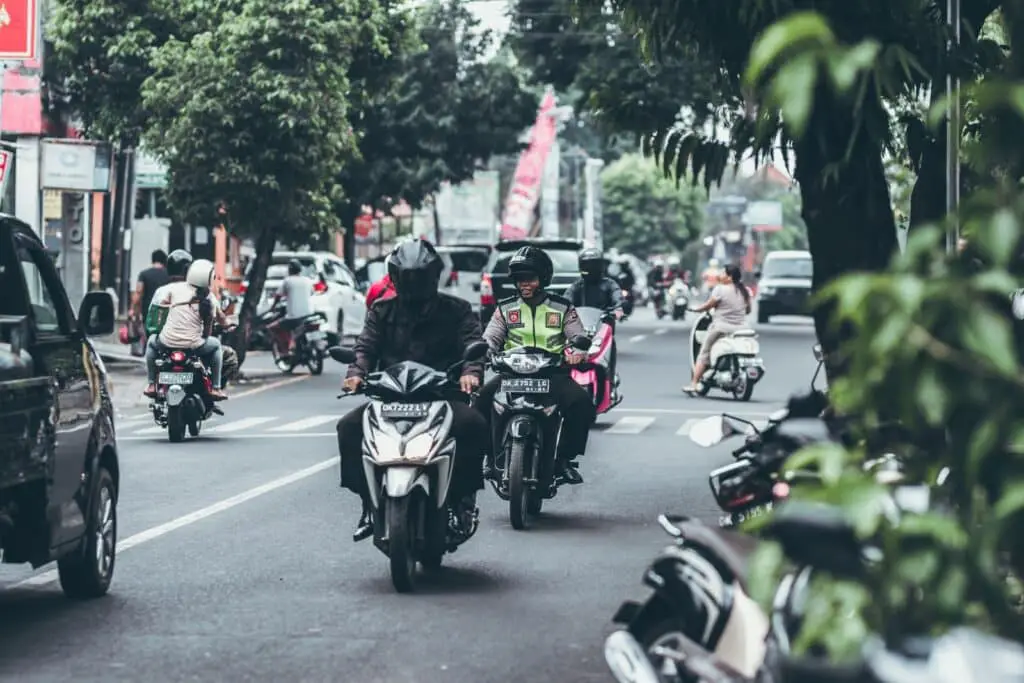
    selective focus photography of people riding motorcycles on road

    If you are motorcycling to work and back on the daily in a climate without frozen winters, expect a solid 3-5 years before you have any issues with your motorcycle battery. By riding each day you are charging your bike’s battery daily and keeping your battery in that perfect voltage range of 12.5-12.6.

    Average Lifespan of Motorcycle Battery as a weekend warrior
    man in brown jacket riding on white and black motorcycle

    Assuming you’re living in a climate that doesn’t hit frozen, your motorcycle battery shouldn’t give you any grief for at least 2 years as a weekend warrior.

    How long a motorcycle battery last without being run?

    Typically, a motorcycle battery will die between 3-4 months without the motorcycle being turned on. For most riders, turn over your engine is the main way they keep their battery fully charged. Therefore when they don’t ride for a few months their battery dies. Because starting your engine is what charges your motorcycle battery, without this charging most modern new motorcycle batteries won’t last more than 4 months.

    The newer the battery, typically, the better the battery is at this with a new battery usually hitting the 4-month mark and an older battery sometimes getting only 1-month before it dies.

    Not running your motorcycle for a long period of time is one of the most common reasons motorcycle batteries tend to die.

    Story time!

    A motorcycle rider stops commuting to work on the bike for a few weeks, then goes on a holiday for a month. Very quickly a few months pass and your motorcycle’s battery is dead.

    Sound familiar?

    How long will my motorcycle battery last in winter?
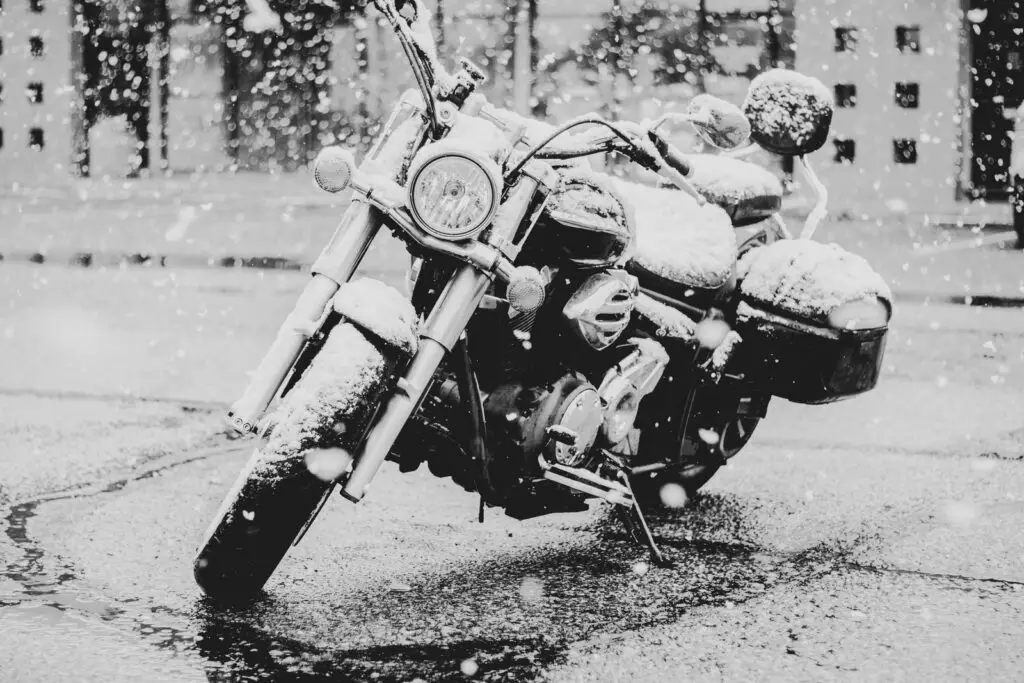
    touring motorcycle covered with snow

    If you live in a climate with freezing winters, you need to run your once per week to make sure the motorcycle battery doesn’t die before spring. For newer batteries, you might be able to push this to two weeks but expect your battery to be dead within 2 weeks of not being ridden. Of course, if you get your bike stuck somewhere with a dead battery you can always jump start your motorcycle with a car.

    This can be very challenging for most since there is a reason we don’t ride in winter, everything is frozen! But try to find a way to go for a quick ride, even if it’s just around the block, every little bit will help. But if it’s completely snowing outside, just don’t risk riding your motorcycle in the snow.

    What can you do to keep your battery fully charged?

    The best thing to do is to keep riding your motorcycle!

    But if you know you’ve got a couple of weeks/months coming up that you won’t be able to take the bike out of the garage there are a few ways you can make sure you don’t come back to a dead motorcycle battery.

    Invest in a Trickle Charger: Trickle charges or battery tender are designed to automatically charge your battery to the optimal voltage and current for long periods of time. This type of charging system is perfect for making sure your motorcycle battery doesn’t die all year round.

    Disconnect your battery from the bike: If you know you just won’t be using the bike for a while and you can’t be afford a trickle charger or battery charger then you should disconnect your battery over the winter.

    Simply open up that saddle seat and disconnect your battery from your bike. Just be careful while you do this and make sure you don’t connect positive to negative.

    In winter keep your bike somewhere warmer: This sounds like an obvious one, but you would not believe how many people store their motorcycle in a sub 0 degrees C shed or barn during the winter, opt for your house attached heated garage, or somewhere warmer. If your battery stays warmer, this alone will not keep your battery charged but will dramatically help extend the life of your battery.

    Short periods of cold are fine, but if it’s anything over 48 hours, expect cold weather conditions to affect your battery.

    Types of Motorcycle Batteries

    Motorcycle batteries come in many different types. The type of battery that you choose will depend on your bike and how it is used. Below, we’ll identify the different types of motorcycle batteries available on the modern market so you can get an idea of what might be best for your specific application.

    Standard wet cell

    This is the most common type of motorcycle battery. It’s filled with a chemical solution (electrolyte) and is sealed, which means the battery cannot be changed without special tools. The acid in this battery can spill out if it is tipped or inverted, so care must be taken when charging or replacing these types of batteries.

    Absorbed Glass Mat (AGM) Batteries

    AGM batteries uses fiberglass between the plates to help contain the acid. This allows it to be mounted in almost any position and gives it more safety than standard wet cell batteries. It is not as spill-proof as gel cells, but they can still be tipped over without damaging the battery.

    The sealed agm battery seems to be a popular type of battery very popular on motorcycles because they last longer than standard wet cells and can be mounted in any position.

    Gel Cells

    Gel cell batteries are another spill-proof battery that uses a thick, jelly-type acid to power the battery. Gel cell batteries are more expensive than standard or AGM motorcycle batteries but tend to last longer between charges. Gel cell batteries cannot withstand freezing temperatures like wet cells can.

    Lithium motorcycle battery

    This type is very popular among street bike riders because it is lightweight and powerful. They also do not produce as much heat when in use. Like gel batteries, they cannot withstand freezing temperatures and are expensive compared to standard wet cell batteries.

    But they are not only lightweight but can outlive all other battery types. The maximum capacity or battery life of these batteries isn’t necessarily better, but they do allow for more charge-discharge cycles. These batteries are nothing like car batteries.

  • Camping In Winter: 5 Essentials For Any Winter Camping Trip

    Camping In Winter: 5 Essentials For Any Winter Camping Trip

    Reading Time: 6 minutes

    When it comes to camping in the winter, whether it’s motorcycle camping, multi-day hiking style camping or just car camping, there are a few small ways that you can prepare yourself that will make a huge difference to the enjoyment of your trip. Ultimately the goal here is to stay warm and dry, whilst still enjoying the outdoors.

    The first thing you need to carry while winter camping is a sleeping bag. A winter camping trip is only exciting when you have the proper winter camping gear. A warm sleeping bag to maintain body temperature is essential, especially on frozen ground. Winter conditions can get extreme and the outside can be frozen solid. The melt snow adds to cold weather and loose snow is equally cold. One of the most common winter camping tips for riders is to wear a down jacket all the time. Sleeping pads protect you from high winds. Normal hiking boots are suitable for such camps. It is essential to choose a proper tent site and keep a distance from heavy snow loads. Warm socks help to keep the feet warm and retain body heat. Staying warm is imperative and hot drinks can also help you.

    Heavy winter clothing which is a great motorcycle protective gear will benefit riders on such camps. Most liquid fuel stoves are portable and can help to melt snow. To tent overnight, you need the right gear to protect yourself from cold temps and melting snow. Snow melts are cold but it is still essential to stay hydrated. Water freezes and heat loss is unavoidable. Two full length pads, drinking water, frozen boots, water resistant clothes, electronics warm regulators should always be by your side. Clothes with built in pressure regulator, the right sleeping bag, calorie dense foods, freeze shut backup stove, insulating layer of clean clothes help to radiate heat.

    Here are my 5 must-haves & dos when camping in winter:

    1. Invest in the right tent

    winter camp tent

    When it comes to tents there are $20 tents and there are $1000 tents and yes, there is a considerable difference! When it comes to buying a tent I like to think of it as an investment, this is going to be your shelter for every camping trip to come. So it would make sense to make sure that you’re buying the right one!

    When it comes to tents there are really 2 options:

    1. 3 Season: Designed for Summer, Spring & Autumn
    2. 4 Season: Designed for Summer, Spring and Autumn & Winter

    Now I know what you’re thinking. “I’ve just looked at 4 season tent option on amazon and they are freaking expensive!”. Yes, they are, with the average four season tent costing $800-$1000 they are definitely expensive. But there is good news, 3 season tents are still completely fine to use in winter down to 32 F or 0 C. Where a 4 season tent really shines is when you’re pushing below 32 F with blizzard-like winds.

    2. Always bring a Sleeping pad

    When it comes to winter camping having a high-quality sleeping pad cannot be overlooked. Even more so than choosing the right tent!

    Let me explain why.

    When camping in winter you’re lying down on the hard, cold ground and it takes your body a certain amount of time and energy to warm the floor beneath you.

    Without a sleeping bag, your body will need to work all night to try to keep the floor beneath you warm. However, with an appropriate cold weather sleeping bag, pockets of air are warmed up and trapped in a specific way that minimizes the amount of effort your body would constantly be needing to use. A sleeping bag at night keeps you protected from the coldest temperature. Exposed skin to deep snow can have a negative impact.

    When it comes to how well a closed cell foam pad will insulate you in cold temperatures, cold weather insulation bags are measured with an R-value. This R-value measures its capacity to resist heat flow through it. So when you’re looking for winter camping hacks the higher this value, the better it will insulate you from cold surfaces. For example, a really thin sleep pad would show the value as 2 (and a really thick and well-insulated sleep pad would have a value of 5.5.

    3. Choose a down sleeping bags and avoid synthetic

    There are some key reasons that your winter camping essentials should be down and not synthetic:

    1. Size and compressibility: When you’re out on the road size is often the determining factor as to whether or not you bring an item on a trip. Down has the unique ability to compress into a quarter of its size, using a stuff-sack is the best way of doing so.
    2. Weight: When it comes to down vs synthetic, down is much lighter than synthetic and has a higher warmth to weight ratio.
    3. Longevity and durability: When looked after properly a high-quality down sleeping bad will last you decades of use. Whilst my experience has found synthetic sleeping bags don’t tend to last more than 5 or so years,

    4. Layer up with the right winter gear

    winter camp gear

    When you are out in the cold laying up properly makes a huge difference to how well you deal with the elements. When layering up it is important to understand the functions of each individual layer and what they are trying to do:

    1. Base layer: wicks sweat off your skin & keeps a thin layer of air against your skin
    2. Middle layer: Insulates your current body warmth and retains body heat to protect you from the cold
    3. Outer layer/Shell: Blocks wind, rain & snow to shields you from external elements.

    5. Choose your campsite wisely

    winter camp site

    Choosing the right place to set up camp is critical to having a good night sleep. The general advice here is to:

    1. avoid the bottom of hills, top of hills or areas where cold-air troughs form.
    2. Pick a nice flate place to setup your tent.
    3. If you’re camping on snow walk around and use your shoes to compress the snow down. packed snow will work better underneath your sleeping bag liner to insulate you from the ground.
    4. Pitch your tent wth the door facing away from the wind.