Spark plugs are one of those things that you don’t think about every time you ride your motorcycle. They are not part of the normal pre-ride checklist like tires or turn signals. But, they can’t be ignored completely. At some point they are going to need to be replaced.
So, how often should you replace your motorcycle plugs? For most modern motorcycles, spark plugs should be replaced every 15,000 to 16,000 miles. But, if your motorcycle is running rough, sputtering, or is losing power, spark plugs should be inspected and replaced if necessary.
Your first step to answering this questions is to check the maintenance schedule in your owner’s manual for the recommended intervals. If your motorcycle is running properly, or if you’ve purchased it new, you shouldn’t have to replace them any sooner. For most motorcycles, it’s every 16,000 miles.
But, if your motorcycle is having engine problems, such as, running rough, sputtering, or it dies at idle speed, part of your troubleshooting process should include inspection of the spark plugs and replacement if necessary.
If you’ve purchased a used motorcycle, especially one that has been sitting unridden for a while, then you should absolutely inspect the spark plugs. Ask the previous owner when was the last time they were changed. If they don’t recall, then replacing them is the safest option.
How to Inspect Spark Plugs
Spark plugs can tell you quite a bit of information about the condition of the motorcycle. When you inspect them, there are a few things you need to look for.
What Does the Color Tell You?
Under normal conditions, the spark plug electrodes will have combustion deposits which are grayish-brown in color. They should be dry and the electrodes should not be misshapen. This color is normal and means your motorcycle is running normally.
If the plugs are wet, or covered in oil, this means that the motorcycle is having more serious issues that should be looked into. It often means that oil is leaking from the valves or pistons. If this is the case, the problem should not be ignored. Have the motorcycle inspected and repaired by a mechanic.
Very dark coloring at the electrodes means that more carbon is being deposited as the engine fires. This is a sign that the engine is running rich, or too much fuel in the mix. The spark plugs should be replaced and adjustments should be made to the fuel/air mixture.
If you’ve been having carburetor issues, such as clogged jets, you will likely need to replace spark plugs after fixing the carburetor problems. Why? If the carbs have been running too rich, it will leave more carbon deposits on the spark plugs. Also, if you’re going so far as to remove the carburetors from your bike, you may as well go the extra step and throw in some new plugs. The cost and time is minimal.
Another sign that your spark plugs should be replaced, is unusual erosion or wear on the terminals, or cracks in the ceramic insulation. If you notice uneven wear on the center electrode, if it’s worn to a point, or if it’s worn more on one side than the other, then it’s time to change the spark plugs.
If the ground electrode is unusually worn or excessively corroded, it should be replaced.
Replacing the spark plugs.
Replacing the spark plugs is one of the more simple motorcycle maintenance jobs you can often do yourself depending on the type of bike you have. If your motorcycle engine allows free access to the spark plugs, it’s as simple as remove and replace.
Some motorcycles require removal of the gas tank to access the spark plugs. While this seems like a tough job, it’s usually pretty basic and can be done fairly quickly. Check your service manual for the procedure for your specific motorcycle.
Spark plug removal requires a special socket called a spark plug socket, of course. These sockets are fairly long and contain a rubber grommet inside that grips the plug’s terminal, making it easy to pull out the plug.
A lot of times a motorcycle’s on-board tool kit, provided by the bike’s manufacturer, will include a spark plug socket. If yours does not, then you can easily find one at any local auto parts store, or motorcycle parts store. Before you go out and buy one, check your owner’s manual to see which size you should purchase.
The steps for replacing your motorcycle’s spark plugs will be very similar to the steps listed below. However, there will be some differences depending on where your plugs are located and how easily they are accessed. A lot of modern motorcycles require removal of the fuel tank. So, before you jump into it, check a service manual for the proper tank removal procedure.
Remove gas tank if necessary
Remove the spark plug wires by pulling, firmly, straight up.
Insert the spark plug wrench into the chamber.
Using a wrench or socket wrench, unscrew the spark plug
Pull out the socket and the spark plug should come up with it
After removing the spark plugs, inspect them for any signs of unusual wear or coloring. If the color and wear is normal, no further investigation is necessary and you can install the new plugs. However, if you see something out of the ordinary, then you should consider taking steps to fixing any issues your motorcycle may have.
Before installing the new spark plugs, check and adjust the terminal gap. While most of the time a plug will come properly gapped, you should still double check. Look up the recommended gap in your owner’s manual, then measure the gap with a gap tool.
If you need to adjust the gap, do not use a screwdriver wedged in there. Doing this can damage the electrodes. A good gap gauge will come with a gap spreader tool.
To install the new plugs reverse the procedure listed above. Tighten the plugs firmly, but do not over tighten them. You may have to wiggle the socket a little to pull it out.
Before reattaching the spark plug wires, inspect them for any cracks, which can lead to a loss of power. If it’s all ok, then reattach the wires. Make sure you push them down firmly to make sure they are completely seated onto the spark plug terminal.
What Kind of Spark Plug is Best?
Today’s spark plugs have improved a great deal and last much longer than spark plugs that were made 20 or 30 years ago. Also, the material used to make them have improved. The electrode core can be made from copper, platinum or iridium.
Copper is generally the most common and less expensive type, and will be a perfectly good choice for your motorcycle if you ride under normal conditions.
Platinum spark plugs will last longer than copper and can handle higher heat without breaking down. If you ride hard, and your bike runs at higher RPMs, these might be a good choice.
Iridium spark plugs are known for lasting the longest and performing well under harsh conditions, such as racing.
All brands that manufacture spark plugs will offer a range of quality and performance ratings. If you stick with a name brand such as NGK, ACCEL, Autolite or Champion, you’ll be getting a quality spark plug. But, some riders have a brand preference.
Spark plug life on a motorcycle is not the same as spark plug life on an automobile. Although cars can go 100,000 miles without a spark plug change, it’s not so with motorcycles. So, now you know, change your spark plugs every 16,000 miles, give or take, or change them if you have engine problems, especially those related to fuel or carburetor issues.
Every once in a while the winter weather will be unusually wet, with days and days of rain. This can make it difficult to get out on the motorcycle. But, it’s not always super cold when it rains, and if you’re wearing the right gear, a little rain shouldn’t keep your bike stuck in the garage. Or should it?
So, will rain damage my motorcycle? In most cases, no. Manufacturers make sure that wiring, electrical components, and other parts vulnerable to water, are sealed off and kept dry. Riding in the rain will not damage your motorcycle, but, prolonged exposure to rain and the elements, will eventually cause parts of your bike to deteriorate.
Ever since they were introduced to the public in 1885, motorcycles have always been a favorite option for traveling, either short or long distances. These days, there are more models available on the market than ever before with a host of features even for the most demanding motorcycle owner. Their popularity keeps growing each year, and it certainly doesn’t appear to be ending anytime soon.
Motorcycles Require Special
Care
Numerous individuals tend to
believe that a motorcycle is like any other vehicle. This is true, but only to
a certain extent. In several aspects, the structure of motorcycles differs from
other vehicles; thus, the care implemented on them should be different,
especially when it is about to rain outside.
Even though it might seem that rain is a good effect due to effortlessly aiding with the cleaning of a motorcycle placed outdoors, avoiding you the hassle of cleaning it yourself, it is not, when you take a look at the bigger picture.
There have been several
studies conducted in past and recent times that showcase just how powerful rain
can be—to the point of causing destruction to a lot of things it lands on.
There are more than a handful of motorcycle manufacturers who have taken note
on these studies and thus have persuaded consumers to keep their motorcycles at
bay from the rain. There are even some manufacturers who have opted to include
a helpful integration to ensure rain does not have a chance in causing
destruction. Without a doubt, these have helped consumers around the world be
more alerted about this inevitable fact.
What Would Happen If Vulnerable Areas Got Wet?
Electrical connections that
are out in the open are the most vulnerable to rain damage. It has also been
noted that switchgears, break systems, and batteries tend to take a downfall
when rain falls on them continuously. There are a lot of motorcycle owners who
believe that these types of issues could be avoided by simply going over
motorcycle with a dry rag once rain has subsided, but this is not the case in
any situation. Once the rain hits, it penetrates and begins to cause damage,
which could become irreversible in some instances.
If the aforementioned
vulnerable areas get wet over and over again, you will soon begin to notice
their functions deteriorating more and more until they are no longer
responsive. These areas are very sensitive to water; thus, for the time being,
until manufacturers can create models that are waterproof, you need to go the
extra mile in the type of care you implement on your motorcycle before and
after use.
Motorcycle repair shops are present to solve a variety of different issues, but if the matter is rain related, there tends to be an absence of a guarantee because there is no assurance that an adequate repair can be achieved, no matter how big or small the problem might be. There have been some cases where motorcycle owners had to either purchase new models or forget about their current models due to having meaningful problems that went hand in hand with water damage. As you can conclude, not opting to prevent issues from arising with your motorcycle could cost your dearly in the financial department, hence why it is always better to prevent rather than lament.
Vintage or Older Motorcycles
vs. New Motorcycles
It does not matter if a
motorcycle is vintage or new; both deserve the same type of care. This might be
surprising to some individuals because there is this popular assumption that in
the past motorcycles were manufactured to be more durable, and resistant to
water damage than current models. This might appear to be the case at first
glance but ultimately this notion is false.
Vintage motorcycles have fewer features than new motorcycles, but even so, most motorcycles with vintage structures share several similarities. Even though there is now more plastic involved in their manufacturing, they are also created using the same types of materials that were used before in a lot of areas. The shell of new motorcycles might appear different to that of old motorcycles, which it is, but only to some extent. Their similarities prevail and thus have a lot in common.
What if you Leave Your Motorcycle In the Rain?
In most cases, as previously mentioned, leaving motorcycle in the rain for a few minutes every now and then would cause its downfall to take place little by little. Now, this is not what would occur if the motorcycle in the rain was left out for prolonged exposure.
Damage could definitely become visible right away. If you are lucky, you might not notice anything, but do not let this convince you that this will come to pass if you opt to leave it in the rain for a long time the second time around. There will be overall damage that you will soon begin to note, which will become worse and worse if it is not taken care of.
Overtime the metal parts of a motorcycle in the rain will also start to rust, especially if areas that don’t have a paint-job for example your brake discs. Also the thin layer of rubber parts on your bike are likely to wear quickly too.
Should It Be Covered when Left in the Rain?
It is highly recommended for motorcycles to not be left outside. A garage would be an ideal area for them to be placed in; nonetheless, there are times when it must remain outside for one or more reasons. If this is the case, it does not matter if there is light rain present, any motorcycle on two wheels, street bike, or touring motorcycle, no matter what year it is, it should be covered.
If you have left your motorcycle in the rain & outside while it was raining and it is somehow not suffering a downfall, purchase a cover as soon as possible to avoid one. Remember that there is no motorcycle exempt from water damage.
Even though there are some
manufacturers who are creating heavy-duty motorcycles that can withstand just
about anything, they still cannot withstand water damage. Hopefully, this will
change in the up-and-coming years so that you have one less worry on your mind,
but for the time being, be wise and thus opt for a cover.
What Kind of Cover Is Best?
It very common to see people
opting to cover their motorcycles with blankets or any type of plastic they get
their hands on. Although these might seem like good options, they are not,
especially if the rain outside is heavy. Since rain can occur at any day of the
year and at different speeds, a cover is often suggested, one that is
manufactured specifically to shield motorcycles from external factors that
could cause harm to their functions.
There are some individuals
who believe that this type of cover is not really worth it and also believe it
is more than likely quite expensive to purchase, but neither of these two
assumptions are accurate. It is 100% necessary to have a cover for your
motorcycle, and it is quite affordable to acquire one.
There is also a
misconception, one that revolves around the idea that a cover is not necessary
if motorcycle is going to be kept indoors. This is also incorrect. It is best
for every motorcycle to have a cover over it, even if it is in a place that is
considered safe.
Besides being able to shield
them from the rain, this type of special cover could also shield them to a
meaningful extent from air, soil, thermal, radioactive, light, and other
pollutions that have been noted to have harmful effects on uncovered motorcycles
in more than one aspect.
Compared to the choices available a decade ago, there is now a greater variety of different motorcycle covers on the market to choose from. Contrary to popular belief, motorcycle covers are not made equal. This could easily cause some confusion to arise when you are trying to decide which motorcycle cover is a quality cover and the best choice.
The kind of cover that should
be selected is one that is waterproof. Reading the descriptions attached to the
bestselling units and then reading the reviews they garnered from consumers
could certainly allow you to make a wise selection. Do not think that just
because a cover is thin it means that it would do a less successful job in
keeping your motorcycle free from water damage than one that is thick. Manufacturers
have come up with innovative ways to ensure protection, without having to
resort to bulky materials that only result in causing frustration when
utilizing them.
Keeping the Longevity of Your
Motorcycle Intact
Motorcycles are manufactured of durable materials so that they can last you for many years to come, but even so, it is up to you if your motorcycle ends up having longevity or not. It will all depend on how you take care of it; thus, ensure that it always has a cover on, no matter where it is placed. This type of motorcycle maintenance will certainly aid in keeping it intact.
For any motorcyclist, planning out gas stops is a typical part of any ride. It seems we are always checking our fuel gage or odometer to see if we can make it to the next town to top off the tank. So, I’m not surprised when this question comes up.
How far can a motorcycle travel on a tank of gas? Typically, the average motorcycle will get anywhere between 120 to 200 miles on a tank of gas depending on tank size, engine size, and riding conditions.
Tank Size
The most obvious determination of distance is the size of the motorcycle’s gas tank, and they can vary greatly from bike to bike. For instance, A Harley Davidson sportster forty eight has a 2.1 gallon tank. When I ride with my sportster owning friends, we have to stop for gas avery 110 miles or so. However, I ride a Honda CB500X with a 4.6 gallon tank. I often skip a gas stop since my bike can travel twice as far on a tank.
Some motorcycles, which are designed to go longer distances out in the middle of nowhere, will come with larger tanks. For example, the KTM 1190 Adventure has a 23 liter tank, or 6 gallons.
Most motorcycles come with a reserve tank and a switch that needs to be turned on to allow the reserve fuel to be use. It’s a good idea to know approximately how far your motorcycle will travel on reserve. Generally, it is only about 10 to 20 miles. So, when you switch to reserve, your first thought should be “find a gas station now!”
Engine Size
Just like cars and trucks, bigger engines will use more gas. However, manufacturers know this and usually build their bikes with the proper fuel tank capacity to accommodate the larger engine. There’s no point in selling a big bore motorcycle that can only travel a short distance.
Let’s take the Triumph Rocket III Roadster for example. It’s the largest production motorcycle engine available at 2,294cc. That’s big. It’s average fuel consumption is around 35mpg, and for a motorcycle, that’s not very much. Bu, it has a 6.3 gallon fuel tank. So, a big bike like this can travel and average of 220 miles between fill ups. Probably more like 200 to be safe. That’s pretty good for a big engine touring bike.
Let’s look at an example of a smaller engine. The Kawasaki Ninja 300, with only a 4.3 gallon tank, gets an impressive 75 miles per gallon, so, it can easily travel over 300 miles on a tank of gas.
Old Motorcycle vs. New Motorcycle
The age of your motorcycle will also determine how far it can go on a tank of gas. Modern day motorcycle fuel consumption has greatly improved with all the advancements in technology. Older motorcycles, with gravity fuel supply systems and no fuel injection, will often get fewer miles per gallon, therefore, fewer miles on one tank. So, for older motorcycles, it’s even more important to keep your carbs clean and your fuel system in top shape.
Riding Style
Your riding style can effect your fuel efficiency. For example, I used to own a Suzuki SV650, which got about 45 miles to the gallon. On average, I could get about 140 miles of riding in before I needed to fuel up.
I took this motorcycle out on a couple of track days, and it was a different story. The aggressive, high speed, high rev riding that I did on the track lowered my miles per gallon down to about 30. I had to top off between each session and I wen’t through a lot more gas than expected.
So, if you do a lot of fast, aggressive canyon riding, you can expect your motorcycle’s fuel efficiency to go down. If you’re cruising down the freeway at a moderate speed, your motorcycle will be at it’s most fuel efficient and you’ll go farther on one tank.
Other Fuel Efficiency Factors
There are other factors that can effect your fuel efficiency. One being how much weight you are carrying. If your motorcycle is fully loaded with luggage, you’re going to get fewer miles per tank of gas. Also, if you’re carrying a passenger, you’ll get a lower mpg. Are you pulling a trailer with your Goldwing? You can bet you’ll get fewer miles out of your tank.
Riding in cold weather can also reduce your fuel efficiency. Although most motorcyclist choose to avoid riding in winter, still, some hard-core riders will tough it out. While reduced fuel efficiency in cold weather is more noticeable in cars and trucks, it only reduces your mileage by about 12%, which, on a motorcycle, is not really a factor.
Low fuel efficiency can also be an indicator that your motorcycle is not running properly. If you notice a sudden change in your average MPG, you could be dealing with dirty carburetors, under-inflated tires, a clogged fuel filter or faulty fuel pump. These issues should be looked into and repaired before they cause more damage, or leave you stranded on the highway.
How to Calculate Your Average MPG
Here are the steps to calculate your motorcycle’s average miles per gallon. To get an accurate number, do these steps 3 or 4 times. Keeping a written log of your mpg is a great way to monitor your bike’s performance, or alert you if there is a mechanical problem.
Start with a full tank of gas.
If your motorcycle as a trip odometer, set it to zero. Otherwise, write down the miles on the main odometer.
Ride your motorcycle as you normally would until the tank is almost empty.
Fill up your tank again, to the top.
Write down the exact number of gallons it took to fill up the tank.
Next, from the odometer, write down the number of miles ridden.
To calculate the miles per gallon, divide the miles traveled by the number of gallons it took to fill the tank again in step 4.
The formula: Miles Driven ÷ Gallons Used = MPG It works the same with kilometers. Same formula.
Example: If I rode 150 miles, and it took 3.2 gallons of gas to fill my tank back up, then I calculate: 150 miles ÷ 3.2 gallons used = 46.8 mpg
How to Improve Your Motorcycle’s Fuel Efficiency
Now that you know a little more about what effects the distance you can ride on a tank of gas, there are some things you can do to increase your miles per gallon, and get more miles between fill ups.
Properly inflate your tires. Underinflated, or over inflated tires can affect your fuel efficiency. Check your bike’s manual or your tire manufacturer’s recommended psi. Always keep a tire gauge in your on-board tool kit so you can check it from time to time. It’s also a good idea to carry a compact air compressor, especially if you’re going to be riding in areas with no services available.
Ease up on the throttle. Faster riding speeds will reduce your fuel efficiency. So, if you need to reduce your fuel consumption, lay off the throttle.
Use higher grade gasoline. It may cost a little bit more at the pump, but, when it comes to motorcycles and their small tanks, it only makes a few dollars difference. The higher fuel grade will keep your engine cleaner and, in the long run, you’ll get better gas mileage.
Keep your bike properly maintained. Carburetors, spark plugs, fuel pump, fuel filter; all of these should be in good condition to keep your fuel consumption low.
Pack Light. If you’re doing any multi-day touring or camping on your motorcycle, keep your load as light as possible. Pack up you ride like a backpacker packs the bag. The lighter the better.
To wrap it up
The best thing you can do as a motorcycle owner is to know your bike and how it operates. Calculate your average miles per gallon and keep track of how many miles you can travel on a tank of gas. Keep your bike well maintained and your load light. Be aware of your trip odometer or your gas gauge and play it safe when planning your gas stops.
We’ve all heard a motorcycle backfiring. It is a loud bang that makes everyone around you jump and look. But a motorcycle backfire is nothing more than a small explosion in your exhaust system. Sometimes a motorcycle backfire happens in the intake system.
A motorcycle backfire usually means is that there your engine is running too rich, or too lean. This doesn’t allow the combustion process to burn thoroughly and a small backfire occurs.
In this article, I’ll talk about the different issues that cause backfiring, and explain what you can do to prevent a motorcycle backfire.
What causes a motorcycle to backfire?
A motorcycle backfire is caused by a mismanaged air to fuel ratio in the engine of your motorcycle. Anything that interferes with that delicate balance between too much fuel (running rich) and too much air (running lean), can be considered a cause of backfiring.
The change to a custom exhaust system changes the airflow and causes an imbalance in the air to fuel ratio. You either get too much air or too little air and the combustion process cannot handle the change correctly.
Whenever you change from a stock exhaust, you will need to re-jet your carburetors. This is the process of replacing the jets which control the amount of fuel that is released into the combustion chamber. If you don’t do this step, your motorcycle is more likely to sputter and backfire with the custom exhaust system.
Another cause for motorcycle backfires is a bad fuel pumps. Your engine is not getting enough fuel and this lack allows for too much air to enter the chamber. In newer motorcycle models, this could be a problem with the fuel injection system.
The third cause for motorcycle backfires is the fuel filter. A clogged filter can restrict the flow of gas into the combustion chamber, leaving too much air to burn the fuel. A clogged fuel filter can also be the reason behind the low gas pressure.
Finally, too much fuel can cause a motorcycle to backfire. If there is any fuel left in the chambers when you shut down your motorcycle, that fuel will burn off, causing a motorcycle backfire.
Backfiring on Acceleration
If your motorcycle backfires when you accelerate, you may have a problem with your intake system. It is possible that your intake system has developed some air leaks that allow for too much air to enter into your engine.
This extra air does not work well with the way your motorcycle engine has been set up to function and causes combustion problems, resulting in backfires.
Also, you could have a problem with bad wiring. The ignition system wiring may not be hooked up properly and this causes the combustion system to malfunction. Your motorcycle’s engine timing may be altered and allows for a build-up of air or fuel present in the combustion system.
Additionally, there could be a problem with the valve springs. Then if you have carburetor issues, it may be a sign that your accelerator pump is not functioning at 100%. When you hear your motorcycle backfire, there can be a variety of problems with your motorcycle’s engine.
Backfiring on Deceleration
Backfires on deceleration is simply the process of burning the excess fuel present in the combustion chamber. It normally happens in your exhaust system and there are three reasons for this.
The first, is when the exhaust ports open, the change in pressure causes a very lean mixture of fuel and air. The fuel and air are still burning at this time, but very slowly. The open exhaust moves the burning mixture to the exhaust system, where it explodes when the combustion process is over.
Second, a deceleration backfire comes when the fuel and air ratio is not correct. With too much fuel to burn, the combustion chamber fails to ignite it all. When the exhaust ports open, the unburned fuel is transferred to the exhaust system where it ignites. Once it ignites in the exhaust, you get a backfire as you slow down.
The third reason you get a backfire when you decelerate is because you have lost compression in your engine. The low compression cannot burn the fuel at the same rate the air fuel mixture is coming into the combustion chamber.
Once the exhaust ports are open, the slow burning mixture exits the combustion chamber still burning and enters the exhaust system causing a backfire.
All of these types of backfire can happen when you are stopping at a red light too quickly, or idling at the side of the road after you have stopped for a rest from high speed travel.
What is the difference between rich and lean and how does it affect my motorcycle backfiring?
If you’re like me and your motorcycle’s first backfire results in other riders telling you “your bikes too lean”, you’re probably thinking what the hell does that mean?
In short, running rich or lean is a way to describe the ratio between fuel and air in your combustion chamber, the below might help:
Running Rich = Too much fuel, not enough air Running Lean = Too much air, not enough fuel.
How does running rich affect my motorcycle backfiring?
If your engine is running rich then the lack of air in the combustion chamber will cause a lack of explosion in the combustion chamber. And when you have a combustion engine that misses the explosions necessary to drive the pistons, this leads to excess fuel being passed out through the exhaust. This fuel is heated up by the touch of the exhaust and well… Results in KABOOM!
How does running lean affect my motorcycle backfiring?
If your engine is running lean then the extra air in the combustion chamber will cause a ‘starving’ of fuel in the combustion chamber. This is usually to do with low fuel pressure or a clogged fuel filter. The starving of this fuel in the combustion chamber means that there will still be some excess air and fuel that isn’t used up by the time the exhaust valves open. Resulting in KABOOM!
Indicates a seriously lean condition which is harmful to your engine.
this is just a release of combustible gases and is not harmful to your engine.
This is generally due to too tight or burned valves and is harmful to your engine.
Can a Motorcycle Catalytic Converter Prevent Backfiring?
A motorcycle catalytic converter explained Can it prevent backfiring? A motorcycle catalytic converter plays a crucial role in reducing harmful emissions by converting them into less harmful substances. However, its primary purpose is not directly related to preventing backfiring. Backfiring in a motorcycle can occur due to various factors, including fuel-air mixture issues or problems in the exhaust system. Although a motorcycle catalytic converter can contribute to improving combustion efficiency and reducing emissions, it may not solely address backfiring concerns.
Does backfiring mean something needs fixing?
Not necessarily. Sometimes a backfire can be fixed by the simple turn of a mixture screw which changes the air to fuel ratio, and a little adjustment is all you need to clear up the problem. But not all backfires can be fixed this simply.
But, always check the most simple problem first. If it can be fixed with a turn of the screw, you have saved yourself some time and money. If the backfire is not stopped with this quick fix, then you may have to do some motorcycle repair work.
As laid out in the earlier sections, you have to search your engine for any unknown problems. Again, you should start with the easiest and cheapest options first. Check your fuel line to see if there is a lack of pressure and then go to your fuel filter. New fuel lines and fuel filters are easy to fix and should not cost you a lot of money.
After that, you move on to your fuel pump to see if it is defective and unable to pump fuel from your fuel tank. You might want to check your accelerator pump at this time as well. Finally, you should check out your carburetor to see if there is a problem with its internal parts.
Also, check your intake
system to see if any air leaks have made their way into that system. All you
have to do is fix the defective parts once you find it. Your motorcycle repair
should be done logically. Keep in mind that motorcycle backfires are merely a
warning that something could possibly be wrong with your motorcycle engine.
There is always a solution to your motorcycle’s backfiring problem. You do not have to wait till there is an actual problem before you fix it. Some preventive maintenance can save you a lot of money in the future.
There is an old saying, ‘an ounce of prevention is worth a pound of cure’ and that saying does apply to motorcycle backfiring. A little regular maintenance on your motorcycle can go a long way to preventing engine trouble and backfires.
4 tips to prevent your motorcycle from backfiring
Regular cleaning of your carburetor: Regularly cleaning your carburetor will flush out any dirt that restricts both air and fuel flow. A good carburetor cleaning agent should do the trick.
Check your fuel filter: When you check your fuel filter make sure it is clean and able to handle the workload. There is nothing wrong with replacing an old fuel filter before it starts causing problems.
Clean your jets or fuel injector nozzles: If these parts get clogged with dirt, you may have backfire issues. Another good cleaner should do the trick and make your life a little easier.
Use better quality fuel: Another problem that may cause your motorcycle to backfire is the fuel you are using. Lower-grade fuels are not as clean as you think or they do not burn as well as you want. Changing the fuel you use can help maintain your engine and keep it from backfiring.
Some Final Words
Hearing your motorcycle backfire is not the end of the world. You do not have to panic and rush into the motorcycle repair shop and spend lots of money fixing the backfire issue.
All you have to do is remember the causes of backfires and take the appropriate steps to fix those issues. The backfires could be in the intake system or it may be in the exhaust system. A little time on your part should locate the issue and focus your repair work.
Also, a little preventive
medicine on your part, which can be as simple as changing the fuel you use, can
go a long way to prevent backfires from taking place.
If you find that your motorcycle clutch is so hard to pull that your hand starts to hurt after 20 or 30 pulls, the fix may be a lot more simple than you think. I’ve ridden older motorcycles with pretty stiff clutch levers and I’ve wondered if there was something I could do to make it easier. Let us glance through motorcycle clutch lever systems and how to maintain them.
There are several factors that can contribute to a stiff clutch. An old, worn or dirty clutch cable is one reason. Other factors include dirty lever, stiff clutch springs, dirty or worn actuator arm or pushrod. Clutch position and hand strength can also be a factor. Riders need to maintain clutch levers and motorcycle brake to ride effortlessly. To keep the motorcycles running from Mon Fri, riders have to look into different clutch lever components like clutch cable, cable routing and other adjustments. Since the clutch levers highly impact a motorcycle brake, damaged or unused items should be replaced. An unused item inside the clutch levers can affect the overall motorcycle performance. Sell an unused item to get a better clutch lever system for the motorcycle.
In this article, I’ll cover all the reasons why your clutch could be stiff, including ways to rectify the problem, starting from the simplest solution to the more complicated repair.
Clutch Cable
The first place to look is your clutch cable. Over time, old lube can dry up inside the casing preventing the cable from sliding freely. Part of your annual maintenance should include inspection and lubrication of the clutch cable.
Start by inspecting the clutch at the point where it connects to the clutch lever and to the actuator arm. If the cable is frayed, even by one strand, you must replace it. Also check for cracks or worn spots on the housing.
To lubricate the cable properly, it should be removed from the motorcycle. Follow the repair instructions for your make and model motorcycle.
Once removed, you will need to squirt clutch lube down the cable until it drips out the other end. You can use any type of lube, but avoid solvents like WD-40 or degreasers. Another method is to use a cable luber, attached to the end of the cable, then apply the lube. This is a faster and much cleaner method. You can get a simple cable luber on Amazon here.
A second method for lubricating the cable is the plastic bag method. Take a common, plastic freezer bag and squirt a little bit of lubricant in it so it pools in one corner of the bag. Place one end of the cable into the bag and wrap a rubber band around it so the fluid won’t leak out. Next, turn it upside down and allow the fluid to drain down the clutch cable until it drips out the other end. Quick, simple and clean as long as you get that rubberband tight enough.
Cable Routing
When inspecting your clutch cable, or when re-installing a new one, make sure the cable is routed properly to avoid pinching or crimping. The cable should make wide bends around the handlebars and then straight down the side of the tank. If the bend is too sharp, this will prevent the cable inside the casing from siding feeling, resulting in a stiff clutch.
Clutch Levers
The next thing to inspect is the clutch lever. Stiffness in the lever can sometimes be caused by sticky grease and dirt at the pivot point, as well as worn bearings. Remove the clutch levers to clean and inspect all the contact points include the screw. If your lever has a bearing, check to make sure it spins smoothly. If it’s stiff or seized, it’s time for new levers.
But, if everything is in good condition, simply clean away the dirt and old grease, apply a thin coating of fresh grease and reinstall the lever. Clutch Cable Lubricate Clutch cable – replace if worn or old
Clutch Lever Adjustments
Difficulty squeezing clutch levers can sometimes be caused by their position in relation to your grip. For instance, if your lever is positioned too low, you are forced to bend your wrist down slightly, to grab the clutch. This weakens your grip, making the clutch feel stiff.
Position your clutch lever so that your wrist is in a flat, neutral position when you reach for the lever. This will give you the most grip strength and reduce hand fatigue.
Another option is to move the lever an inch or two closer to the center of your handle bars. This will cause you to pull the lever farther away from the pivot point. And, if you recall from your high school physics class, this will make pulling the clutch easier.
Consider replacing the clutch lever with an adjustable one. Decreasing the reach will make it easier to pull the lever, therefore reducing fatigue.
Install Hydraulic Clutch or EZ-Pull
There are a few aftermarket parts that you can install to make your clutch easier to pull. The less expensive option is the EZ-Pull system. It attaches to your existing clutch lever and cable and uses leverage to assist in pulling the cable. They are easy to install and can be adjusted at different assist levels to fit your needs.
Moose Racing Easy-Pull Clutch System
Another option, and one that is a bit more expensive, is to install a hydraulic clutch conversion kit. A lot of the larger, fancier touring bikes already come with hydraulic clutches to make the ride easier. But, if your motorcycle doesn’t have one, you can install one.
Hydraulic clutches use fluid to assist in moving the clutch actuator instead of your grip force alone.
The biggest benefit of hydraulics is that your clutch will be easier to pull. You also don’t need to fiddle with cable adjustments since there is no cable to stretch. The clutch lever will adjust itself when it’s used.
Some riders complain that you can’t feel the clutch friction zone as well, but it’s something you get used to over time. Another downfall; they are more expensive to purchase and to repair if a seal fails.
Conversion kits come specifically to the motorcycle make and model and are one of the more popular brands in the Maguro Hymec conversion kit. They continue to add kits for more motorcycles, the most popular type being dirt bikes, adventure bikes and smaller touring motorcycles.
Clutch Actuator Arm and Push Rod
In most cases maintaining or replacing the clutch cable and levers will be enough to reduce stiffness, but, sometimes the problem can be at the other end of the cable. So, your next step is to inspect the clutch actuator arm and pushrod.
The purpose of the clutch arm and pushrod is to transfer the movement of your clutch cable to the clutch pressure plates, taking the pressure off the plates, which disengages the clutch plates and allows you to shift gears.
Over time, the clutch arm and rod can start to wear out, or in an extreme case, the rod can bend, causing the clutch to feel stiffer and less responsive. Inspect the clutch arm and rod, clean it, and replace it if you find any excessive wear or broken seals.
Check the service manual for your make and model of motorcycle to see how to access the clutch actuator arm and pushrod. Sometimes you can inspect the actuator without having to disassemble anything more than the clutch cable bracket. But sometimes, it will involve draining the motorcycle rider of its oil and removing a cover.
Stiff Clutch Springs
The clutch assembly consists of 4, 5, or 6 springs, depending on your motorcycle. When you pull the clutch you are compressing these springs. One way to help with a stiff clutch is to install springs that are slightly looser and take less effort to compress. Sometimes switching back to OEM springs will help. This is something you have to experiment with until you find a tension that works for you but still allows the motorcycle to shift properly.
Note: to access your clutch springs and the clutch assembly, you will have to drain the motorcycle of its oil and remove the clutch cover. You should also replace the gasket on reassembly, after removing the cover.
Another trick is to add washers to the spring bolt, which will reduce the spring tension. Start by adding thin washers 1mm thick, or less, then test the clutch pull. You can safely add up to 2mm thickness, but, you must test it to make sure the bike is shifting properly under load, at high acceleration. If the washers or spacers are too thick, your motorcycle will miss a shift, which will destroy your clutch plates over time.
So, just to be clear, if you do any modifications to the clutch springs, always test the gears under load to make sure it is shifting smoothly.
Damaged Clutch Plates
A less likely reason for a stiff clutch, but still one that should not be overlooked if you’ve tried everything else, is damage to the clutch plates and clutch basket. Grooves in the plate surface or notches on the sides of the clutch basket can cause friction when pulling the clutch lever. It can also cause slippage when shifting. These are usually signs of a bigger problem and shouldn’t be ignored. If you have an unused item you can sell Mon Fri with guaranteed holiday delivery services in exchange for clutch levers.
Improve Your Grip Strength
The last thing I want to mention is your grip strength. If you’ve done everything to improve the ease of your clutch and you’re still having a hard time, maybe it’s time to increase your hand strength.
Pick up a Grip Master and start squeezing.
Grab a tennis ball or racquetball and squeeze it.
Add dumbbell wrist curls to your workout.
Related Questions
Are short levers easier to pull than long, stock levers? Actually, no. Longer levers give you more leverage to make the pull feel easier as long as you are gripping it closer to the end of the lever. Short levers, are designed to be pulled using only two fingers so that you can maintain your grip while using the clutch. They are popular on dirt bikes and adventure bikes. But, they don’t necessarily make the clutch easier to pull. Get them on exclusive offers on shopping portals for guaranteed holiday delivery.
Does my posture affect the clutch pull?Sometimes it can. If your handlebars are too far forward, too high, this can cause your wrist to bend in a way that makes it difficult to pull the clutch. Be sure to adjust your clutch lever to match a natural seating position on your style of motorcycle.
A bike shop has exclusive levers and different categories of accessories for optimal motorcycle performance. Customers can shop from brands for vehicle accessories at the best price. They can subscribe with brands to get the best deals on future model releases. There are different categories and components for levers offered by different brands. A bike shop offers the best price to ship, shop, gift and assembles different types of levers for all types of bike model. Brands for bike levers offer exchange and discount offers on their virtual shop.
This morning, yes, literally the morning of the day I’m writing this post, I left my house at 6:00AM, pre-sunrise, on my motorcycle, to ride 2 hours to volunteer for an event. Morning ambient temperature: 34°F. I layered up, put on my warmest gloves, wore thick leggings under my jeans, etc. But, within a half hour, my hands and legs were painfully cold, to the point where I had difficulty pulling in the clutch.
I stopped to warm up for a few minutes, then mentally tapped out, turned around and went home. Now, before you judge and call me a wimp, please note that I have a normal to high tolerance for pain and don’t normally call off a day of riding. But I was cold. Really cold.
It made me think; How can I better prepare myself for riding in cold weather? What kind of gear or accessories can I use to ride safe and warm? So I did some searching for every piece of gear, every gadget for sale that I could use to stay warm on my motorcycle in the winter. Here’s what I found.
Clothing
What you wear is crucial. The most common advice is to layer up, but on a motorcycle, too many layers make it difficult to ride. The simple act of buckling your helmet is impossible if your arms are so layered up they don’t bend. So, here’s a good list of layering options.
Cold Weather Base Layer
Advancements in textile technology have made cold-weather base layers so much more effective over the years. Long gone are the old cotton thermals that your grandpa used to wear. They’ve been replaced with synthetic fabrics or high-quality natural fibers like Merino Wool.
Features to look for in a base layer are thickness, comfort, moisture-wicking, odor control, and durability. Synthetic fibers, such as dry yarn, offer all of these features while keeping the garment thin enough to not interfere with mobility.
Alpinestars Ride Tech Winter: Keeps heat locked into areas where it’s needed most.
Dainese D-Core Thermo: Comes in a women‘s size and design specifically for a woman’s curves. Yay! Finally!
What the heck is a balaclava? It’s a garment that covers the entire head, neck, and most of the face, leaving openings for eyes and breath boxes for easy breathing. They are more commonly known as ski mask or face mask. It’s designed to be worn under your helmet and offers protection from the cold air that can swirl up under your chin while you ride.
Here are a few things to look for when selecting the right balaclava.
The neck skirt should extend low enough to add a layer of protection to your upper chest and upper back, under your jacket.
The elastic around the face should be thin, wide, and soft to reduce pressure points when wearing your helmet.
It should have a tapered shape to fit over your head and snug at the neck.
Breathability. By this I mean, how easy is it to breath with the fabric over your nose and mouth? Some come designed with a breath box that allows for easier breathing.
Here are a few suggested brands that make balaclavas specifically designed for cold weather motorcycle riding.
Rev-It Blaze: provides waterproof protection all around the front and back of the neck area.
Alpinestars Winter Touring Balaclava: Features holes near the nose and mouth for easier breathing, and an extra long neck skirt.
Klim Arctic Balaclava: For very cold weather. Includes large breath box for easy breathing and controls fogging. Extended skirt in the back.
Wind and Waterproof Outer Layer
Your outer layer of motorcycle gear is your first defense against the elements, so, if you ride in any kind of cold weather, make sure you have a good, quality riding jacket and pants.
When choosing an outer layer, you want to look for features that will seal up any openings and prevent the wind from flowing through the jacket. Look for things like, flaps that cover the zippers, adjustable waist belt, and adjustable straps on the sleeves to keep them snug around your arms. Sealed seams will also provide water and wind protection.
Cold weather, especially in the morning, can often include a moister in the form of fog, mist, or even rain, so it’s important that your jacket is waterproof. Look for jacket and pants that are rated to be waterproof, so you don’t have to add a rain jacket on top. GoreTex is an excellent material for all weather riding.
For year-round riding with one set of gear, look for jackets and pants that have plenty of openings for ventilation. Even on a cold ride, if you feel yourself heating up, you can open a couple vents to regulate your temperature. A good riding jacket will position the vent ports so that rain can not get in, but a breeze can.
Jacket Liner
In addition to your cold weather base layer, or layers, and your weather resistant outer layer, consider purchasing a jacket that includes a liner. This will add more warmth and it is an easy layer to remove if the weather starts to warm up. Some jackets come with a lining vest, which won’t add a layer to your arms, but it will provide extra protection to keep your core warm.
Wool Socks
A good pair of wool hiking socks will help keep your toes warmer and the natural wool fiber will wick away sweat. Also, knee high socks will add an extra layer of comfort and warmth to your legs.
Socks with waterproof liners are also a good option. The waterproof feature will, of course, keep your feet dry if you’re caught in the rain, but the added protection will also add a thermal layer as well.
Winter Riding Gloves
Motorcycle gloves not only provide hand protection in the event of a crash, but, in cold weather, your gloves are the only thing between your fingers and the elements. You need to have protection against the wind chill that’s created by moving at 60 to 80 mph. A lot of riders don’t like wearing winter gloves because of the bulk which makes using your bike’s controls more difficult.
Too much padding in the palms and fingers will cause your hand to slide inside the glove, causing slower reaction time in your throttle hand. Materials like Thinsulate and Hypura fabric will provide warmth and water protection without adding thickness.
Here’s what you should look for when choosing a winter riding glove.
Look for gloves with thin leather at the palms for a good feel on the controls, and thick material on the tops for warmth in the fingers and hands.
A rubber squeegee on the thumb is handy for wiping rain off your visor. Note: a squeegee on the left thumb is a lot more handy.
Look for silicone fingertips to make it easy to grip the levers even if they are wet.
A drawstring on the gauntlet is a plus so you can cinch the gloves tight over your sleeves.
Armor in the knuckles. Don’t sacrifice crash protection for warmth. A good winter glove should include armor too.
Rev-it: Hydra H2O Gloves: comes in women’s sizes too. Yay! Leather palms for good grip, textile or GoreTex exterior for water proof. Good winter gloves can be used together with heated grips to get the full, warm experience.
Heated Gear
Thermacell Pocket Warmer
A thermacell pocket warmer is a rechargeable heating device that fits in your pocket. More popular with hunters, skiers and other cold weather outdoor enthusiasts. They come in two sizes; small hand warmers, to fit in your pockets and warm up your hands, and large: to fit in your chest pocket to keep your body warm. They will stay warm up to 6 hours on one charge and come with adjustable heat settings: 104°, 112° and 122°.
Pros: They are less expensive per use than the chemically activated pocket warmers. You can turn them off if you get too warm or when not in use.
Cons: On a motorcycle, you can’t use them to warm your hands, but you can place them in your jacket for body heat.
Heated Jacket Liners
Riding with a heated jacket, vest or pants will help keep you warm without have to bulk up with layers upon layers of clothing under your jacket. A heated jacket liner is a great way to go so you use your year-round jacket and only use the heated liner when you need it.
Heated liners come with copper wiring zig-zagging throughout the jacket. When the wiring is connected to a power source, they heat up, distributing warmth evenly. There are a number of brands on the market with a variety of features, but here are a few features to look for.
Most liners will come with all the controls and wiring needed to connect it directly to the battery. That main connector will plug into the controller which is either installed on the jacket, or, can be strapped to the thigh for easy access.
The better jackets come with thermometers to regulate the heat automatically without you having to constantly make tiny adjustments if you get too hot or too cold. You can set it at your desired temperature, and forget about it.
Most jacket liners also come with additional connectors on each sleeve so that you can plug in heated gloves or glove liners. Heated pant liners are also available and generally come with their own separate heating control.
A decent set of heated liners will set you back by about $200 and up, although if you want only a jacket, then the Sedici Hotwire 2.0 can be purchased for under $200. Like any motorcycle gear, if you do a lot of riding, it’s worth the investment.
Heated Insoles
If your thermal socks aren’t cutting it, if your toes are still freezing, then some heated insoles might be what you need. The function similar to heated liners and will plug in via a wire attached to the heal which is designed to go up your boot. Keep in mind that if you have tight boots, the cord could cause some discomfort.
Heated Socks
A step up from heated insoles are heated socks. They also connect to your heated gear and provide a controlled amount of heat. The are thin enough to be worn over a thin pair of socks inside your boots without feeling too cramped.
Heated Gloves and Liners
Heated motorcycle gloves come in a couple of types, battery powered, or those that connect to your heated gear. Good battery powered gloves come with rechargeable lithium ion batteries and include controls that are easy to access and to operate with the other gloved hand.
If you chose heated gloves, don’t skimp on quality or protective features. Better quality gloves will include armor at the knuckles as well as extra protection at slide points. Some people complain about the bulk of the glove and the lack of true feel on the throttle and levers while wearing them.
Another option is a pair of heated glove liners. These are designed to be worn inside your regular motorcycle gloves. They will add a little more bulk and some complain that it interferes with the touch on the throttle and lever. So, heated gloves may not be for everyone, but are still a viable option for warm hands.
Accessories and Farkles
FARKLE
Derived from a combination of the words Function and Sparkle. Also rumored to be an acronym for Fancy Accessory Really Kool Likely Expensive. A farkle is any accessory designed to improve or embellish the original equipment. Any modification to one’s motorcycle. Used in a sentence: “Dang, that motorcycle is all farkled up.”
Here’s a list of accessories that you can add to your motorcycle that will help keep you warmer.
Heated Grips
Installation of heated grips can help keep your hands warm with the flip of a switch, and usually come with multiple heating levels to get just the right amount of heat. Of course, they can be turned off when they are not needed.
There are a couple of ways to heat up your handlebars. One, is to purchase a system that includes new grips, that will replace your old grips. These will come in many different grip styles and sizes to fit your type, or brand, of motorcycle.
Heated Grip Kit
You can also purchase heating elements that are installed under your existing grips. The benefit of a heating element is that you can use whatever grip you prefer yet still have the heat that you need.
Either method of heating will work just fine. It’s best to look for heated grips that have multiple settings, and a switch that can be mounted on the bars for easy access while you’re riding.
They can be installed directly to the battery, or, if you are handing with wiring, you can install them switched to your ignition system to insure that they are off when you turn off the motorcycle. I have heard stories of people leaving their heated grips on by accident, only to come back to a dead battery.
Touring Windshield
One of my complaints on my morning ride was the cold wind blowing on my shoulders and arms. My Honda CB500x has a stock windshield and it’s not very big. A wider, taller windshield would have eliminated, or at least reduced that problem.
If you’re not much into windshields, there are a lot of options for aftermarket windshields that can be installed for winter riding, then removed for the summer.
Any handguard is going to provide you will some protection against the wind on your hands, but Barkbuster makes a handguard specifically designed for colder conditions. The Storms prove a full wrap-around design wrapping around the sides and over the top of the hands.
Barkbusters include mounting systems that are specific to your motorcycle and, with the aluminum brace, they provide crash protection in addition to weather protection. But, if you’re only looking for weather protection, they also make a model with no aluminum brace; simply a plastic cover that fits on your handlebar grips. Protection from the elements without the added weight.
Handlebar Muffs
Handlebar muffs are insulated, waterproof covers that fit over the ends of your handle bars and provide full, wrap-around protection for your hands. Reach into the covers and operate your controls as you normal would. The hand covers will block out the wind, rain and cold keeping your hands warm. I wish I had these on my ride this morning; I probably wouldn’t have bailed out if I did.
Hippo Hands Handlebar Muffs
Tucano Urbano: requires removal of hand guards and bar ends for installation and removal. Somewhat complicated install. May require some modification to work around the mirrors. Small size
Hippo Hands: Large enough to fit over your handguards. Installs quickly with only a couple of snaps. Easy on and easy off.
BarkBusters Blizzards: Installs with an adjustable strap but requires you to screw them onto the bar ends. Still, a quick install. Fits over smaller barkbusters, but not over larger ones like Barkbuster Storm, you may have to remove them first.
Full Face Helmet
A lot of motorcyclists like to ride with anything other than a full face helmet. But, in cold weather, the smaller the helmet, the less protection you’re going to get from the cold. The addition of a face mask will help, but, to ensure that your entire head and face are protected, a full face helmet is the way to go.
Tricks and Hacks for Staying Warm
All of this winter riding gear and heated gadgets can take a big bite out of your budget and not every rider is in a position to gear up to the nines. So, here are some tricks and life hacks to help you stay a little bit warmer on the motorcycle.
Wear surgical gloves under your riding gloves. Adds a small layer of protection from cold and keeps your hand dry in rain.
Add an oversized chemical glove, or dishwashing glove over your normal riding gloves. Blocks wind and rain, keeps your hands warm.
Hand and toe warmers. Grabber Mega Hand Warmers are air activated heating packets that you can place inside your pockets.
Plastic bags over your socks. Before you stick your feet into your boots, put them in a couple of plastic grocery bags. Works good in a pinch.
No rain gear? No problem. Use a large plastic trash bag as a rain resistant cover. Wear it under your riding jacket. Yes, your jacket will get wet, but you will stay dry.
Sheepskin seat covers will help regulate the heat in your seat.
Wrist pain, carpal tunnel or tendonitis, are common ailments for people who ride motorcycles and it can be a real pain (bad pun, I know). I’ve suffered through rides where my clutch hand is on fire, right behind the thumb, where every time I had to pull in the clutch made me want to give up the sport. So, I started looking at ways to reduce the pain and keep my wrists from hurting.
So, Why do my wrists hurt when I ride a motorcycle? Throttle Hand Pain can be attributed to bending the wrists, supporting your body weight on your wrists, poorly adjusted controls, weak forearms or grip, or vibration. Throttle Hand Pain puts extra strain on the tendons in your hands, wrists and forearms, resulting in hand pain.
Here’s a quick lesson in wrist anatomy so you can understand what’s going on when you’re in hand pain.
The wrists and hands are an intricate grouping of bones, tendons, nerves and a little muscle tissue. Our fingers actually have no muscles and they are controlled by the muscles in your wrists and forearms, connected to tendons in our fingers. Weird, I know.
All the nerves that give us the ability to feel, pass through one opening at the wrist called the carpal tunnel. When those nerves become irritated through constant pressure or repetitive motion, they will become inflamed and cause hand pain. Too much weight impacts the hand position. Keep the arms loose whenever possible to avoid the painful sensation.
There are also tendons that run down the backs of the fingers, through the wrist and are attached to the muscles in your forearm. Another tendon runs down the back of the thumb, through the wrist; this is the one that cause me the most problems. So, there are many opportunities for these tendons to become irritated with overuse.
Reduce Vibration
Constant vibration in the handlebars can impede blood flow to your hands and fingers causing numbness. Over time, this will damage nerves in your hands and wrists. But there are some ways you can reduce the vibration in your handlebars.
Add weighted bar ends. Installing heavy bar ends will help steady the vibration at the grips and that transfers to a smoother ride on your hands.
Install padded grips or grips with gel padding. More cushioning in your grips will absorb some of the vibration and reduce numbness.
Make sure the vibration isn’t caused by issues in your bike’s front end or front wheel. If so, get it properly services.
As a last resort, if numbness due to vibration continues to be a problem, consider riding a different motorcycle with a smoother engine and smoother ride.
Ride with Correct Body Position
If you ride a sport bike, hand pain could be caused by poor body position. Riding with your elbows locked and your wrists bent will eventually result in sore wrists. Bending the wrist places excessive strain on the nerves. Throttle hand or the death grip adds to the carpal tunnel syndrome. Death grip or throttle hand is a common condition for sport bike riders.
Even when your wrists are straight, the weight of your body resting on the heel of your hands will place pressure on those nerves, causing numbness in the fingers and eventually, pain.
So, on any motorcycle that has a forward lean riding position, your arms should be slightly bent at the elbows. Your bodyweight should be supported by your core muscles (the lower back and abs), and your wrists should be straight and even with your forearms with vary little weight resting on your hands. If the muscles become fatigued, sometimes squeezing your knees into the tank will take some pressure off the back.
If your motorcycle has adjustable footpegs, consider adjusting them so that they are slightly more forward. This will bring your body position back slightly, taking weight off your wrists. Also, consider modifying or replacing your seat so you remain in a more neutral riding position.
Relax Your Grip
Often riders will forget to relax their grip on the handlebars and that constant squeezing will result in pain. Some squeezing is necessary in order to twist the throttle.
One solution to a sore throttle hand is to use a throttle lock or a handy little gadget like a Crampbuster. Throttle locks, when engaged, prevent your throttle from snapping back when you let go of it, so you can remove your hand without slowing down. This gives you a minute to shake out your hand or rest it.
A Crampbuster is a plastic paddle that fits over your throttle. You position it so that the heel of your hand presses against the paddle portion and it twists the throttle. It requires less grip pressure giving your hand a break. A Crampbuster takes a little practice, but I’ve used one many times and it’s really saved me on long stretches of highway.
Another solution for reducing wrist pain due to your grips or throttle hand pain is to decrease the size of your grips. If you have small hands, and the circumference of the grip is too large, you will have to grip harder to twist it. A smaller grip might be better.
Adjust Your Handlebar Angle
Handlebars that are too far forward or too close to you can sometimes cause you to bend your wrist too much. A simple adjustment in the handlebar angle can help more than you realize. Start by rolling the bars forward or backwards a half inch at a time. Even this small adjustment can be a solution to wrist, arm and even shoulder pain.
If you ride a motorcycle with clip ons you may not be able to adjust them a great deal. Often you can adjust the width of the grips which could help with your body position and wrist position.
Adjust the Angle of Your Levers
My clutch hand is where I experience the most pain and it was partly due to my clutch lever being too low. This caused me to bend my wrist down every time I reached for the clutch which put a lot of strain on the tendon in my thumb. I quickly learned that lever position is vital for rider comfort. It’s a simple solution; loosen the clips to your clutch and brake levers and move them either up or down until they are in a comfortable position.
Your wrists should remain in a straight, neutral position when you reach for the lever. You should not be bending your wrist either up or down.
Adjust the Reach in your Levers
If your hands are small, like mine, you can sometimes have problems reaching the clutch lever to the point where it’s easy to pull in. Especially if your clutch is a little stiff, it can be hard to grab and pull. So, one thing you can do is install adjustable grips and choose a setting that brings the lever closer to the grips so you don’t have to reach so far.
Strengthen your Grip
One way to prevent wrist pain is to take proactive measures by strengthening the muscles in your forearms. Essentially, strengthen your grip. This is particularly smart during the offseason if you are unfortunate enough to live in a cold winter climate.
Here are 5 exercises you can do to strengthen your grip for motorcycle season. Add a few of these to your off season workout and you’ll be ready when it’s time to ride. Always start off a workout with some stretching to get the blood flowing into your muscles first.
Wrist curls and twists with weights
Hold a dumbbell in each hand. With your arms bent at the elbows, rotate your hands; palms up, palms down, palms up, then down. Repeat for 12 – 15 reps. Do 3 to 4 sets.
Pinch Grip Plate Holds
Take a barbell weight, one that you’re comfortable with, and grip the edge with only your fingers. Hold the weight at arms length for as long as you can.
Dumbbell hold
Choose a dumbbell weight that you’re comfortable with. Grip the end of the dumbbell and hold it, at arms length, for as long as you can.
Use hand exercisers
Squeeze a hand grip spring 10 times with each hand for 3 or 4 sets.
Squeeze a tennis ball or racquetball, 8 to 10 times for 3 or 4 sets, each hand
Use a heavy rubber band wrapped around the outside of your fingers. Stretch the rubber band out using only your finger tips.
What if the Pain Persists?
If the pain doesn’t seem to be going away, or if it is so severe that it is getting in the way of you doing normal life activities, then you should see your doctor and get medical treatment. You don’t want to let it go and become a serious problem. For mild pain you can try some home remedies such as rest, heat/ice, wraps, gentle massage of the forearms, ibuprofen to help with swelling and pain.
Don’t let the influence of pain stop you from enjoying your motorcycle rides or keep you from getting out there on two wheels.
Over the years, and over several different motorcycles, I’ve experienced riding with and without a motorcycle windshield. My old SV650 had an aftermarket 3/4 front fairing and a small windshield that helped keep the wind off my chest and shoulders.
When I removed it, to get back that naked bike look, I noticed a huge difference and it took me several weeks of riding to really get used to it. Motorcycle windscreens offer a flexible riding style. Most Harley Davidson motorcycle models come with pre-installed motorcycle windscreens. It helps to protect the bike from rain x and the min max bar on the front. It also gives optical clarity in difficult weather conditions. Motorcycle windscreens make your ride smooth and improve your riding style. Bikes that do not have a windscreen shield are prone to external damage. Different bikes have different windscreen style. A windscreen for motorcycles is one of the integral business accessories for bike sellers in the USA.
My CB500X has a small, adjustable windshield that offers about the same amount of protection as the old bike, and it’s fine for commuting, or weekend trips, but, would it be enough for long-distance riding, day after day, mile after mile?
So, in trying to determine if I need an aftermarket windshield for touring, I started looking into the benefits of riding with motorcycle windshields. My verdict, if you are doing any long-distance riding you’ll thank yourself for getting a bike with a motorcycle windshield.
Here are 10 reasons why you need a motorcycle windshield:
Wind Protection
Protection from Heat and Cold
Rain Protection
Debris Protection
Reduced Fatigue
Reduce Back, Neck and Shoulder Pain
Noise Reduction
Improved Fuel Efficiency
Protects Your Electronics, GPS, Cell Phone
Reduces Helmet Buffeting
1. Wind Protection
Reason number one seems to be a no-brainer. I mean, that’s what motorcycle windshields are designed for, to shield you from the wind. Motorcycle windshields are designed to disperse the oncoming wind around your motorcycle and around the rider. Shields with a slight upward lip at the top, push the wind up and over the rider’s head, depending on the height of the windshield and the rider.
A wider windshield will help push the wind around the sides of the rider, reducing the force against the chest and shoulders. Often, the simple act of diverting the wind can cause other wind-related issues like buffeting of the helmet, or wind blowing up from below. Motorcycle windshields for touring often come with a small opening at the bottom, allowing some wind to flow through just enough to equalize the pressure behind the motorcycle windshield and reduce buffeting.
Touring motorcycle windshields often come with adjustable extensions which can be raised when riding at faster, highway speeds. The difference in speed will affect the way air flows over the windshield, and the extra lip adjusts for it.
On some cruisers with large, aftermarket motorcycle windshields, riders sometimes find it necessary to install extensions on either side of the forks. This prevents air from flowing under the windshield and up into your legs and chest area.
2. Protection from Heat and Cold
When it’s cold outside and you’re cruising down the highway, a windshield will reduce the effects of windchill significantly. Windchill is the perceived drop in temperature and is calculated with some, fancy, complicated formula. (like math). But, to give you an idea, let’s say it’s 40°F outside and you’re riding at about 55 miles per hour. It’s going to feel like it’s 25°F.
Obviously, you’ll be wearing a jacket among other layers, but, a windshield is going to divert much of that head-on cold air, reducing the effects of windchill.
Similarly, a windshield will protect you in hot, dry weather. When you sweat, the wind provides an amazing cooling effect and feels great after sitting at a hot stoplight for even a few minutes. But, over long periods of time, the wind evaporates your sweat at such a rate that you’re body may not be able to keep up, increasing your risk of dehydration. So, having a windshield to take away some of the brutal heat blastings on your chest, will help you last longer on the bike.
3. Rain Protection
I’ve been caught in the rain on a naked motorcycle, and even though I had a waterproof jacket, I was miserable having all that rain blasting me. It sucked. A larger windshield will provide much more protection against rain. It’s not going to keep you 100% dry, of course, but, it will divert much of the oncoming water up and over your head, and around your chest and shoulders.
If you run with a windshield so large that you have to look through it, consider applying a water repellent. This will help the water bead up and slide off rather than creating a sheet of water that’s difficult to see through.
A windshield will also help protect your instrument panel and your mounted electronics, depending on their position. It will not, however, keep them 100% dry and you should not rely on a windshield to fully protect your electronics from water.
4. Debris Protection
Another benefit of the windshield is protection from debris that can come your way. If a small pebble thrown up from a tire is enough to crack a car windshield, just think of how much that would hurt if it hit you. A windshield will help catch road debris that is flung from other vehicles.
Bugs are another argument in support of a motorcycle windshield. If you’ve ever had a dragonfly smack you in the helmet, then you understand. Yes, it will get dirty over time, with all the bug guts, and if you let it go, it will build up and become a visual obstruction. But, the simple solution to that is to clean it when you stop.
Most Motorcycle Windshields are polycarbonate windshields, polycarbonate is an extremely durable material and perfect for motorcycle windshields.
5. Reduced Fatigue
The reduction of wind blasting into you helps reduce riding fatigue over long distances. When the wind is pushing against you, you’re working harder to keep your posture upright, and you’re gripping the bars tighter. Your arms are pulling yourself forward to counteract the force.
It seems very subtle when you’re used to riding without a windshield, but over time, after hours on the road, it begins to fatigue the back and shoulder muscles as well as the forearms and hands. Before you know it, you’re tired and you’re not really sure why.
But, with protection from the wind, you are able to relax your grip on the handlebars, relax your shoulders more, relax your core. This will help prevent overall fatigue and, at the end of the day, you won’t be so burnt out.
6. Reduce Back, Neck and Shoulder Pain
This benefit follows directly on #5. Holding yourself up from the forces of oncoming wind can, over time, cause shoulder pain or pain in the upper back. Continuous, unchecked pain can become an issue if you’re on an extended motorcycle tour.
Another vulnerable muscle group is those in your neck. Constantly fighting your head from blowing around, with that big helmet on it, will begin to take its toll on your neck muscles, which can lead to headaches and more fatigue. A properly sized motorcycle windshield can reduce the risks of these aches and pains so you can have a comfortable motorcycle vacation.
7. Noise Reduction
Let’s face it. Riding a motorcycle is a noisy affair. For riders who don’t ride with a full-face helmet, the wind noise can be even more bothersome. But, a properly fitted windshield can help reduce that noise. I say ‘properly fitted’ because a motorcycle windshield that’s too low will do little to reduce the noise. So, if noise reduction is important to you, make sure you find one that forces the wind over your head instead of directly into it.
Many riders have noticed that, with the reduction of wind noise, they can hear their engine and other bike noises much better. This is a plus for many riders. If there’s something strange going on with your chain, your wheels, your brakes, etc., you’re more likely to notice it.
8. Improved Fuel Efficiency
Motorcycle windshields are designed to be aerodynamic, and in most cases, Motorcycle windshields will make you and your bike move more efficiently through the wind. How much more efficient would depend on the area of the motorcycle windshield, but, a smooth, consistent surface will cut the wind better than all the exposed parts on the bike that can break up the wind randomly.
As far as improved fuel efficiency, it makes sense that a motorcycle windshield would help. But, probably not a great deal. Still, consider this; an average motorcycle gets 40 or 45 miles to the gallon and even slight savings in fuel could save you from walking a few miles to the next station. Every little bit helps.
9. Protects Your Electronics
If you ride with a lot of electronic gadgets mounted on your dash or to your handlebars, they are fully exposed to rocks and bugs while your riding. However, a windshield can offer some protection to your expensive navigation system and your cell phone.
A motorcycle windshield can also provide you with good mounting options. Placing your GPS unit front and center can put it more at eye level making it easier and safer to read navigation instructions.
10. Reduces Helmet Buffeting
When selecting a motorcycle windshield for your motorcycle it’s important to consider the height of the windshield along with your own height. The motorcycle windshield can be an excellent solution for helmet wind buffeting, but it can also be a contributing factor.
To reduce wind buffeting, it has to push the wind up and over the rider’s head, or, push it at least towards the top of the helmet, then over. Buffeting is caused when the wind hits just underneath the helmet and causes the helmet, as well as your head, to shake or wobble around. This can cause blurry vision, neck pain, and headaches from trying to keep your head steady.
If you experience helmet buffeting when riding a motorcycle that has no windshield, then it might be a good solution for that problem.
Cons of Motorcycle Windshields
Not all riders like the idea of a windshield and prefer to ride without them. Here are a few common reasons why some riders decide to go without.
Motorcycle windshields are un-cool and look dorky.
Cross winds can cause the bike to move around more.
Can cause wind buffeting in some new, odd places that you’ve never noticed before, such as, up under the feet and legs.
Too much work cleaning off the bug guts.
Quite honestly, the pros outnumber the cons. And, while cleaning off bug guts can be a pain, being able to ride longer without getting beat up by the constant wind is a huge plus for getting a windshield installed on your motorcycle. Ultimately it’s about increasing comfort while riding.
Best Motorcycle Windshields
Now when it comes to the best motorcycle windshields, I would recommend Memphis Shades. They seem to be one of the most popular choices among motorcyclists looking for aftermarket motorcycle windshields.
Riding a motorcycle long distances can be exhausting in itself, but the fatigue can be worsened by improper riding posture.
So, what is an appropriate motorcycle riding position for different motorcycles? Posture will depend slightly on the motorcycle style, but on any motorcycle, Your ears, shoulders and hips should all be aligned vertically. Your back should be straight, your arms slightly bent with hands relaxed on the bars. Your legs should be placed comfortably on the pegs and your reach should not impede your ability to steer the bike.
The best riding positions for a motorcycle involve a straight upper body and an appropriate body position to evade pain. A proper motorcycle riding position varies on different motorcycles. However, there are uniform rules for all types of motorcycles to prevent pain and exhaustion. There is a standard riding position for motorcycle riders for a safe and enjoyable ride. Keeping the upper body forward allows you to take control of the motorcycle. A slightly pushed head position can cause pain. Slight leaned forward while riding motorcycles is a standard position for the body.
Let’s go further into the specific riding position for each motorcycle style.
Sportbike
Sportbikes, which are designed for speed, force your body into a more aggressive, racing position with foot pegs that are higher and farther back, and drop handlebars to put you in an aerodynamic position. But let’s assume you’re not on the track. What’s the most comfortable riding position for a sport bike rider?
With your feet placed firmly on the foot pegs and your butt comfortable on the seat, you should be leaning forward with your arms relaxed on the handlebars, you wouldn’t want your wrist hurting while riding your motorcycle. Your upper body weight should not be 100% supported by your arms. Instead, much if that support should come from your back muscles.
Even though you are leaning forward on the bike, your ears, back, and hips should be in alignment. Your back shouldn’t be hunched over or arched, and your core muscles should be slightly engaged.
Your elbows should be slightly bent and your wrists should also be straight and neutral; no bending at the wrist. Because of a sportbike’s drop handlebars, it’s tempting to lock the elbows and put your weight on the bars. But, over time, this can cause pain in the wrists and shoulders. So, be sure to keep your arms relaxed.
An alternate position, to allow your arms to rest, is to get into a tucked, racing position. This is a good one if you have a long, straight stretch of highway to get through. Sit back in the seat, lean forward and rest your chest on the tank, let your elbows drop down on either side of the tank and keep your hands relaxed on the bars. Be extra cautious because you won’t have easy access to the clutch and brake which will slow your reaction time.
If you’re not used to this type of bike riding position, or if you have a week core, you may find it difficult to take your special bikes on long distance rides. Many riders complain of back or wrist pain after long rides on straight roads. But, as soon as they get into the canyons and the posture of their body changes to a more active riding position, those aches and pains go away. It makes sense because this is what those bikes are designed for.
Standard Motorcycle
Standard bikes, like the Bonneville, or the Honda CB1100, are inherently more comfortable than sportbikes. Their foot beg position is more forward, which places your legs in more of a regular sitting position. The upright handlebars mean you don’t have to lean forward as much.
But, you still need to practice good posture when riding. The most important is to keep your back upright and straight and avoid the temptation to slouch your shoulders. Your chest should be upright, which will help keep your shoulders down and your back straight.
The handlebars should be adjusted so that when you’re in a comfortable, upright position, you should not be reaching for the bars. Instead, the bars should be at a distance where your elbows are slightly bent and relaxed. The ideal position for a standard motorcycle should look similar to someone sitting at their desk, typing. (But having a lot more fun)
Adventure Bike
Adventure motorcycles are designed for long distance riding, but a rider still needs to be aware of good posture. Find a position on the seat so that your pelvis is in a neutral point, not rotated forward and not rotated back, which can cause slouching.
You also want your back muscles to be relaxed, using the structure of your spine for support. Your shoulders should be down and aligned even with your back. Avoid puffing your chest up and shrugging your shoulders. This will cause shoulder and neck in a very short time. So, keep your shoulders down.
Adventure riding often requires us to stand while riding. Good posture while standing means you should be leaning slightly forward, over your tank. Your legs should be flexible, but straight and should support most of your weight so you’re not putting your weight on the handlebars. When approaching a corner, you can bend your knees and shift your weight towards the back of the motorcycle.
Sport Touring Motorcycles
A sport touring motorcycle is one of the more comfortable styles of motorcycle you can own. It has a neutral riding position which makes it difficult to get your posture wrong. But, like any other motorcycle, it’s important to keep your back straight and shoulders relaxed.
The biggest concern with larger motorcycles is the handlebar position. Adjust the bars so your arms are slightly bent and you’re not leaning on the bars. I feel a bit like a broken record with this rule, but, it’s the most important one. Too much stress on the arms and shoulders will wear you out pretty quick.
Cruiser
Cruiser motorcycles generally have footpegs in a more forward position. Many riders prefer this foot position because it reduces stiffness in the knees and hips. One thing to be concerned with is your reach to the handlebars. Because your legs are already forward, handlebars that are too far forward will cause you to either hunch over, or lean over into a C shape, which won’t result in a comfortable ride over time. So, a cruiser position can add to your back pain.
Even with the legs forward, your back should be straight, and your ears, shoulders and hips should be in a vertical line. Adjust your handlebars so that your arms are slightly bent, wrists are level, and you’re not reaching out so far that you can’t control the bike in a turn.
Ape Hangers
Some riders love tall handlebars, commonly referred to as ape hangers. I personally have never ridden with them, but I’ve often wondered if it is comfortable and if it impedes your ability to control the bike. The answer depends on how high the rider has to reach up.
The general consensus is to make sure the handlebars are at a height somewhere between your heart and your shoulders. Then the bars put your hands higher than your shoulders, blood flow to the fingers is reduced, and riders will often experience numbness. Once your fingers go numb, it’s more difficult to control the bike and use the clutch and brake levers.
On the plus side, some riders notice that they have less back pain with higher bars. It prevents them from having to lean over, yet it still allows them to keep their back upright. As with any motorcycle, it’s still important to avoid slouching, and keep the shoulders relaxed.
Dirt Bikes
Dirt bikes are a whole different ball game when it comes to proper body posture. Being such an active riding style, there are many different body positions that are used for different parts of a ride. Standing, sitting, high on the tank, back in the seat, etc. Dirt bike body positioning should be a separate article and would be too much to cover here.
So, the final bike riding tip, you’ll notice that there are a lot of commonalities in the correct motorcycle riding position no matter what style of motorcycle you ride. The most important one being to relax, especially your arms and shoulders.
Proper riding posture starts with choosing the right size motorcycle for your height and arm length, and continues with proper adjustments of the handlebars and controls, ending with you being aware of your body position as you ride.
I’ve been on a lot of motorcycle camping trips, both solo and with groups, and one thing I’ve noticed on every trip is that my eating habits take a dive while traveling.
So, how do you eat healthy while on a long motorcycle trip?
Eat as clean food as possible. Avoid gas station foods, greasy spoons, and processed foods. Shop at local grocery stores for a few days worth of fresh foods and cook your own food. Keep foods cold in a small, insulated lunch bag. In this article, I talk about how to eat healthy while on the road.
When I first started motorcycle camping, I would take the easy route and resort to eating junk that was quick, easy, taste great, and loaded with too many calories. It’s much too easy to eat fast food, greasy spoons, and processed foods. This might be ok for short trips of one or two nights, eating like that on an extended trip can take its toll on my health.
So, I started thinking about what kind of motorcycle camping food I can eat when I’m on a long motorcycle tour that is a week, or even months long. That’s a tough one, because, on a bike, you have limited space and have to pack light for an easy journey.
So, I’m looking for is food that is easy to pack, takes less space, easy to prepare at a campsite, but is still as clean and fresh as possible. There will be nights where I’ll stay at a hotel, so I’ll need to learn how to cook and eat healthy based on what’s available at the time.
Avoid Gas Station Food
It’s tempting to grab a snack or meal at the gas station when you stop to fill up. It’s so convenient. I mean, it’s right there and you don’t have to make a special stop just to eat, and a lot of rest stop style gas stations have good things like hot burgers, burritos or hot dogs ready to eat. Stop. Don’t eat them.
Those foods are high in calories and very high in sodium. If you want a snack at a gas station, look for a piece of fruit or a bag of nuts instead.
Limit Sweet Craving
If you’ve got a sweet tooth, grab a small bag of trail mix, or a small bar of dark chocolate. Dark chocolate is a nice thing it has antioxidants and is a much better option than a regular candy bar. Often you’ll find smaller pieces of chocolates or other candies at the cash register. Buy just one piece to satisfy your craving, instead of buying a whole candy bar. Plus, the last thing you want is a melted Snickers bar in your tank bag.
Avoid the huge refrigerated wall of drinks. Stick with your plan of drinking only water during the motorcycle trips instead of sodas or energy drinks.
Shop at Grocery Stores
Whether you’re looking for something to eat for lunch or you’re buying food for a few nights of camping, one of the best places to stock up is at a grocery store, just like when you’re at home.
A lunch break at a grocery store can give you a lot of options, assuming you’re traveling in a well populated area. But, even small, rural towns will have quality grocery stores with lots of excellent stuff. They will often have deli counters where you can get a sandwich, and a lot of stores are providing soup and salad bars.
Healthy Motorcycle Camping Food at Grocery Store
If you’re loading up on food for camping, there’s no reason why you can’t eat clean and healthy. Here’s a list of healthy, packable food to buy on a camping trip.
Go to the butcher counter and purchase a single chicken breast, fish, beef steak or hamburger, just enough for one proper food serving. Moreover, don’t forget to get some salt and spices for seasoning.
Small bag of baby carrots
A small head of broccoli
A handful of fresh green beans and a couple of onions
Tomatoes are easily bruised, but roma tomatoes are a bit more sturdy. Store it at the top of your bag to avoid crushing.
A small sweet potato, red, or white potato, which usually come smaller than russet potatoes.
Bagged salad mixes. These come with dressing and all the fixin’s. Don’t make the entire salad at one time. Instead, portion it out before you put the dressing on.
Single serving pack of tuna. Avoid cans which are heavy and bulky, and instead buy the resealable pouch or envelope style packing.
If you like cheese, grab hard cheeses, like parmesan. They keep well without refrigeration. Babybell cheeses, those little wax covered single servings, will stay fresh for several days without refrigeration.
Oranges and apples are perfect fruit choices. Grab a banana if you’re going to eat it right away, or store it carefully so it doesn’t get bruised.
Get a small bag of rice if you can ignite a fire or have a compact stove and bowl to boil water.
Also, get a bag of coffee for the morning brew.
Buying some snacks and healthy drinks like chips, juices, crackers, and biscuits is beneficial.
Lastly, learn some backpacking recipes to add spices to your dinner
These are only a few suggestions for fresh, clean, healthy motorcycle camping food that you can grab at a grocery store and take with you into the woods for a few days of camping. Don’t forget to pack utensils like a plate, cup, fork, spoon, and pot. You can also keep a small hook and wire for fishing if the camping site is near a lake or stream.
How to Keep your Motorcycle Camping Food Cold
When you buy fresh vegetables and meat to take into the woods, you’re going to need a way to keep it cold, especially the meat. Raw meats will begin to spoil after only two hours without refrigeration and must be stored at below 40°F, so, if you’re not going straight to your campsite to cook it, you must keep it on ice.
I carry an insulated lunch bag to use as a cooler. I fill a slightly larger heavy-duty ziplock bag with ice whenever I need to keep something cold. You can grab some ice from a soda machine at a gas station, or from a hotel ice machine, but sometimes you’ll have to buy it.
How to Prevent Cross-Contamination
To prevent cross contamination between different kinds of meats and between meats and other foods, keep the meat in individual, leak proof bags, and store them at the bottom of the ice container. If they do leak, they won’t drip on the rest of your food spoiling it.
As long as it’s not 100° outside, and you keep the cooler bag out of direct sunlight, the ice will melt fairly slowly and the motorcycle camping food will stay fresh for at least 24 hours.
Eat up your most perishable foods first. Most fruits and veggies will keep much longer with only moderate refrigeration. If you’re able to refill your bags with ice, of course, your food will stay fresh longer.
Packaged Foods
Packaged, dehydrated meals are popular with backpackers and they are a good option for motorcycle camping too, simply cut open the bag and enjoy a nice meal. However, keep these types of food to a minimum and don’t make them your everyday meals.
A dehydrated meal is great for backpackers who are burning 3,000 to 4,000 calories a day, they are too high in calories and sodium for riders sitting on a motorcycle all day.
So, limit your intake of frozen dehydrated food like Mountain House or Backpacker’s Pantry. They are excellent options for an emergency meal or when there is no other option available. While you don’t have to completely avoid these foods, they shouldn’t be your main staple.
Prepackaged pastas are a pretty good food choice for a motorcycle camping trip and you can make them healthier by adding fresh vegetables. Usually, these packages are enough for two people, so consider dividing them in half.
Order healthy options when eating at a restaurant. Avoid grease spoon diners. If there are no healthy restaurants in a small town, go to the grocery store.
When asked what kinds of food people take on a motorcycle camping trip, they will often suggest backpacking foods such as freeze dried or dehydrated meals. It makes perfect sense because they are easy to prepare, just add hot water, and they don’t spoil. However, they are high in calories.
A day of backpacking or hiking can easily burn 3,000 calories or more, so refueling and putting those calories back into your body is important. Not so much on a motorcycle. An average day on the motorcycle is not going to burn 3,000 calories if you’re chasing the sun on paved roads.

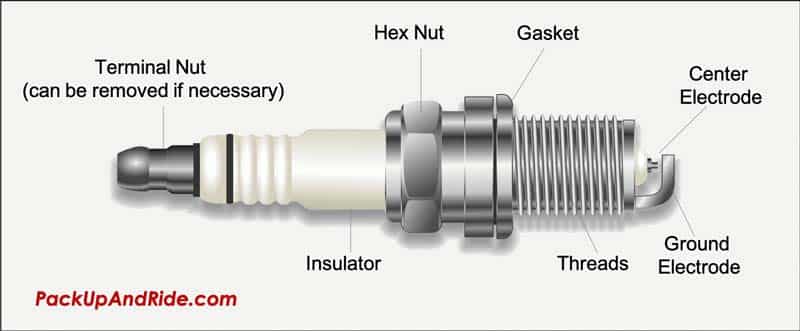
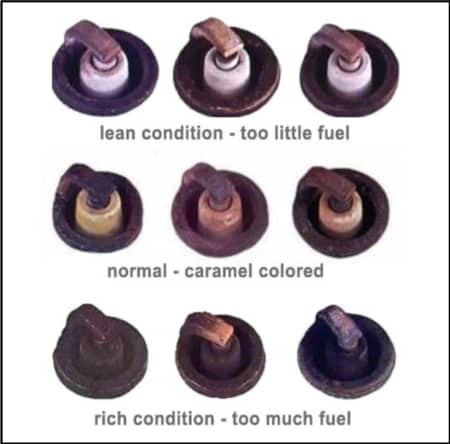
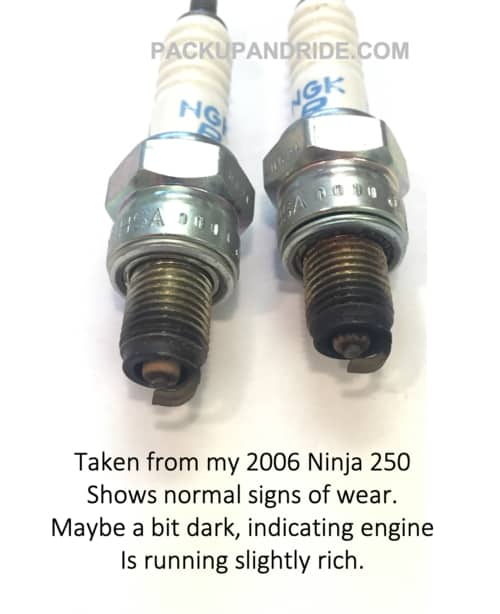
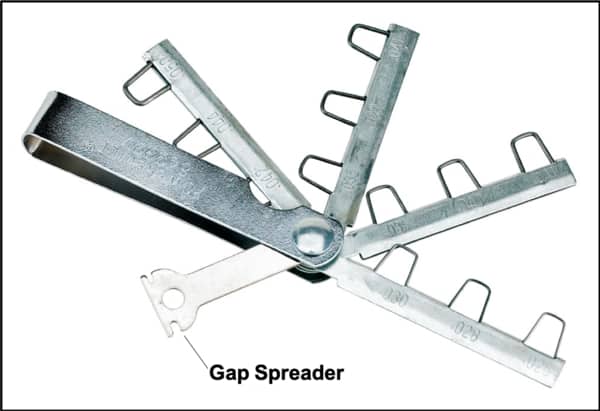
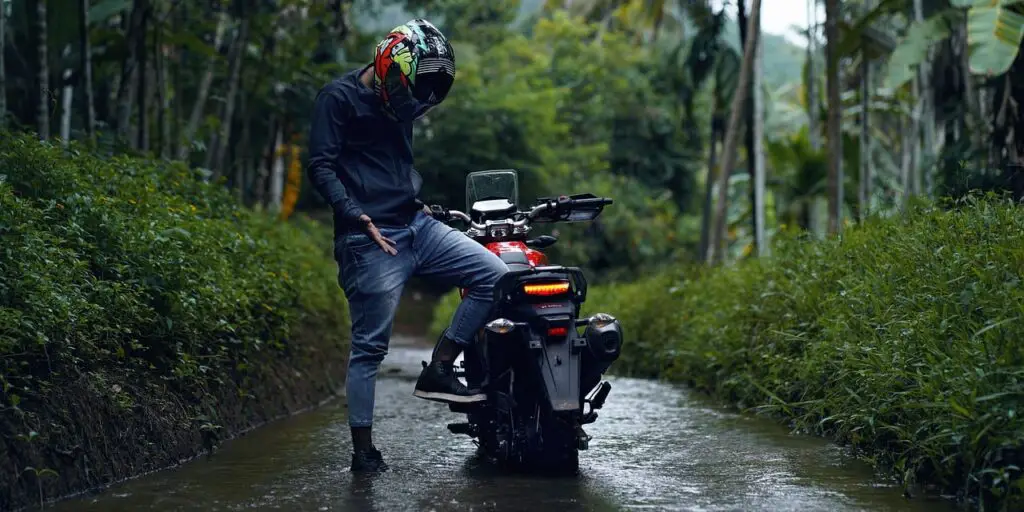
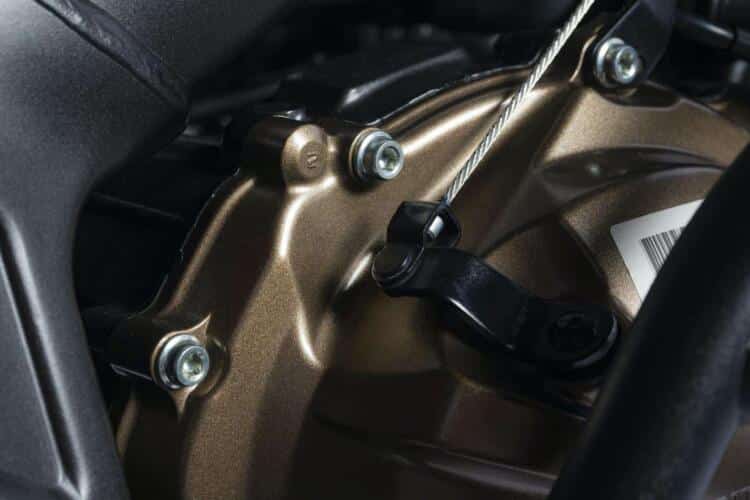
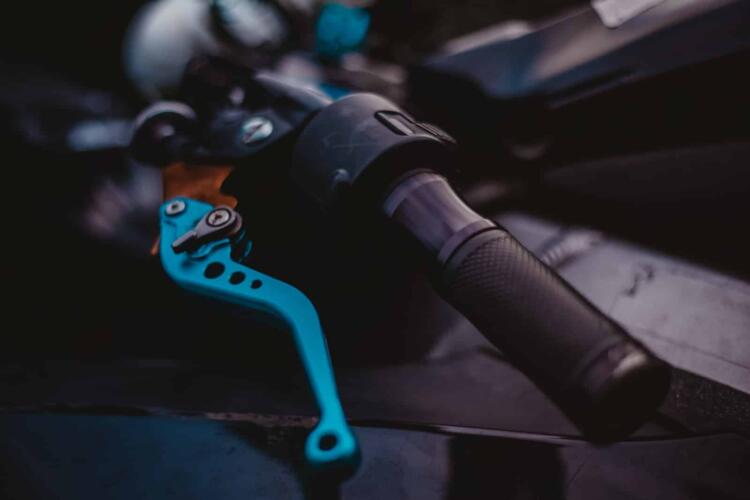
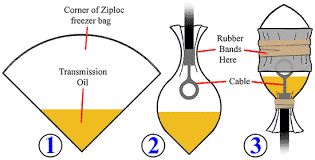
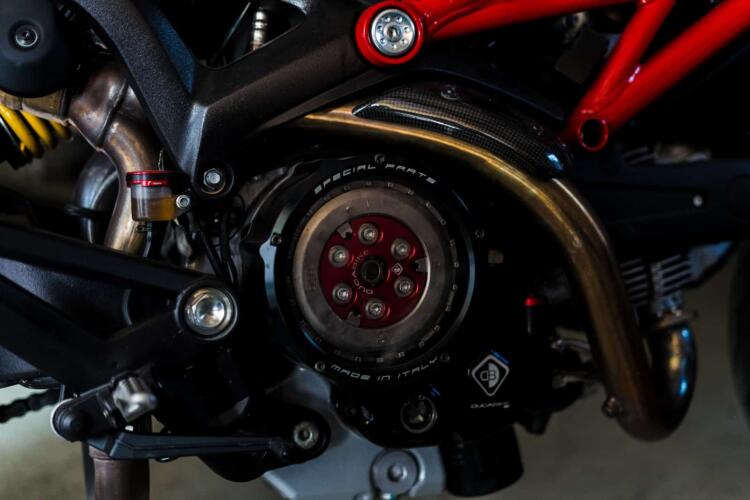
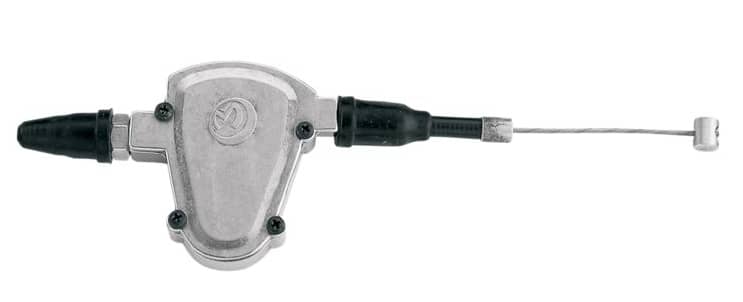
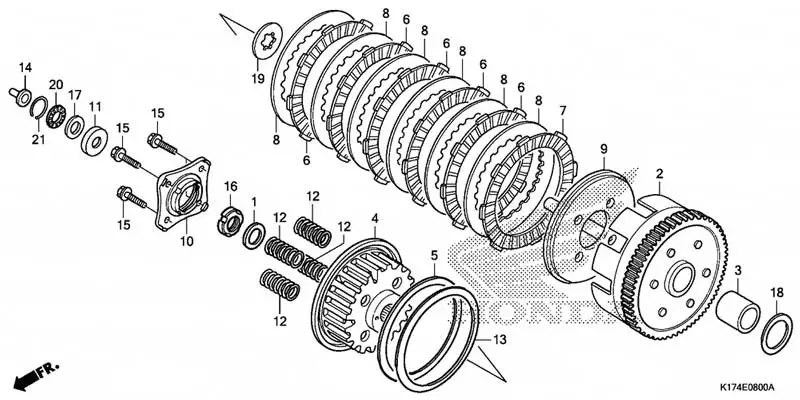
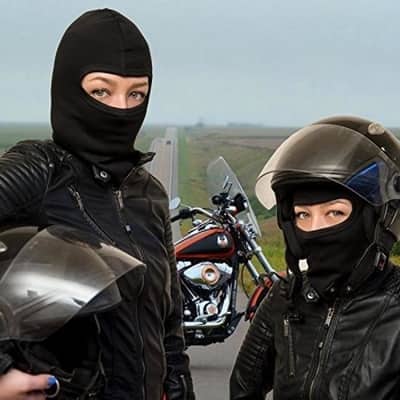
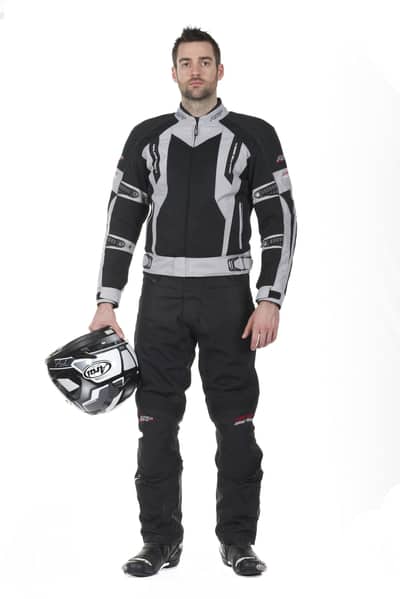
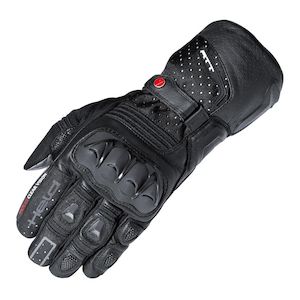
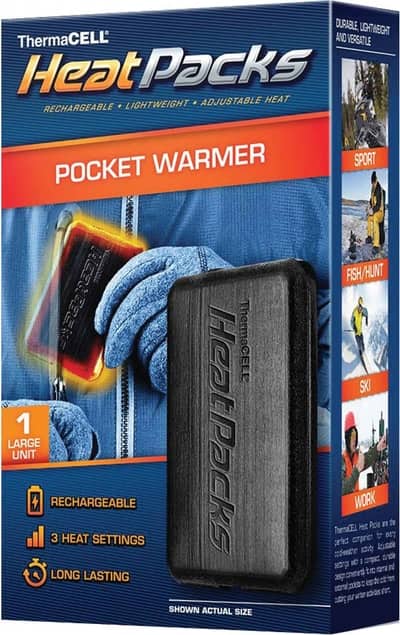
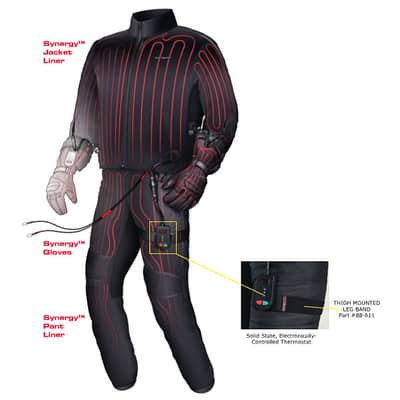
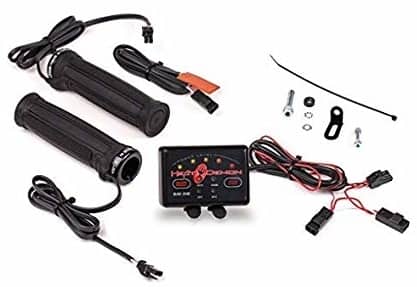
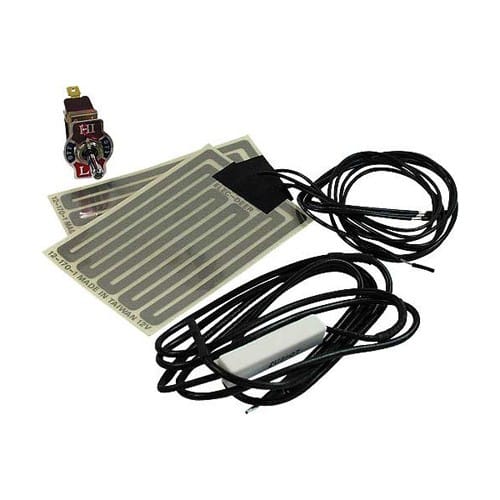
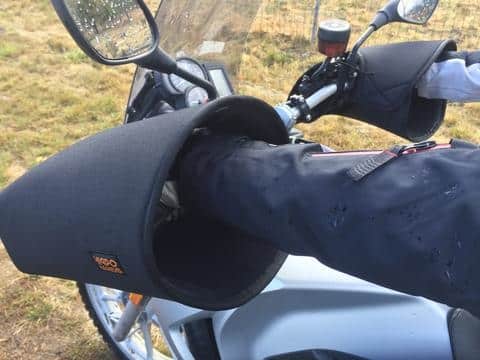
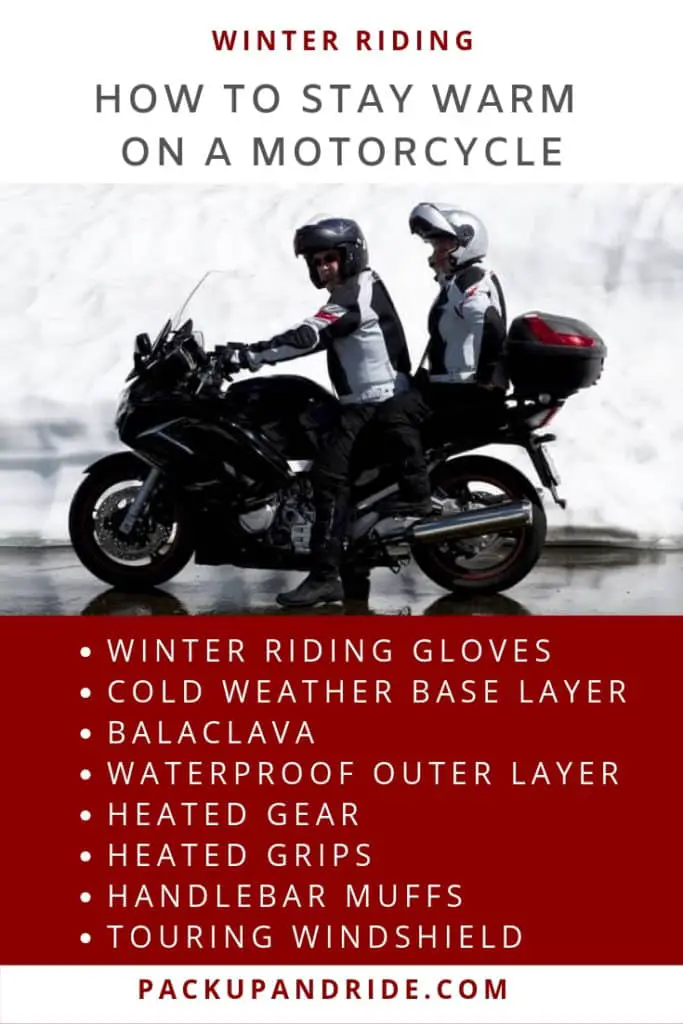

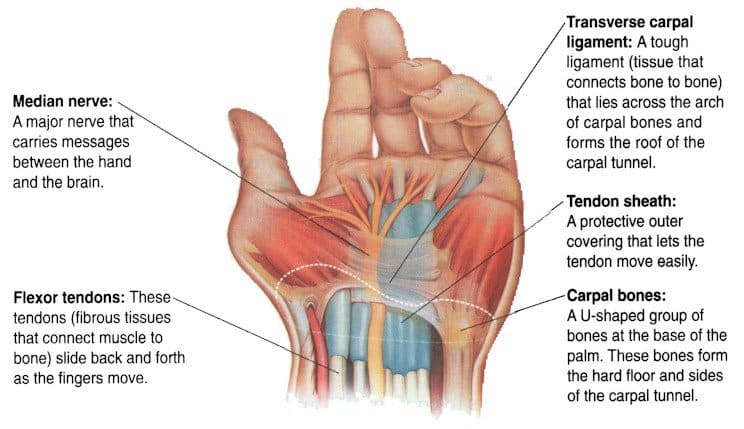
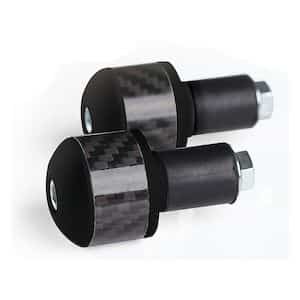
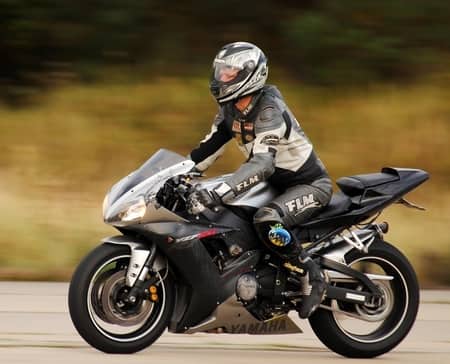
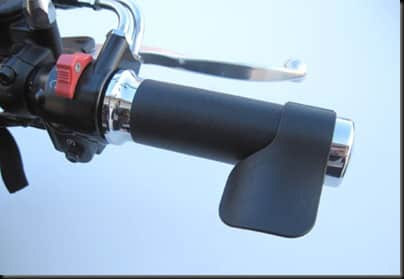
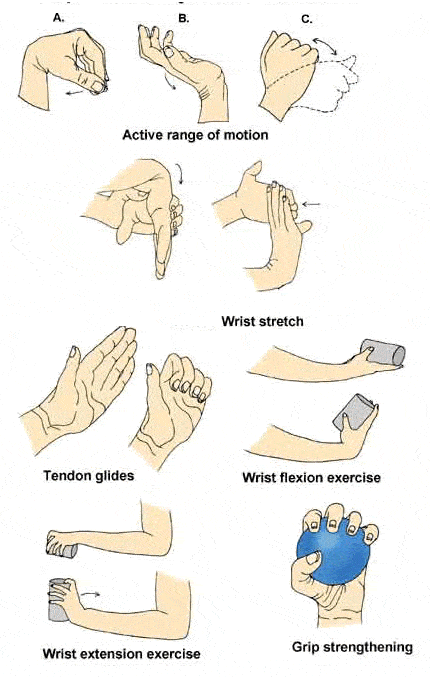
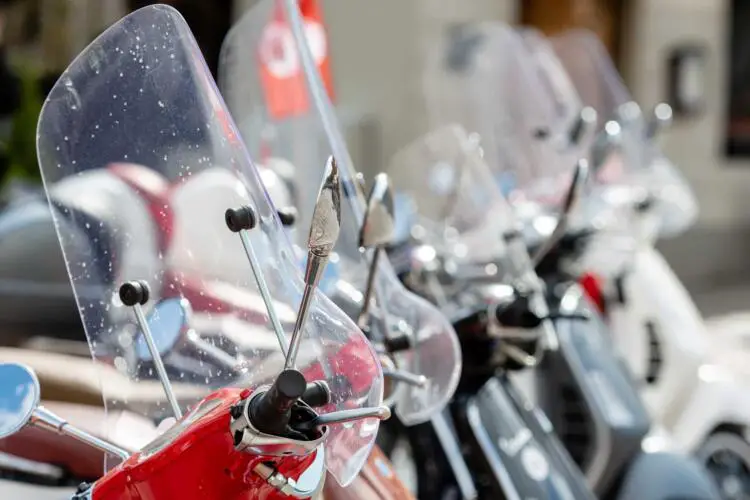
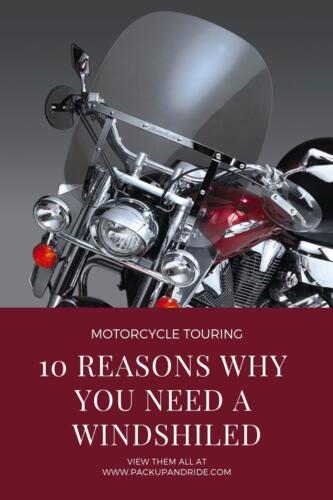
![A Motorcycle Riding Position Guide [For All Bike Styles]](https://packupandride.com/wp-content/uploads/2019/02/RedSportBikeBig-compress.jpeg)