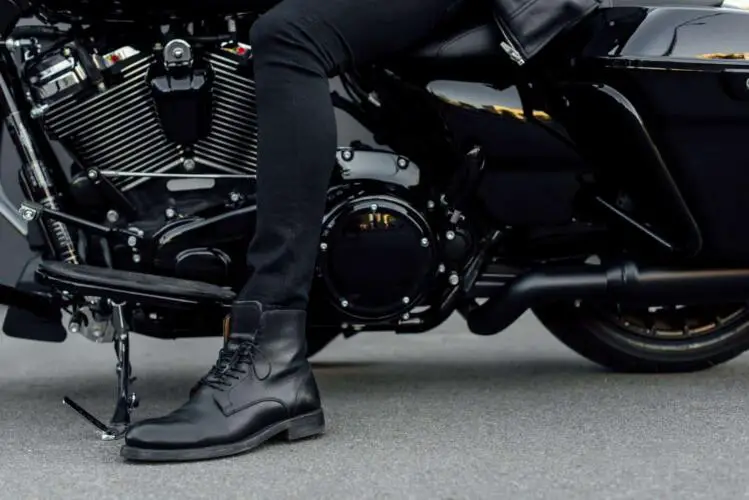
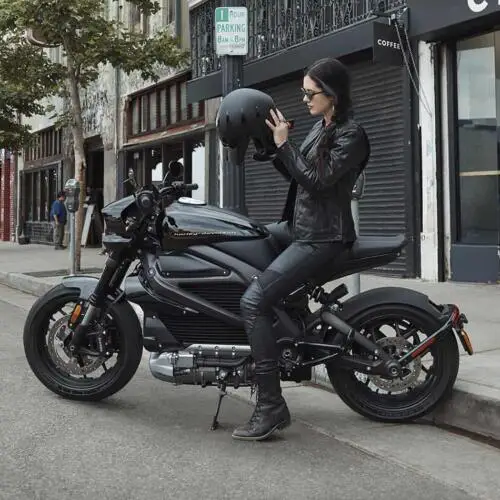
Motorcycle boots are an essential piece of gear for any motorcycle riding trip from popping out to the shops to a mountainous touring trip. Some riders believe that they are not necessary for all situations, but we disagree! Motorcycle boots protect the rider’s feet and ankles from debris on the road surface and offer protection in case of a spill or crash.
In this blog post, you will learn when it is important to ride with motorcycle boots in each different situations and terains so that you can make an informed decision about your riding gear.
Statistics about Motorcycle Footwear
Before we dive into the main reasons why we believe that motorcycle boots are an essential piece of kit for all trips, let’s go through 5 motorcycle boot statistics (because we all love stats!):
Stat 1: In a survey of motorcyclists, nearly half (48%) report never wearing motorcycle boots. 12% say they usually wear them when riding on dirt roads or trails only; another 23% typically use them for commuting and short rides. Those who wear boot are more likely to engage in offroad riding than those who don’t.
Stat 2: Motorcycle riders are six times more likely to suffer foot injuries if not wearing protective footwear, such as a properly fitting motorcycle shoe or boot.
Stat 3: Helmet-wearing motorcyclists with no foot protection had an injury rate that was fifteen times the risk of helmeted motorcyclists whose feet were protected from being injured by their footwear!
Stat 4: Motorcycle riders are six times more likely to suffer foot injuries if not wearing protective footwear, such as a properly fitting motorcycle shoe or boot.
Stat 5: 100% of people who have had a motorcycle drop on their foot without boots wish they had boots on 😉 Trust me, I know
What makes motorcycle boots better than normal shoes?
Motorcycle boots are made with a hard outer shell that can withstand the heat of the exhaust and direct contact.
They have thick soles to provide traction in wet conditions, high top shafts for protection from bugs and debris, waterproof lining to protect riders feet against moisture coming up through the pegs or boards (although water resistant shoes also do this), removable inner linings for easy on-and off convenience, Velcro straps around ankles so they don’t slide down when riding and durable rubber heel guards as well as tough toes.
Riding boots offer great flexibility because they come in both shorty styles which fit low over your calf muscles like hockey goalie pads but also regular length models that cover your entire ankle area just below the knee cap.
Motorcycle boots are also designed to protect your toes and ankles during crashes and accidents on motorcycles.
A high-quality boot will have the ability to withstand a substantial amount of impact and abrasion. The construction should be fireproof so they won’t catch on fire if you ever go down with your bike.
What to look for in motorcycle shoes?
When looking for a pair of motorcycle shoes, expect that you get what you pay for. Not all motorcycle shoes are the same. Typically buying leather with all of your gear (including your motorcycle shoes) is the way to go.
Think about the climate that you live in. You should also look for boots that offer good ventilation, if you live in warmer climates, perspiration can cause blisters and other foot problems when riding motorcycles all day long. A breathable material like leather or synthetic is more appropriate than jean fabric blends which don’t allow sweat to escape as quickly.
What are motorcycle shoes made from?
The material that motorcycle shoes are made from can be plastic, leather, nubuck, or fabric. The difference is really in the durability of the shoe and the breathability. Leather is going to offer the best protection by far but will not breathe as well as a textile or something of the sort.
Are steel-cap boots a good alternative if I don’t have motorcycle boots?
The steel-cap boots are a good alternative if you don’t have motorcycle boots. They offer protection for your feet, but will not protect the top of the foot like regular shoes do because they only extend up to about mid calf which means that anything below can be exposed with potential injury or burns from hot pipes and exhausts. They also will not offer the ankle protection that you should really have if you came off your motorcycle.
Why most people do not wear motorcycle boots:
It’s understandable that most people choose not to wear motorcycle boots. They are expensive, often heavy and bulky, difficult to walk in when they’re on your feet, uncomfortable for those with wider or narrow feet (and there is no room inside the boot for them), tricky to put on once you’ve laced up their laces all the way – and it can be a little overwhelming deciding which pair would be best suited for your needs.
Many riders find themselves wearing more comfortable footwear instead of true motorcycle shoes because they have trouble walking around after putting them on. Others don’t want the hassle of struggling into an unfamiliar shoe before going out riding. And many others still just prefer having something simple like sneakers as their go-to footwear while on a motorcycle.
Motorcycle shoes vs motorcycle boots
There are two very different types of riding footwear – boots and shoes, which means you’ll need to consider your needs when deciding what type is best for you. Sometimes people will opt for one or the other because they can’t decide between them so we’re going to go over both with our pros and cons below:
Boots Pros:
They offer more stability on foot pegs while at speed than either sneakers or flat-soled show tugs, their heeled soles keep feet away from hot exhaust pipes (or cold ones in winter), and some models come with thicker rubber that protects better against road debris and pinch points like curbs or manhole covers.
Shoes Pros:
Shoes typically offer better protection and grip on slippery surfaces like gravel or wet pavement, they’re lighter weight than boots which is good for riders who are touring long distances.
Boots Cons:
They can be difficult to walk in, especially with a lot of gear on your back (jacket, helmet), their heeled soles make them more unstable while trying to stand up from sitting position on the bike’s seat, some models have leather uppers that don’t breath well so feet sweat inside when it’s hot outside.
Shoes Con:
Shoes offer less stability at speed because there isn’t as much foot support and often times not enough traction underfoot – this makes shoes unsuitable for riding dirt bikes over rocky terrain where stopping hard necessitates doing so without sliding forward.
Are motorcycle boots necessary for a short trip to the shops? And why?
Most will tell you that Motorcycle boots should be worn, even for short trips, but most don’t do it. The truth is, most of us don’t expect that it is us that will get into a crash, but when we do, even at 20 mph, you’re going to wish you were wearing more protection on your feet.
Want to see my Recommended Motorcycle Footwear? Click Here
Adventure motorcycles are a type of motorcycle designed to handle off-road terrain. They typically have large tires, high ground clearance, and long-travel suspension for rough terrain. Adventure bikes also come with electronic rider aids like traction control and ABS. When would you use an adventure motorcycle? Adventure motorcycles are perfect for your next camping trip or overlanding expedition!
Who would ride an adventure motorcycle?
Really anyone who’s after an adventure! Adventure motorcycles are designed for off-road terrain, so they’re great for camping or overlanding. They may not be ideal if you live in a flat area and want to commute on your bike every day. But they are fantastic at exploring the wilderness.
What characterizes adventure motorcycles?
Because adventure motorcycles are designed to handle off-road terrain, they have large tires, high ground clearance, and long-travel suspension for rough terrain. These bikes typically come with footpegs instead of clip-ons, but they may also have electronic rider aids like traction control or ABS.
Is it ok to buy an adventure motorcycle for commuting?
Whist it is technically possible, you would not want to buy an adventure motorcycle for commuting. They are too heavy and have too much power to be good at that. But they’re fantastic for exploring the wilderness, so if you live in a flat area where there’s nothing to explore then it might not make sense because of all the extra weight on your bike!
How much does an adventure motorcycle cost?
Adventure motorcycles can vary in price depending on what features you want, milage & the year. For a simple model without electronic rider aids, expect to pay around $5000. If you are looking for something with more bells and whistles like ABS or traction control, the price could be up to $12000 brand new! For used adventure motorcycles cost is relatively the same as other motorcycles.
If you are on a tight budget, second-hand bikes can be cheaper. However, buying brand new will give you more warranty and the ability to customize your bike. When looking at a second-hand bike be sure to get a second opinion from a qualified mechanic.
Why should I buy an adventure motorcycle?
Adventure motorcycles come with electronic rider aids like traction control and ABS. They also have large tires, high ground clearance, and long-travel suspension to handle rough terrain! If you like to explore, you will love an adventure bike!
An adventure motorcycle is different from other motorcycles because they are designed to handle off-road terrain. They have large tires, high ground clearance, and long-travel suspension for rough terrain. Adventure bikes also typically come with electronic rider aids like traction control and ABS!
How much maintenance does an adventure motorcycle have?
Avoiding deep puddles and mud will make the bike last longer, but you should change your oil every 3000 miles!
If you’re not sure on how to change oil, there’s a handy video below.
Other maintenance that an adventure motorcycle will need is air filter cleaning and spark plug cleanings.
What is the difference between street biking and off road bikes?
Off Road bikes (including adventure motorcycles) are designed for challenging terrain like dirt roads or sand dunes. They often lack amenities that street motorcycles come with such as saddlebags, mirrors, lights or turn signals. Street Bikes on the other hand are more of what we would typically think of when picturing a “motorcycle”. They have many features not usually found on Offroad models; these include: handlebars called clip-ons instead
Do adventure motorcycles require special training?
The answer is no! As long as they have an upright position with footpegs instead of clip-ons, anyone can ride them regardless if they’ve ridden before! It’s all about exploring different terrain and seeing where it takes you!
Adventure bikes come with electronic rider aids like traction control and ABS. They also have large tires, high ground clearance, and long travel suspension to handle rough terrain! If you enjoy exploring new places then an adventure bike is perfect for you!
How are adventure motorcycle tires different from other motorcycle tires?
Adventure motorcycle tires are different to other motorcycle tires because they are meant to go off-road. adventure motorcycle tires are larger and have a higher traction coefficient than other types of tires, which can help with gripping the road surface when going through rough terrain
Do adventure motorcycles require special training?
The answer is no! As long as they have an upright position with foot pegs instead of clip-ons, anyone can ride them regardless if they’ve ridden before ! It’s all about exploring different terrain and seeing where it takes you!
What are the benefits of owning an Adventure Motorcycle/how does it feel?
Honestly, adventure motorcycles give you the confidence to explore and go a little more off-road than you would be able to with just a naked or sports motorcycle. Adventure motorcycles allow riders a feeling of freedom in their travels while still having many safety features. It’s easier than ever before to get around as well since these bikes typically offer more power than other motorsports which makes them great for commuting when gas prices rise. This type of motorcycle will suit those who want something versatile that can take them over any surface-even
Should you buy a brand new or second hand adventure motorcycle?
If you are on a tight budget, second-hand bikes can be cheaper. However, buying brand new will give you more warranty and the ability to customize your bike. When looking at a second-hand bike, be sure to get a thorough check-up before buying.
What are Adventure motorcycles are most used for?
Adventure motorcycles are most used for exploring new destinations or on unpaved roads. This type of motorcycle is also great for those who enjoy riding in the dirt and traversing rough terrain without sacrificing comfort or safety. Riding an Adventure Motorcycle will allow you to get more out of your travels while still feeling safe!
What are some challenges?
One challenge that adventure motorcyclists face is having a variety available to choose from. You can find these bikes offered by many different manufacturers, each with its own set of pros and cons so it’s important to do research before making this purchase in order to make sure you have all the information necessary when deciding which one best suits your needs.
Some things riders must consider:
Bikes come in many different shapes and sizes
Different bikes have a variety of pros and cons so it’s important to do research
Bikes may be expensive with the right options or inexpensive without all the features you want.
Adventure motorcycles vs. sport bike touring: what’re the differences?
Adventure motorcycles are different from sportbike touring in the sense that they’re designed for off-road use, whereas a sports bike is better suited to long stretches of asphalt. There are some similarities as well: both types of bikes have fuel injection and ABS brakes which makes them more reliable than older bikes. The differences really come down to engine size and weight distribution with adventure motorcycles having roughly twice the displacement of an equivalent sportsbike or tourer but also heavier weight distributions with higher ground clearance, knobby tires, taller gear ratios and lower center stands.
The advantage to using either type will depend on your destination (with mountainous regions being much more challenging for a street based motorcycle) so it’s important to think about the conditions of where you are likely to be riding the most with your motorcycle.
The ground clearance and high center stand position make adventure bikes a bad choice for riding on tarmac, where the slightest pebble can cause major problems. Adventure motorcycles are best suited to rougher terrain with knobby tires that will hold up better in dirt than their street-based counterparts’ thinner rubber.
Conclusion
Overall adventure motorcycles are for every situation, but man are they fun when you’re going off-road or on a touring ride where you’ll hit some rough terrain. Ultimately they will give you the confidence to fly over the rough trails & roads!
Have you ever considered swapping your gasoline-powered motorcycle for an eco-friendly electric one? With advancements in technology, electric motorcycles are becoming a viable and powerful alternative to their fuel-guzzling predecessors.
This blog post will guide you through the top 9 best electric motorcycles on the market, factoring in performance, price, range and style. Intrigued yet? Read on to discover how an electric motorcycle revving up could be music to your ears!
Key Takeaways
The top 9 best electric motorcycles of 2023 include the Energica Experia, Cake Kalk INK Electric Motorbike, BMW CE 04, Zero FX, Onyx RCR Electric Motorbike, Vespa Elettrica, Lightning LS-218, Arc Vector and Pursang E-Tracker.
There are affordable electric motorcycles available under $5000 like the CSC City Slicker and Ultraviolette F77.
Electric motorcycles have advantages such as potential savings on fuel costs and lower maintenance expenses. They also offer a quieter riding experience and superior performance at lower RPMs. However, they come with disadvantages such as higher upfront cost and limited range per charge.
The future of electric motorcycles is promising as more people turn to eco-friendly transportation options. Prices are becoming more competitive with technological advancements. It’s important to consider factors like range, power, charge time, weight and seat position when choosing an electric motorcycle that suits your needs.
Best Electric Motorcycles of 2023
Here are the top electric motorcycles to keep an eye on in 2023.
Energica Experia: Overall best electric motorcycle
The Energica Experia is a top pick for 2023. It stands out in the world of electric bikes. Riders love it for its power and range. The bike gives an impressive 101 horsepower. This means fast rides every time! With one charge, you can travel up to 153 miles before needing more power.
What’s cool about this bike is that it charges at Level 1, Level 2, and even Level 3 DC Quick Charge stations. Plus, the Experia is among the first electric touring bikes on sale today! It has received lots of great comments for how well it performs, how good it looks, and what it can do.
Cake Kalk INK Electric Motorbike: Best value EV motorcycle
The Cake Kalk INK Electric Motorbike shines in the world of electric motorcycles. It took home the title for best electric dirt bike at the 2022 Micromobilities World. With its clean, quiet operation and top-notch performance, it makes for a great ride.
This EV motorcycle stands out from other bikes.
You will love this motorbike if you enjoy off-road rides. It costs less than $5,000! This makes it one of the best value EV motorcycles around right now. You can easily buy this motorbike without breaking your bank account.
The Cake Kalk INK gives you an exciting ride every time you are on it. Grab yours today and join in on all the fun that comes with riding an electric motorbike!
BMW CE 04: Best premium electric motorbike
The BMW CE 04 is the top pick for a premium electric motorbike. This first-ever electric bike from BMW Motorrad shines with speed and power. Its liquid-cooled 31 kW (42 hp) electric motor can zoom over 30 mph in just over two seconds! And it’s not all about power.
With its sleek design, it stands out on the road too. The price may be high at $11,795 USD, but you get what you pay for. It is one of the best electric motorcycles of 2023 for those seeking luxury and performance rolled into one.
Zero FX: Best electric sports bike
The Zero FX is a standout electric sports bike in 2023. It offers impressive performance, connectivity, and sustainability. With its powerful motor, it can produce 46 horsepower and 78 pound-feet of torque.
This means you’ll have plenty of power for thrilling rides. The Zero FX also stands out for its long-range capability, making it suitable for both on-road and off-road adventures. Riders appreciate the reliability and durability of this bike, making it a top choice for those seeking an exhilarating electric sports bike experience.
Onyx RCR Electric Motorbike: Best electric street bike
The Onyx RCR is a top-rated electric motorbike that stands out as the best choice for street riding. With its powerful 72V motor, it offers an exhilarating and smooth ride. This high-speed cruiser has a top speed of 60 mph (96 km/h), making it perfect for urban environments.
The Onyx RCR features a 3kW continuous rear hub motor with a peak power output of 5.4 kW, providing impressive acceleration capabilities. Moreover, this electric bike offers a range of up to 75 miles (120 km), ensuring you can go on longer rides without worrying about running out of battery power.
Whether you’re commuting or exploring the city streets, the Onyx RCR delivers exceptional performance and style.
Vespa Elettrica: Best electric scooter
The Vespa Elettrica is recognized as one of the top electric scooters among the best electric motorcycles of 2023. It provides a smooth and enjoyable ride, while also being easy to recharge.
You can choose from different colors and two speed options: 45km/h and 70km/h. People appreciate how quiet this scooter is, and its sleek design makes it stand out from other models.
In fact, many consider it to be the most attractive electric scooter in the world.
Lightning LS-218: Fastest electric motorbike
The Lightning LS-218 is the fastest electric motorbike in the world. It holds the record for having a top speed of 218 mph (351 km/h). This impressive bike debuted in 2015 and boasts 244 horsepower.
Not only does it have incredible speed, but Lightning Motorcycles claims that the LS-218 outperforms any other electric motorcycle on the market. With its ability to accelerate quickly from 100-150 mph, this bike is highly regarded for its exceptional speed and performance.
Arc Vector: The most stylish electric motorcycle
The Arc Vector is known as the most stylish electric motorcycle on the market. Handcrafted in Britain, it is also the world’s most advanced fully electric bike. With a starting price of £90,000, this motorcycle features a three-piece carbon fiber box frame that houses the 399v battery pack and mountings.
It can reach an impressive top speed of 150 mph. The sleek design and cutting-edge technology make the Arc Vector a standout choice for those who prioritize style and performance in their electric motorcycles.
Pursang E-Tracker: Best electric motorcycle for off-road
The Pursang E-Tracker is the best electric motorcycle for off-road riding among the 15 best electric motorcycles of 2023. It has a stylish design and is powered by a powerful Bosch electric motor.
The E-Tracker offers a comfortable driving position that works well for both relaxed cruising and off-road adventures. With its strong acceleration and good range, it’s an excellent choice for off-road enthusiasts and motorcycle lovers alike.
Affordable Electric Motorcycles Under $5000
Exploring affordable electric motorcycle options might seem a bit daunting, but it doesn’t need to be. Here’s a list of some of the best electric motorcycles you can find for under $5000:
1. CSC City Slicker: Priced at just $2,795, this bike offers one of the best value-for-money propositions in the affordable electric motorcycle market. It’s a great choice for those looking for an affordable commuter electric motorcycle.
2. Ultraviolette F77: This bike is not just affordable but also packs a punch with its performance. Known for its speed and agility, the F77 is the perfect electric motorcycle for those who love to ride fast.
3. Zero S ZF7.2: Although it’s on the higher end of our budget, Zero Motorcycles offers this model, which is known for its power, speed, and affordable price tag.
4. Taotao ATE-501: This electric scooter is not only budget-friendly but also a comfortable ride for those who prefer laid-back cruising in the city.
5. Razor MX650 Rocket: Perfect for adults wanting a street-legal electric motorcycle, this bike by Razor provides an excellent blend of affordability and practicality.
6. Kymco Agility 50: A perfect blend of comfort and convenience, this scooter offers a practical solution for city dwellers looking for an affordable and efficient means of transportation.
7. GenZe 2.0: Known for its customizable storage space and connected app, GenZe offers this affordable and practical electric scooter that’s great for urban commuting.
These bikes are not only affordable but also offer great performance, proving that you don’t need to break the bank to join the electric motorcycle revolution.
Advantages and Disadvantages of Electric Motorcycles
Electric motorcycles come with an array of benefits and drawbacks that are crucial for potential buyers to consider prior to making a purchase.
Advantages:
1. Potential Savings: The cost of refueling an electric motorcycle with electricity to travel 100 miles is approximately $2, a significant reduction from the $8.75 cost of gasoline for a similar distance.
2. Lower Maintenance Expenses: Electric motorcycles generally have fewer moving parts than their gasoline counterparts, resulting in less wear and tear and more savings in the long run.
3. Quieter Riding Experience: Electric motorcycles deliver a smooth, silent ride, setting them apart from the traditional, noisy gas-powered motorcycles.
4. Superior Performance: Electric motorcycles excel at lower RPMs, providing an immediate torque that results in impressive acceleration.
5. Long-term Affordability: Depending on one’s commute, an electric motorcycle can result in substantial savings over time, despite the initial purchase cost.
Disadvantages:
1. Higher Upfront Cost: Electric motorcycles often come with a higher purchase price compared to gas motorcycles, which could deter potential buyers.
2. Electricity Consumption: Although economical in refueling, electric motorcycles can lead to increased electricity bills due to frequent charging.
3. Limited Range: Typically, electric motorcycles provide a shorter range per charge, putting a cap on the distance one can travel without recharging.
4. Charging Time: Unlike refueling a gas motorcycle, charging an electric one can take several hours, which could be inconvenient for some riders.
The Future of Electric Motorcycles: Future or Fad?
The future of electric motorcycles looks bright. With advancements in technology and growing concerns about environmental impact, more and more people are turning to electric vehicles.
Electric motorcycles offer numerous advantages over traditional gas-powered bikes. They are quieter, produce zero emissions, and require less maintenance. Additionally, electric motorcycles provide instant torque, delivering a thrilling riding experience.
Electric motorcycles are not just a passing fad; they represent the future of transportation. As society becomes more conscious of its carbon footprint, electric vehicles will continue to gain popularity.
According to Erik Buell, an industry expert, the future of mopeds and motorcycles is electric. This shift towards electrification aligns with the global push for sustainability.
Furthermore, there is a misconception that electric motorcycles are expensive compared to their gas-powered counterparts. However, this is not true anymore as prices have become more competitive with technological advancements and increased market demand.
In conclusion, the future of electric motorcycles is promising. With their numerous benefits and increasing affordability, it’s clear that they are here to stay. As technology continues to improve and infrastructure develops further for charging stations worldwide improves, we can expect even greater adoption of these eco-friendly modes of transportation.
How to Choose the Best Electric Motorcycle for You
Consider key factors such as range, power, charge time, weight, and seat position when selecting the ideal electric motorcycle for your needs.
Range
Range is an important consideration when choosing an electric motorcycle. It refers to how far the bike can go on a single charge. As a rider, you need to think about your daily commuting distance and the availability of charging stations in your area.
If you have a short commute and charging facilities nearby, a motorcycle with a shorter range may be sufficient for your needs. However, if you plan on taking longer trips or if charging stations are not readily available, you’ll want to look for a bike with a longer range.
Some electric motorcycles even offer a range extender feature that allows you to go further without recharging. For example, the Damon HyperSport Premier is known for its long-range capabilities and could be an excellent choice if you’re looking for extended riding adventures without worrying about running out of power.
Power, Torque, and Speed
Power, torque, and speed are three important factors to consider when choosing an electric motorcycle. Power is measured in horsepower and determines how much oomph the motorbike has.
The higher the horsepower number, the more power it has. Torque, on the other hand, refers to the twisting force that makes the motorcycle accelerate quickly. It’s like a turbo boost for your ride! Lastly, speed is all about how fast the motorcycle can go.
When choosing an electric motorbike, it’s essential to check its torque because it directly affects its power and acceleration capabilities. So if you’re looking for a thrilling ride with quick acceleration and high speeds, considering these factors is a must!
Charge Time
The charging time of electric motorcycles can vary depending on the model and charging method. Some electric motorcycles offer fast-charging capabilities, allowing you to recharge your battery quickly.
However, it’s important to consider the availability of charging stations in your area. If you have easy access to charging stations, this won’t be a major concern. It is also recommended to look for electric motorcycles that offer versatile charging options, such as compatibility with different types of chargers or the ability to charge at home using a regular power outlet.
With advancements in battery technology, many electric motorcycles now have impressive charging times and performance capabilities, making them a convenient choice for riders who want quick and efficient recharging options.
Weight, Seat Height, and Position
Weight, seat height, and position are important considerations when choosing an electric motorcycle. The size and weight of the bike can affect how it handles on the road. A smaller, lighter bike may be easier to maneuver in traffic or tight spaces.
Seat height is also crucial because it affects your posture and reach to the handlebars, pedals, and ground. Having adjustable seat height options can provide flexibility for riders of different heights.
It’s also essential to consider the position on the bike, including handlebar position and footpeg placement, for optimal comfort and control while riding.
Consider licensing requirements
To enjoy the thrill of riding an electric motorcycle, it’s important to be aware of the licensing requirements. In order to ride any electric motorcycle, you will need a valid motorcycle license.
This means you’ll have to pass both a written and practical exam specific to motorcycles. However, if you’re interested in electric bikes, which are more akin to bicycles with added power assistance, then good news – they generally do not require a license to ride.
So, depending on your preference and experience level, keep these licensing requirements in mind when choosing the best electric two-wheeler for you. It’s always better to be safe and legal while cruising on the roads or exploring off-road trails!
Methodology: How the Best Electric Motorcycles Were Selected
To select the best electric motorcycles, we considered several factors. We looked at performance, including power, torque, and speed. We also considered range and charge time to ensure practicality for everyday use.
Weight, seat height, and riding position were important for comfort and accessibility. And we took into account licensing requirements to make sure the motorcycles were suitable for different riders.
Additionally, we researched customer reviews and expert opinions to gauge overall satisfaction with each model. By considering these factors, we identified the top electric motorcycles that offer a combination of quality, performance, and value-for-money.
Features to Consider When Buying an Electric Motorcycle
When choosing an electric motorcycle, it’s important to consider the following features:
Battery Mileage: Check the manufacturer’s specifications for the estimated distance the bike can travel on a full charge. This will determine how far you can ride without needing to recharge.
Charging Time: Find out how long it takes to fully charge the battery. This will affect your riding schedule and convenience.
Power and Torque: Consider the power output and torque of the electric motor. Higher power and torque usually mean better acceleration and performance.
Range Anxiety: Take into account your typical riding habits and the availability of charging stations. Ensure that the electric motorcycle you choose has sufficient range for your needs.
Handling and Stability: Evaluate factors like weight, seat height, and riding position. These aspects will affect your comfort and control while riding.
Licensing Requirements: Be aware of any specific licensing requirements for electric motorcycles in your area. Make sure you comply with these regulations before making a purchase.
Conclusion
In conclusion, there are many amazing electric motorcycles available for purchase. From the Energica Experia as the overall best, to the Lightning LS-218 as the fastest, and the Pursang E-Tracker for off-road adventures.
Whether you’re looking for a stylish street bike or a reliable scooter, there’s an electric motorcycle out there for you. Consider your needs and preferences when choosing the best one that fits your budget.
Get ready to hit the road on your eco-friendly and exciting ride!
FAQs
1. What are some of the best electric motorbikes I can buy?
Some of the best electric motorbikes include the Harley Davidson Livewire, Sondors Metacycle, and Lightning LS 218.
2. Can these electric motorcycles go off-road?
Yes! Some EV bikes even have specific ride modes for trail riding on off-road trails.
3. How fast can an electric sport bike go?
Most bikes like the Harley Davidson Livewire offer impressive range and power delivery with high top speeds on highway rides. The claimed top speed may vary based on each model’s battery range, weight, and other factors.
4. Are there any city-friendly electric commuter bike options?
Certainly! Full size motorcycle models like LiveWire S2 Del Mar show impressive real-world range in city conditions apart from having a massive range that makes them ideal for urban commutes.
5. What is traction control and regenerative braking in an EV bike?
In an EV bike, traction control helps maintain grip especially at high speeds or rough surfaces while regenerative braking recharges your battery when you use brakes to increase its overall range.
6. Is it hard to handle these two-wheel electric vehicles?
No! Most Electric Motorcycles are built on a same platform as regular gasoline motorcycles but equipped with features like reverse gear for easy handling; hence they give similar performance giving riders an amazing experience.
So can you be too short to ride a motorcycle? No, you cannot be too short to ride a motorcycle. You just need to figure out what is safe and comfortable for you while you are mounting, dismounting and riding your bike.
Many motorbikes have seats with heights taller than their rider’s inseam, especially off-road bikes. As long as you are able to and balance yourself along with the weight of the bike on one foot, you are ready to ride.
Different bikes fit distinct people in distinct ways. For instance, the seating position and footpeg placement vary considerably among riders. Your general strength and internal leg measurements are vital. Short men usually have more convenience than petite women as they are substantially stronger. Riders can always make up for what they lack in their height with planning, skill, and of course, time. Getting the latter straight can even make you comfortably ride a bike that you thought you could never sit on without support. Isn’t that amazing? Well, but it is true. A bike that fits one rider might not be a great choice for someone else of similar height.
Things to Consider If You Are A Short Rider
If you are someone who has a fetish for bikes, but is having difficulty in choosing the perfect frame due to short height, here are some things that you might consider while purchasing a bike:
1. Ride Bikes Which Make You Happy
When choosing a bike, there might be a thousand things that cross your mind before you make the final decision. You might get driven by a bike’s eccentric look or at times by peer pressure. However, irrespective of the kind of motorbike you buy, make sure it makes you happy every time you ride. If you do not love your bike and avoid practicing, it is definitely a red flag and you must reconsider your decision.
2. Choose Tall and Light Over Low and Heavy
Now, if you are aspiring to ride a heavier, taller bike in the future, it is recommended that you start with a taller and lighter option. Forcing yourself to get used to a bike you won’t be able to flat foot is not a great idea. Begin by training yourself to land on halt on the left foot initially. Getting used to flat footing can be dangerous because later it can be difficult for you to practice touching just the balls of your feet to touch the ground. You will end up relying on your feet a lot more as opposed to your skills. When you cannot use two flat feet to enhance stability, you have to make up with your skills as a rider.
3. Practice Your Braking Skills
Practice and perfect your braking skills. The better you are able to brake, the easier it will get for you to handle the 400 lbs you are riding. Try putting down your left foot first and place the right foot on your rear brake till you accelerate. There might be chances that you do not need the rear brake to stop your bike as many motorbikes have implausible stopping power in the front. However, to smoothen and add finesse to your braking, you might need to add a little rear brake to maintain your stability. Ever dropped your bike while making a stop? It might be because you did not make use of the rear brake and release it before the bike came to a stop.
Top Tips for Short Riders
Your height should never be a problem for you to ride your favourite bike. But, here are a few tips that can make bike riding a cakewalk for you:
1. Wear Quality Boots
Having some extra bit of traction is important, especially if you are a little short on height and have difficulty flat-footing with both your feet. Thus, it is essential that you invest in some great boots for biking. A good pair of boots can infuse a great deal of confidence in you. Riding a bike has a lot to do with your mind and will. So, getting that extra boost of confidence is highly beneficial. Normal boots do not have as much traction as biking boots. The market is full of great options and choosing a purpose-built boot will offer more traction and stability.
2. Purchase A Lower Seat Option
Look for a lower seat option if available. While you will get some options in the form of factory accessories offered by the producers, in other cases, there are several aftermarket suppliers. You can also get your seats customized by professional upholsterers who will reduce some of the foam within it and fill it with 3D, gel, or memory foam. While your seats will get thinner, their comfort will remain intact.
3. Focus on Skill Building
One thing that you need to know is money that you spend on enhancing your skills is always beneficial as opposed to the amount of money you spend on altering bike parts. So, if you are looking for ways to compensate for your short height, it is best that you focus on perfecting your riding skills. Try braking smoothly and perfect your clutch control and throttle time. Get some extra awareness of where you are stopping or parking and practice avoiding an uneven or inclined pavement. Enhancing your skills will immensely improve your ride experience.
4. Opt for Low Bikes With Narrow Seats
A low seat is not enough to offer a comfortable ride. Look for bikes that have a narrower build to help keep your legs closer together and give you a better ground reach. You can test the bikes when you purchase them from the dealership by sitting on them. Not all bikes will give you the same reach due to their variations in shape. But you can always pick one that gives the most comfort.
5. Be Patient and Practice
If you do not make time to practice riding on a daily basis, or more than often, you will make no progress when it comes to riding taller bikes and improving your techniques. Riding a bike is a lot more than being able to keep your bike upright. The more you practice, the better you get. You might find it surprising, but you can get better than any person who is taller. A taller person does not necessarily have better skills than you. By practicing you do not have to practice three to four hours each day. A maximum of 15 – 20 minutes for 5 days a week is enough to perfect your skills.
The Wrap Up
Riding motorbikes can be tricky if you are not able to put both your feet down and touch the ground. However, mastering your riding skills can help you overcome a lot of difficulties that are caused due to the lack of height. Now that you have some insight into ways you can enjoy your ride despite being short, it is time you begin implementing them today.
Walk into any motorcycle store and pick up your size in a motorcycle jacket, guaranteed it’s going to be tight. But should you just accept that tight is normal when it comes to motorcycle jackets or opt for a larger size?
When it comes to making sure that your motorcycle jacket is the right size, make sure your motorcycle jacket is tight enough to hold your armor in the right places, whilst still feeling comfortable, not constricting or restricting in any way.
How do you find the perfect-sized motorcycle jacket?
Finding the perfect size motorcycle jacket can take trying on different brands, seasons (summer and winter gear), and materials. It is important to also mention that different styles of jackets will fit differently too. let’s talk about what you should avoid.
Some people will wear a motorcycle jacket that is too big for them to fit their armor in the right places, this can be dangerous and uncomfortable as well. Other times they are wearing a motorcycle jacket that is so tight it feels constricting or restricting, which might cause some discomfort and lack of mobility. Of course, if you are a tall or short rider this may change how you look for the perfect-sized motorcycle jacket.
Lastly, it is important to mention that not all motorcycle jackets will fit the same and different brands or styles might have a different feel on your body.
What is a Motorcycle Jacket used for?
I know this might seem obvious but I think it’s worth mentioning here because too many people buy gear on stylish choices rather than safety. Motorcycle jackets are protective gear for your upper body that’s designed to protect you from injuries caused by falls, collisions, and other accidents. Motorcycle jackets include armor built into the jacket or placed in pockets. The material of motorcycle jackets is drag resistant and designed to prevent road rash if you fell.
Like any piece of gear, it’s only as good as how well you use it, and having the wrong size motorcycle jacket is like wearing your helmet on your foot.
It just won’t help with a head injury.
With this in mind, it is essential that you find the right size motorcycle jacket otherwise you are not protecting yourself on the ride.
Why should a motorcycle jacket be tight-fitting?
Motorcycle jackets are made to be tight fitting. This is because they need to protect you in the event of a crash, and there are two ways it does this: The first is my not being so lose that it gets caught on a slide on the pavement and the second is to ensure that your armor in your motorcycle jacket all holds to the right areas in the occurrence of a crash.
Does not mean that motorcycle jackets should fit tightly everywhere?
A good motorcycle jacket will be tight in the areas it needs to be tight in, to hold in armour and make sure that nothing will get caught; yet should also leave enough stretch, movement and room to not restrict your movement, or breathing when you are riding. You also shouldn’t feel very much restriction around your chest area and you shouldn’t feel a tug when you lift your hands up as if you were riding.
What to look for when fitting in a motorcycle jacket?
Shoulders should be snug and not have any bunching in the front or back, but they should accommodate movement.
Chest: the chest should be tight enough that it will not tug when you’re moving your arms around, but it shouldn’t restrict breathing.
Waist: there should not be any bunching in the back of the jacket.”
Raise your hands in the air as if you were riding, and the jacket shouldn’t restrict movement
How do leather motorcycle jackets fit?
Leather motorcycle jackets typically stretch out over time, and should be fitted snugly at first.
How do textile motorcycle jackets fit?
Textile motorcycle jacket often have stretchy material on the sides to accommodate movement of your arms and can also produce more airflow than leather does. But it is important to remember that the textile won’t stretch.
Some tips for how you can tell if your jacket fits properly:
Does the length of the sleeve hit at about mid-bicep?
Is there a little bit of room around the waistline?
Are the armholes not too tight, but not so big you feel like your arms can’t move freely either?
Does it go down past mid thigh or is it just at your belly button line?
If you answered yes to all these questions then congratulations, you have found a motorcycle jacket that will fit your body and personal style.
If the answer is no to any of these questions then it’s time to go shopping for a different size or another brand! It can be difficult trying on several jackets in one day so if possible try them out at home before investing in one.
So you’re all green to motorcycles, you’ve just got your new bike and you remember that your choke is needed to start your motorcycle but do you leave your choke on while riding? The answer is no, it is NOT OK to ride your motorcycle with the choke on. Whilst your motorcycle might technically run with the choke on, you should not do so.
In this article, we will run through everything there is to know about riding a motorcycle with the choke on, what happens if you do if it is harmful to your motorcycle, and if there are any certain circumstances in which you should ride your bike with the choke on.
What is a motorcycle choke?
A motorcycle choke changes the air fuel mixture to help start a motorcycle engine. It works in the same way as a car’s choke does. It’s designed to make it easier for your bike to start when there is less oxygen in the air – something that can happen during cold weather or high altitude riding. The ability to change the fuel supply to air ratio inside your engine will greatly assist in starting your bike.
The choke is usually located on the handlebars, besides your clutch hand. Sometimes they can be found on the left of the petrol tank just where it meets the bars, but more often than not they are situated on the right side so you can reach them with your left hand.
A motorcycle choke basically allows a richer mixture of fuel and air into your engine when you pull the lever. This contains more petrol than the air you would breathe on a cold day, so your bike is more likely to start the first time.
When you start a bike’s cold engine with a choke fitted, it will take longer for the engine to fire up. This takes a little bit to get the air fuel mixture correct.
How to start a motorcycle with a choke?
The procedure for starting a motorcycle with a choke is simple enough. Follow these steps:
Switch on your bike’s choke and wait until the engine warms up.
Push down the kick-start lever and turn over your engine without using the starter button or electric start just yet.
Now that you have primed the carburetor, switch off the choke and you’re ready to ride.
What to do if my motorcycle engine only runs on choke?
If you find your bike stalls as soon as you release the choke, this could indicate a few things. The first is that it’s time to replace your motorcycle’s carburetor. Another reason for stalling when you take away the choke is that the jetting in your fuel injection system isn’t working right. If you’ve just fitted a new exhaust system, you may need to check the backpressure.
Another thing that could stop your engine from running well when it’s cold is a dirty air filter. If this is blocked, even with fresh petrol in the tank, your bike will suffer because there isn’t enough air getting through to work properly. Make sure your air filter is clean and your fuel tank isn’t running low to get the engine started.
Why it is best not to ride with the choke on?
The main reason that we advise not riding with the choke on is that it can be harmful to your motorcycle. Whilst driving a vehicle you need air and fuel in order for the engine to function, when you’re riding with the choke on there will be an excess of fuel which means that there will also have too much air.
The result of this excess in air and fuel is that the engine will be over-fueling because there have been mixed together. The air fuel mixture is really important when getting the best performance out of your engine. Rich fuel mixture is usually a little optimal.
Overfilling the fuel mixure in comparison to air can cause a variety of problems for your bike, from it running hotter than usual to the pistons being damaged by excessive heat through misfires. This is not simply having more fuel, but to do with the ratio of fuel air mixture.
In addition to this, if you ride your bike choke on and you happen to stall the motorcycle, it can be difficult for your bike to start again. If this happens then make sure that you turn off the main switch before trying to restart as this will help preserve fuel in your tank without affecting airflow.
Removing the Choke: How long should I wait?
The amount of time you have to wait is different for each motorcycle, but it should be around three minutes to go from a cold engine to warm. After the engine warms up you’ll be able to ride properly.
In many cases, the choke will take a little bit longer than that so if your bike still isn’t starting then try turning off the main switch and waiting another minute before hitting on again. Once you can get your engine running, it will be a lot easier to ride your motorcycle.
If you have trouble starting the bike with a cold engine then make sure that you keep an eye on how long the engine is running before taking off as this can wear down your battery or cause other problems with your vehicle’s electrical system.
What Happens If You Do Ride Your Bike With Choke On?
If you ride with the choke on, it will make your motorcycle run very poorly and not start quickly. The problem is that gas can’t enter the engine as freely because of how tight or restricted the air intake becomes when the throttle is cut off during a cold start-up. This means less fuel gets to pass through so there’s more chance of fuel starvation.
Can I turn off the choke while riding my motorcycle?
It is not advised to turn off the choke while you’re riding your motorcycle, as it could cause a dangerous engine stall. The best thing to do if you realize that you’ve left on the chock is pulled over, turn off the choke and stop for five minutes before continuing with your journey so that enough time has passed for the engine temperature to increase.
If this doesn’t work, try turning down the throttle or revving up the engine till it reaches operating temperature again but don’t forget to use care when doing so!
Is it harmful to my motorcycle to ride with the choke on?
Riding with the choke on will cause fuel starvation and it can be harmful to your motorcycle. The best thing to do if you realize that you’ve left the choke on is pull over, turn off the chock and stop for five minutes before continuing with your journey so that enough time has passed for the engine temperature to increase.
If this doesn’t work, try turning down the throttle or revving up the engine till it reaches operating temperature again but don’t forget to use care when doing so!
After the engine warms up, riding should only be done with the choke off. Riding all the time with the motorcycle choke on will damage your spark plugs. Just don’t do it. A motorcycle choke is made for starting a bike, not riding it.
When is it better to ride with the choke on?
The only time it is safe to ride with the choke on, and should be considered an emergency measure if you are in a tight spot, is when your motorcycle has run out of fuel. If this happens then turn the choke all the way up so that there is no more air passing through and put as much petrol into your tank as possible before turning off the engine. This will force whatever remaining gas inside to combust – but don’t forget to use care when doing so!
Do all motorcycles have a choke?
No, not all motorcycles have a choke, some bikes can warm a cold engine without a choke. If you’re riding an older model however then it is possible that the choke might be there but will just be set to ‘on’ by default so it can’t easily be turned off and could cause problems if disabled.
Newer models, are usually designed with better fuel-saving features, such as Electronic Fuel Injection (used in every fuel injected motorcycle), that allow for an easy startup without using the choke as often. Most fuel injected bikes do not have a mechanical choke either.
You’ve got a long motorcycle touring trip planned out, a trip of a lifetime and you’re thinking 🤔 I wonder if the motorcycle’s come with a throttle lock system to help give your hand relief for those long stretches of road.
So, a motorcycle cruise control system is seldom pre-installed because often a cruise control unit is a matter of luxury. Most motorcycles do not have this unit, however, some specific touring motorcycles do come with this function. However even those who offer it, you might not want to use it.
There are different motorcycle throttle lock companies like Atlas Throttle Lock that have electronic cruise control, brakeaway motorcycle cruise control, manual lever, front brake lever, bar end weight, throttle control, throttle open system, throttle grip, throttle forward, throttle tube, throttle position, and throttle housing systems. Kaoko Throttle Lock has similar products and services to add cruise control for enhancing motorcycle engine speed. Omni Cruise and Go Cruise are other companies apart from Atlas Throttle that offers other throttle locks for different motorcycle models like Honda, Suzuki, Harley Davidson, and more.
In this blog post, we will explore why most motorcyclists choose not to use cruise control and what if any of the benefits it would offer to motorcycle.
What percentage of motorcycles offer Throtte Lock?
It is hard to tell for certain how many motorcycles offer have throttle locks, but most estimates place the number somewhere between 30% and 45%. One of those reasons for this lack may be that motorcycles are often designed with a specific need in mind. For instance, touring bikes are more likely to have this unit because they can cover long distances without stopping or slowing down.
Why don’t most motorcycle riders use or care about Throttle Lock?
The main reason that most motorcyclists do not use or want to use a throttle lock is because of the way it affects motorcycle riding and safety, as well as the experience of riding a bike. For one thing, using this function would limit your ability to accelerate going up incidences of hills.
Furthermore, this unit is not compatible with braking or pulling the clutch in a manual transmission motorcycle. In fact, according to riders who have experimented with this feature on their bikes and found that it led them into accidents due to how they were unable to brake as expected when coming off of an incline because they had been relying on the motorcycle throttle lock system to do the heavy lifting for them.
As well, one of the main attractions that many riders enjoy about riding motorcycles is feeling in tune with their bike and its surroundings while out on a ride. Using this feature would remove some of these sensations from the experience as they rely solely on it rather than trusting themselves and being aware of their surroundings.
But I really want cruise control. What are my options?
If you really feel like you need cruise control, you’ve got two options; get it installed on your current motorcycle or buy a new bike with the throttle lock system.
Buying a new motorcycle with cruise control
But if you insist on buying a touring motorcycle with cruise control there are a few options available for you including the KTM 1290 Super Adventure and BMW R 1200 GS but it would be wise to do your research before settling on a motorcycle that has cruise control given how controversial they can be.
Installing cruise control on your current motorcycle
Cruise control can be installed on any motorcycle, but it would not make sense if you have a manual transmission as the rider will need to shift gears manually. In addition, cruise control could interfere with safety features such as ABS and TC (Traction Control). So be careful when choosing your motorcycle for installing this unit.
Is it expensive to install cruise control on my motorcycle?
It is not expensive to install cruise control on your motorcycle. The cost of the installation will depend largely on how much custom work needs to be done with respect to mounting points for the throttle and brake levers, as well as wiring harnesses that need to be modified or replaced. A typical installation usually costs between $600-1500 depending upon what needs to be changed in order for it to work properly (mounting point modifications, etc.).
How does cruise control work on a motorcycle? Is it the same as a car?
Cruise control on a motorcycle is different than in a car because the rider has more direct input to how it operates. This feature can be set by using an electronic device that plugs into the bike’s standard OBD-II port which then communicates with other aspects of its electronics such as throttle and gearbox pressure sensor, engine RPM (from crank position sensors), or brake force from ABS systems and others.
Conclusion
In summary, whilst some motorcycles may have cruise control as an option, it is not a good idea. The installation can be very expensive and the safety features of a motorcycle such as ABS will be compromised. I think at a fundamental level, we need to understand that motorcycles and cars are just different vehicles and should be treated as such. We shouldn’t be trying to add in-car features into a motorcycle. Think of airbags, on a car, it’s a great idea, less so on a motorcycle.
You may have noticed that when you ride your motorcycle, it has a blinking light on the back. Do motorcycles have hazard lights? Yes they do! Motorcycles are required by law to have at least one flashing or steady red light on the rear of their bike. This is for safety reasons and because motorcyclists need other drivers to see them easier than cars.
When were hazard lights introduced on motorcycles?
Hazard lights were first introduced on motorcycles in Europe and the UK in 1966 to help warn other drivers of their presence. The use of hazard lights was later made law under the Road Vehicle Lighting Regulations 1989, which required them to be fitted as standard equipment since 1992.
The first motorcycle hazards lights for sale were introduced by Signet in 1966 and featured one bulb that was wired into both stop/tail light functions of the vehicle. The system included two switches to control when they would flash, with one switch controlling their function as a running warning light
There are many types of motorcycle hazards light available today that can be mounted on the bike or worn around a rider’s waist.
Do hazard lights make you safer on a motorcycle?
Many riders feel that having a flashing light on their bike can be beneficial to other drivers, especially when riding in high-traffic areas.
However, there is also some concern that hazard lights might draw attention from people who are not paying much attention and end up swerving into the rider’s path or running them off the road.
Why Don’t Motorcycles Have Seatbelts?
Motorcycles do not have seatbelts due to a few reasons. Firstly, motorcycles provide a different riding experience where riders balance using their body. Secondly, in case of an accident or loss of control, a seatbelt could lead to more harm than good, potentially trapping the rider. It is essential for riders to understand this motorcycle seatbelt information to ensure their safety.
When are hazard lights used on motorcycles?
Most hazard lights are used when a rider is stopped at an intersection or in heavy traffic, and they can also be put into both stop/tail light functions of the vehicle. The system included two switches to control when they would flash, with one switch controlling their function as a running warning light.
The flashing alert on motorcycles can be a helpful tool for other drivers, but should also be used with caution to avoid drawing attention away from the rider and into their path.
Each motorcycle is equipped with lights that are regulated by state laws and enforcement of those states. They can range in colors such as red-blue or amber-red; however, they all vary based on the state in which they are being used.
Red lights are often seen as a warning sign to drivers that there is an obstacle ahead of them or traffic that may impede their path, and blue can be indicative of a motorcycle’s hazard light function.
Should you use hazard lights on a motorcycle?
Yes! You should definitely be using your emergency lighting while driving. this will make it much easier for other drivers to see and react quickly if anything were to happen. It might also encourage them from cutting in front of you or not leaving enough space when passing by.
The use of hazard lights is also required by law, so make sure you don’t forget to turn them on.
For a motorcycle rider, it’s even more important because your vehicle might be difficult or impossible for other drivers to see in the dark without hazards lights! Getting hit from behind due to lack of visibility can cause injury and damage to your bike.
For the most safety, it’s best to always turn on your hazards when you’re on a motorcycle. Even if there is light from other vehicles or street lights, it might not be enough for someone driving behind you with impaired vision due to darkness.
Do I need to use hazard lights in every country?
In most countries, it’s law to have your hazard lights on while driving. In others, the use of those particular lights is not mandatory with just a few exceptions.
For example, you’re required by law to turn them on in Canada when there’s an emergency situation such as bad weather or construction work that will cause reduced visibility.
In New Zealand, hazard lights are required if you’re carrying a load that obscures visibility or is likely to cause injury.
Some countries also require hazards when driving through an intersection and in the opposite lane of traffic. The rules vary from country to country so it’s best to always check with your local authorities before going on the road.
In summary, it is not always required to have your hazard lights on but it is best practice if possible.
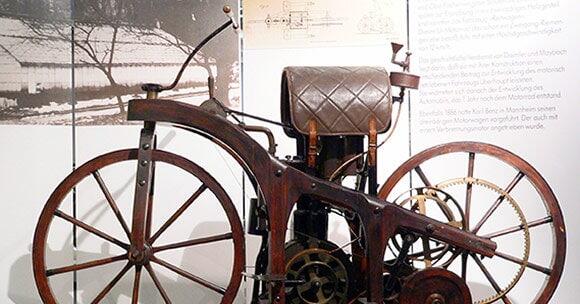
One of the first motorcycles ever made was the 1894 “motor tricycle.” This vehicle was built by Gottlieb Daimler and Wilhelm Maybach. Motorcycles evolved from this early invention to a gas-powered engine with two wheels that is steered by handlebars.
The motorcycle history shows the evolution of different motorcycle components like front and rear wheels, steam powered motorcycle, outrigger wheels, the successful internal combustion engine and more. The spike in motorcycle sales for motorcycle riders highly benefitted the motorcycle market. During the first world war, german inventors used motorcycles for different purposes. The motorcycle construction determined the rider posture. There were different motorcycles with iron tread wooden wheels, pedal crank mechanism, wooden bicycle frame, two outrigger wheels, steam powered motorcycle and more.
What were some of its notable qualities?
In the 1880s, when German inventors Gottlieb Daimler and Wilhelm Maybach created this vehicle in 1894, their goal was to create a motorized horse carriage. This invention is often called “the world’s first motorcycle.” It had innovative features such as an electric ignition system and a single-cylinder engine with horizontal orientation. The engine was air-cooled, it had a large radiator to keep the engine at optimum temperature.
What was the horsepower of Gottlieb Daimler and Wilhelm Maybach’s motorcycle?
The engine was able to produce about two horsepower and it had a top speed of 45 miles per hour. The engine had a tiller and it had a large radiator to keep the engine at optimum temperature.
Was this vehicle successful?
This motorcycle was quite popular but only about 650 of them were made before production stopped in 1901. It is one of the most important inventions for motorized vehicles because it has many innovative features that are still found on motorcycles today like the tiller, the frame that is in front of the motor and the large radiator.
In what year did Gottlieb Daimler publish his first motorcycle patent?
Gottlieb Daimler published his first motorcycle patent in 1885.
What happened to motorcycles from there?
Motorcycles continued to evolve as the technology advanced in other fields like petroleum and electrical engineering, which led to even more power.
The 1890s marked the introduction of bikes that were built for speed. The 1895-built “White Lady” was the first bike with a water-cooled engine and chain drive that resulted in 30+ mph speeds.
Motorcycles in the 1900s to 1910
In 1901, a new motorcycle design emerged with an engine that was positioned horizontally over the front wheel. These bikes were called “horseless carriages” because they resembled horse-drawn carriages but without horses.
In 1909, the first Harley-Davidson was manufactured.
Motorcycles in the 1920s
The 1920s also saw a number of changes in motorcycle design that led to better handling and control for riders. For example, motorcycles got their own suspension systems so they would not bounce as much when going over bumps or uneven terrain. The fairings on these bikes were designed to help channel air for better aerodynamics and cooling.
In the 1920s, cars became more popular than motorcycles because of their ability to carry passengers in greater comfort over longer distances.
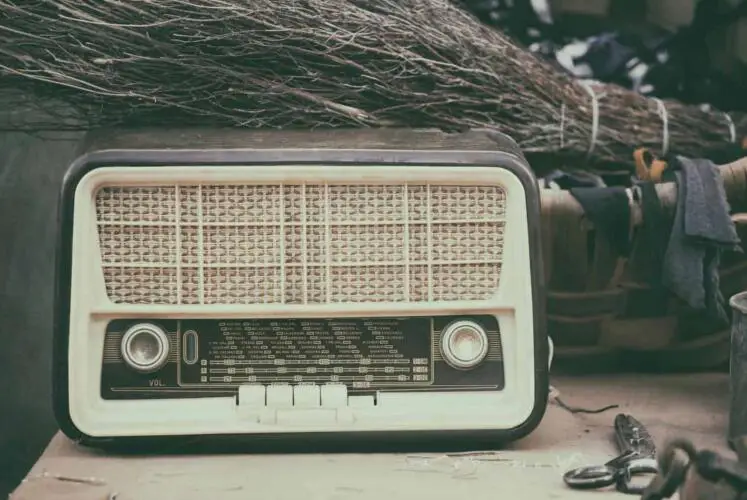
Fun Fact, the 1920s also brought interesting new accessories such as motorcycle radios.
Motorcycles in the 1930s
The 1930s brought about a renewed interest in motorcycle culture when Germany’s Nazi Party used motorcycles as propaganda vehicles at rallies and parades.
In the 1930s, motorcycles became a popular way to commute. The growing interest in production and sport biking led motorcycle manufacturers like Harley-Davidson to begin producing bikes with more power for higher speeds. This design also made them less likely to tip over when going around turns at high speed or on irregular surfaces.
Motorcycles in the 1940s
In the 1940s, Harley-Davidson introduced the ServiCar, a motorcycle with an enclosed passenger compartment.
In 1948 and 1949, BMW produced two prototype motorcycles called the R32 and R33 to test their new overhead camshaft engine design. The first production bikes from these designs were released as the 500cc R50/500 sports bike in 1954 for the 1955 model year.
Motorcycles in the 1950s
In 1954, the first mass-produced American motorcycle with a telescopic fork was released by Harley-Davidson. The bike is called “Super Glide.” In 1957, Honda began releasing its CB line of motorcycles to compete in the US market and became known for their affordability as well as performance.
In 1959, Honda began releasing its CB line of motorcycles to compete in the US market and became known for their affordability as well as performance. Harley-Davidson also introduced “The Sportster” that year. The company’s 1963 K model had a 25 horsepower engine with one speed transmission
and was capable of doing 100 miles per hour.
1961 was the year that Honda introduced their first four-cylinder motorcycle, which became known as one of America’s best performance bikes. That same year Harley-Davidson also released its “Sportster” model with a 25 horsepower engine and capable of 100 miles per hour.
Motorcycles in the 1960s
In 1963, Honda releases its K25 Super Sports, which was equipped with a four-cylinder engine and could go 100 miles per hour.
The first motorcycle ever made is attributed to Gottlieb Daimler in 1885, who built the world’s first motorcycle powered by an internal combustion engine. The bike became known as “Daimler’s Dream,” because it was so heavy that it could only travel at a walking pace.
It was created with an epower engine and one-speed transmission and was capable of doing 100 miles per hour.
1961 was the year Honda introduced their first four-cylinder motorcycle which became known as one of America’s best performance bikes. That same year Harley-Davidson introduced the first Sportster, which was built for speed.
As early as 1960 there were plans to create a motorcycle that could travel at 200 kilometres per hour (125 miles per hour).
In 1963 Honda releases their K25 Super Sports with an engine capable of 100 miles per hour and in 1964 they introduce the C70 Dream Sport with a 100-mile per hour engine.
This is the motorcycle that became known as “Daimler’s Dream.”
The C100 was introduced in 1965 and by 1968 it had four speeds, overdrive, electric start and light alloy wheels for stability at speed.
It could reach 200 kilometres per hour (125 miles per hour) with a top speed of 240 kilometres per hour (150 miles per hour).
Motorcycles in the 1970s
In the 1970s the C250 and the CB200 were introduced.
The CB250 was a small, lightweight motorcycle that became popular in America although it had only 125 miles per hour speed capability.
In 1975 Honda released an even smaller bike model called the Magnum 23 with a top speed of 200 kilometres per hour (125 miles per hour) but this type of bike did not last long.
Motorcycles in the 1980s
In the 1980s BMW introduced a five-speed version of their K100 series, which had been in production since 1978 and by 1983 this model became available with an automatic transmission.
This motorcycle was designed to be used for touring as well as highway use and its engine could reach up to 105 miles per hour.
Motorcycles in the 1990s
1990 represented a decade of innovation with motorcycles.
In 1991, Yamaha released the RZ250 which was a small and lightweight model that could reach speeds up to 180 miles per hour while also being able to accelerate quickly and be easily maneuvered in traffic because of its lightweight (about 200 pounds).
That same year Honda introduced the CBR600F and the world-famous Ducati also released their first model of the Ducati Monster, which was a naked bike made for off-road use.
In 1992 BMW introduced the F650 series motorcycle and in 1993 Honda followed up with the CBR900RR Fireblade, one of the most celebrated models ever built. In 1997 Kawasaki created its two best motorcycles ever with the release of the ZX-12R and the ZZ-R.
In 1998, Yamaha followed up by releasing their best motorcycle to date: The YZF R-series which was very lightweight (less than 300 pounds) and could reach speeds of 190 miles per hour.
In 1999 Honda created a new line that had a larger engine and the CBR1100XX Super Blackbird was born.
Motorcycles in the new millennium
The new millennium saw an emergence of powerful models that were built for racing like Ducati’s 999, Aprilia RSV Mille “FACTORY” or Suzuki GSX-R 1000 K11 Limited Edition and Harley Davidson Motor Company’s V-Rod Series.
Harley Davidson Motor Company’s V-Rod Series.
2001: Suzuki and Kawasaki released their best models ever, the Hayabusa and ZZR1200 respectively. In 2006 Yamaha introduced its first sportbike with an inline-four engine named R25 which was a lightweight fast motorcycle producing 140 horsepower from a 999cc liquid-cooled in-line four engine.
Yami R25 was a lightweight fast motorcycle producing 140 horsepower from a 999cc liquid-cooled in-line four engine.
In 2007: Honda introduced the new CBR1000RR Fireblade that had 197 horsepower and could reach speeds of 190 miles per hour.
The first V-Rod Series is born – 2001 to the present day, Suzuki releases its best model ever – Hayabusa (1999), Kawasaki releases its best models ever – ZZR1200 and Yamaha introduces R25 inline-four sportbike with 1000 cc liquid cooling system (2006) are all examples of motorcycles being built for speed/racing purposes. Then we have Ducati 999 series racing bikes that can reach speeds up to 225 miles per hour.
The fastest motorcycle in the world is currently the Kawasaki Ninja HIIZER900 (2012) that can reach a speed of 300mph or 4828 kilometres/hour which they claim is the most powerful production motorcycle ever created with an engine displacement of 900cc liquid-cooled inline four cylinder.
Overall, the world of motorcycling has changed so much from Gottlieb Daimler and Wilhelm Maybach’s 1894 “motor tricycle” to today’s modern motorcycle.
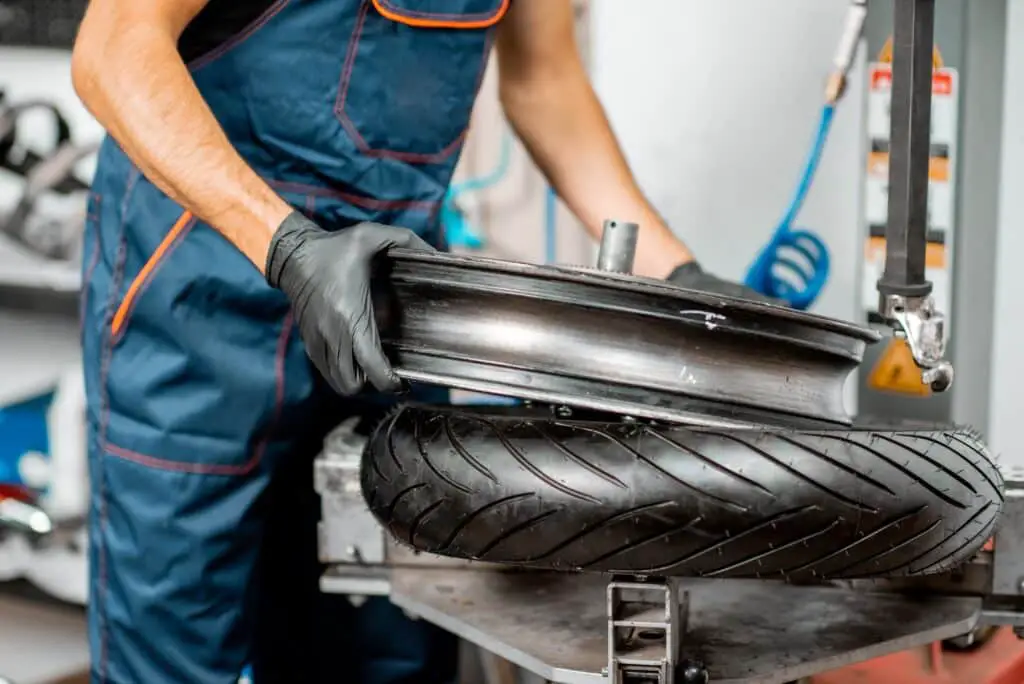
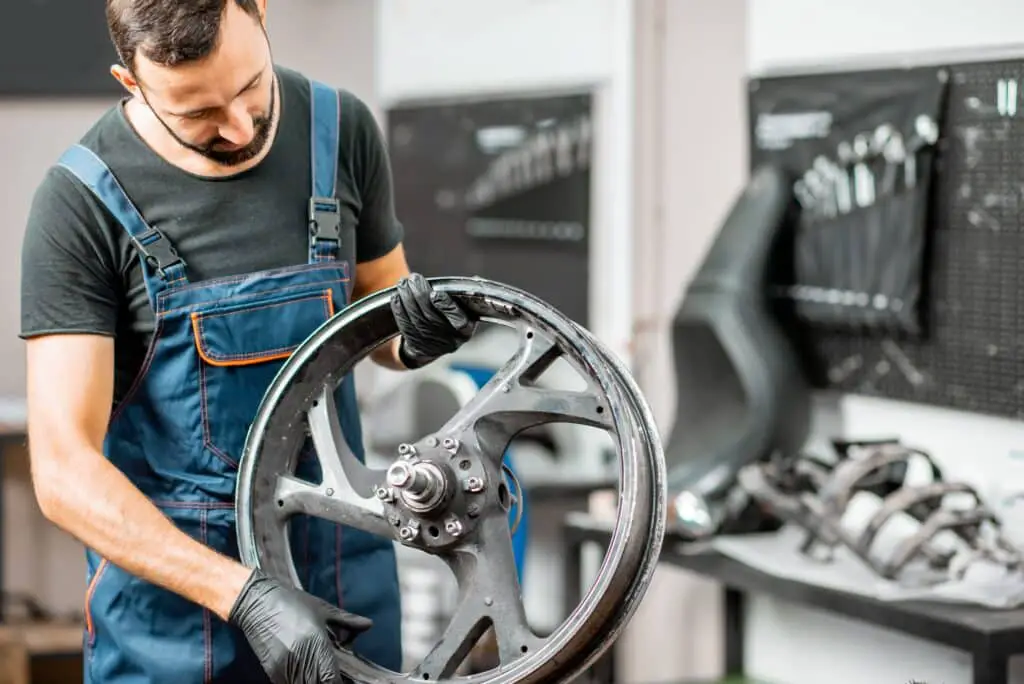
Motorcycle wheel straightening is a process of motorcycle rim repair that can be used to get your bent motorcycle rim back into shape. This blog post will go over the basics of what you need to know about this process, and how it works. It also goes through some possible causes for bent motorcycle rims, and suggests ways to fix them so they don’t happen again!
But first, we often get asked the question ‘can you straighten motorcycle wheels’? To which the answer is almost always: yes, you can! There are a few different ways to go about this process, and the right way will depend on what type of motorcycle rims are on your bike.
If it’s an aluminum wheel then there is a good chance that bending the motorcycle rim back into shape should be relatively easy. An alloy motorcycle wheel repair is a different story completely. A bent wheel is dangerous and will get in the way of a safe ride. Bent wheels can cause a simple wobble side to side or dipping when cornering. Most rims, including used rims and damaged rims, can be safely restored.
In most cases, the reason your wheel is not straight, how bent your motorcycle rims are or what your wheels are made out of will determine whether or not this is a job for the mechanic or yourself.
How To Fix Your Bent Rims Yourself:
Step One – Analysis What Caused The Bent Rim
Check the cause of your bent motorcycle rim. Is it a result of a crash? If so, then you shouldn’t waste time with this article and instead should take your motorcycle wheels to see if they can be fixed at a local motorcycle shop or place that specializes in such work. There are some things which just cannot be done by yourself and a motorcycle rim repair of this nature is one of those things!.
However, if your bent motorcycle rim is the result of a more gradual process (such as too much weight on one side of the bike putting pressure on one side of your motorcycle wheel), then there is a good chance that bending the rim back into shape should be relatively easy.
For this reason, it’s worth reading this article and investigating some ways to do just that before you take them off to a professional for repair that could cost as but as a brand new motorcycle wheel!
Step Two – Remove The Motorcycle Wheels & Clean Rim
To start the motorcycle rim repair, remove the motorcycle wheels from your motorcycle and place it on a flat surface like a table, bench, or workbench. Clean off any dirt that’s accumulated with some warm soapy water (you can use dishwashing liquid or degreaser) to make sure you’re starting out with clean metal surfaces in order to avoid getting dirt trapped in the motorcycle rim.
Step Three – Bend Motorcycle Rim Into Place
Use a rubber mallet to gently tap the motorcycle wheel back into shape, working from one side of the bend to the other so as not to cause damage on any parts of your motorcycle rims that are already straight or which have been damaged by previous accidents. When you’re done it should be as straight or a little straighter than it was before. Motorcycle rim repair takes time and smaller taps are better.
Step Four – Evaluate If More Motorcycle Wheel Repair Is Needed
Remove the motorcycle wheel from its original place and try turning it to see if you’ve fixed the bent wheel. If there is still an issue, repeat steps two, three, and four on the other side until both sides are aligned with one another. Once this has been done, use the rubber mallet to gently tap in any final corrections.
Conclusion
You should see a noticeable difference in how straight your bike’s wheels are when you’re done with this process compared to the bent wheel you started with. And if you’re still not happy with the wheel repair then it’s best to go back and do another pass-through for your wheel repair.
This is a way to fix bent wheels on a motorcycle without needing to buy new parts or having a mechanic deal with a wheel repair! Follow these steps and let your bike sit overnight in order to make sure the wheel has enough time to cool off before riding it again. This process can be done who wants a wheel repair completed in under an hour.
Now as promised, this motorcycle wheel repair article has taught you how to fix a bent motorcycle wheel in 5 minutes, but it can take a while longer to do the actual motorcycle wheel repair itself. Take your time with the motorcycle wheel repair, damaged motorcycle rims are a patient person’s game!
DISCLAIMER: if you are unsure about repairing your motorcycle yourself, please seek professional advice. This advice is general in nature and should not be used as a professional opinion. If you are unsure of how your rim was bent, have completely broken motorcycle wheels, or require an alloy wheel repair contact a professional mechanic.
Motorcycles may not seem like a likely place to find a radio, but they do. According to the site “All About Motorcycles,” radios are required on motorcycles in some countries (such as Italy) and optional in almost every other country.
This article will go through in detail the history of motorcycle radios, from when it was first appeared in 1921 when Harley Davidson installed a radio on one of their bikes for an advertisement to if they are even a necessary addition to a bike.
Motorcycle radios throughout history
The first mention of a radio on a motorcycle came from Harley Davidson in 1921. At first, the radio was an advertisement for a motorcycle and not available as a standalone purchase. The earliest radios were expensive to buy and install so they weren’t widely used until after WWII when technology started getting cheaper.
Motorcycle radios in 1930s
In the 1930s motorcycle radios became more common as motorcycle manufacturers started installing them to add value to their bikes when they were first introduced. Harley Davidson was the most popular manufacturer of radios for motorcycles during this time and these early models also came with a microphone so that riders could talk on the phone while riding.
Motorcycle radios in 1950s & 1960s
The 1950s and 1960s were a period of rapid change in the radio industry. The transistor and integrated circuits started revolutionizing all aspects of life including radio on motorcycles. Radios became smaller, lighter, cheaper to buy and install which lead to greater adoption by motorcycle manufacturers who were looking for ways to increase sales. By 1980 radios had become standard features on all new
Motorcycle radios in 1970s
All the way to the 1970s motorcycle radios were only available as factory options. Riders would need to order their motorcycle from the manufacturer with a radio installed or they had to buy one separately and have it custom-fitted into their bike by an expert at a motorbike shop. This is because most radios were heavy, fragile, and required more power than motorcycles could provide on-board so riders needed another vehicle to provide power.
Motorcycle radios in present day
These days it is much easier to add a motorcycle radio because there are now many options available that will fit the needs of most riders and manufacturers have found ways to make radios lighter, more durable and they no longer need any extra power sources for operation so all you do is plug your bike into an outlet or connect it to your battery.
But do we even need motorcycle radios in 2021?
The answer to this question will depend on a number of factors including where the rider lives, what type of motorcycle they own, and how serious they are about listening to something while riding.
Bluetooth Headsets have taken over motorcycle radios
In recent years Bluetooth headsets and earbuds have become increasingly popular and they offer a number of advantages over traditional motorcycle radios.
Reasons that riders are finding Bluetooth audio devices better than traditional radios:
First, Bluetooth devices are much less expensive than radios which can cost between $200-$300 depending on the features you need.
Second, since headsets or earbuds connect wirelessly to your phone it means riders don’t have to worry about getting tangled in wires and they can easily change songs by just tapping the screen.
Third, once riders have their phone set up with music apps like Spotify or Pandora they will never have to worry about not having something good to listen to since these services are constantly updating their playlists and giving new suggestions based on your listening history.
Lastly, with voice-activated assistance such as Siri and Google Assistant, you can focus on the road and not have to worry about trying to change songs or find a new station.
Our top 4 motorcycle Bluetooch headsets are:
The Sena SMH-55, this is a great headset for those who are looking to talk hands-free on the road, and it packs a punch in terms of sound quality too.
The Sena 20S is also another great option that has some of the best battery life out there with an incredible 18 hours of continuous usage time.
The Cardo Scala Rider G20 (with DSP) is a great option for riders that want to listen to a wide range of music and talk hands-free, all while getting an amazing 20 hours of battery life.
The Plantronics BackBeat Pro is pricey but worth the investment. This is a great option for those who are looking to purchase an expensive headset that will last years and has some of the best sound quality out there.
Not everyone has the same needs in terms of what they need from their headset, so we hope this list can help you find the right one!
In conclusion, it seems as though radios were a fad throughout history they have ultimately been overtaken by Bluetooth headsets and for good reason, they are wireless, more convenient, and can be used in conjunction with voice assistant to make phone calls and keep your eyes on the road.
Indian Motorcycle was originally founded in 1901 as the Hendee Manufacturing Company. The company was acquired by George Hendee and Oscar Hedstrom who renamed it Indian Motorcycle. But few know why they named it Indian Motorcycle. So why did Indian Motorcycles name themselves after the Indians? They did this to honor the Native American people, specifically Chief Sitting Bull of Sioux Nation, who had fought against General Custer at Little Big Horn.
History of the Native Indian American name ‘Indian
The Story Behind Indian Motorcycle’s Name: “Indian” is a word that originates from the Cherokee people, who were one of the first groups to encounter Europeans in North America. When English-speaking settlers came into contact with them, they called these Native Americans “Indians.” The name stuck and eventually became synonymous with anyone from the Americas.
Did the Native American people like Indian Motorcycles being named after them?
They did.
How do we know? Because George Hendee and Oscar Hedstrom had Chief Sitting Bull’s blessing before they made the change to Indian Motorcycle.
Before long, Indian became a household name after World War II, when it was marketed as an inexpensive bike for returning veterans who were looking for transportation or just something to tinker with on.
Indian Motorcycle also became associated with the larger-than-life Wild West, which helped to fuel its popularity.
The company went on for a while in this regard (even though it wasn’t making money) until they finally fell into bankruptcy and stopped production in 1953. In 2009, Polaris Industries purchased Indian and revived the brand by bringing it back to its roots: producing powerful, heavy-duty bikes with a strong connection to the early days of motoring.
Indian Motorcycles in the 40s & 50s
Leading into the 40s and 50s Indian Motorcycles were known for their power, durability and beauty.
Indian Motorcycles made its way into pop culture in a number of ways: the aforementioned Western movies that would often feature Indians as central characters; Tom Mix, who served as America’s first cowboy hero and starred in more than 100 films using an Indian motorcycle to chase down criminals or other outlaws; and in 1950, when Steve McQueen was gifted an Indian Chief motorcycle.
Indian Motorcycles in the 60s & 70s
In the 60’s and 70’s, Indian Motorcycles were known for their beauty as much as they were power, but it would be short-lived: from 1963 to 1970 Indian produced more than. 28,000 motorcycles.
Indian Motorcycles in the 80s
In 1980 or so, Indian sold more than 45% of all its production to customers outside the US and was profitable for a time with low sales costs, but by 1982 it had been driven out of business because they couldn’t keep up with Japanese motorcycle manufacturers who were selling at. A price that was two to three times lower.
Indian Motorcycles in the 90s
In 1990, Indian agreed to be purchased by a group of investors led by William F. Harley Jr., son of company founder William A. Davidson and grandson of one-time competitor Walter Davidson who had successfully manufactured motorcycles for years with financial. And technical assistance from the British company Triumph.
Indian Motorcycles in the 2000s
In 2002, Indian began producing its first motorcycles since 1951 at a new plant in Kings Mountain, North Carolina. For many years before that their only motorcycle production was limited to importing bikes from England (under license). The US Department of Defense granted Harley-Davidson a contract to produce the MQM-92 Indian Scout.
Indian Motorcycles in the 2010s
In 2011, Polaris Industries purchased Indian with plans to invest heavily into revitalizing and expanding its product line. This included new production of some existing models (now called Chief) as well as development of new motorcycle platforms for street and off-road.
In November 2011, Indian unveiled a prototype Chief of the Roadster at EICMA in Italy. The production version of this motorcycle was released to dealerships on July 12, 2012 as an early 2013 model year bike for $18,999 USD.
The future is bright for Indian Motorcycles, with new products and a world-class manufacturing facility on the horizon.
In 2011, Polaris Industries purchased Indian with plans to invest heavily into revitalizing and expanding its product line. This included a new production of some existing models (now called Chief) as well as the development of new motorcycle platforms for the street and off-road. Polaris pledged to invest $100 million in the company’s manufacturing facility, creating 600 new jobs for Indian employees and an estimated 150 construction jobs from building a brand-new factory on property adjacent to its current location in Springfield Ohio
Polaris CEO Scott Wine says “Indian Motorcycles will be profitable within six months”.
Where are Indian Motorcycles Made?
Indian Motorcycles are still proudly made in the USA. Spirit Lake, Iowa to be specific. They have a factory of approximately 550 professionals working in the manufacturing line at the Indian Motorcycle Factory & Experience Center. They even have tour visits at their Experience Center Monday to Friday from 8:00am and 3:00pm.
Who owns Indian Motorcycles Currently?
Whilst Oscar Hedstrom and George Hendee founded Indian Motorcycles over 100 years ago, the company is now run by CEO Scott W. Wine and president Michael Dougherty.
In Summary
Indian Motorcycles has a deep, rich history with the American spirit and is now poised to make an incredible comeback in America’s motorcycle market!
Once again Indian motorcycles are now proudly made here at home, close to our roots and heritage as well as for all those who have supported us over the years.
Whilst Indian Motorcycle was not the first motorcycle ever made, it is proud to be an American bike and a part of our country’s history.