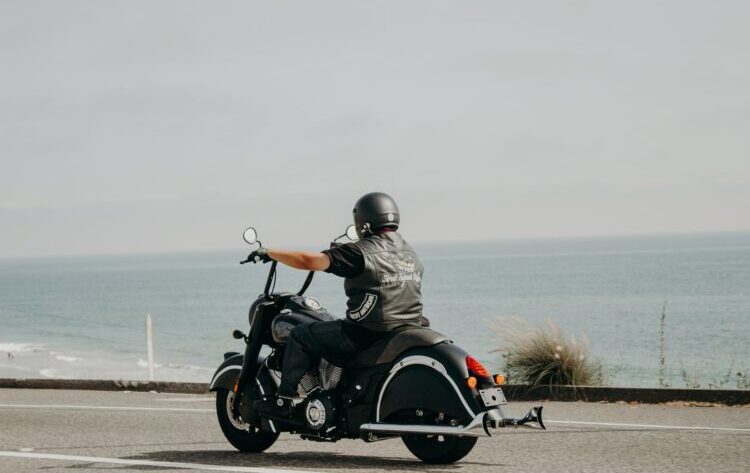
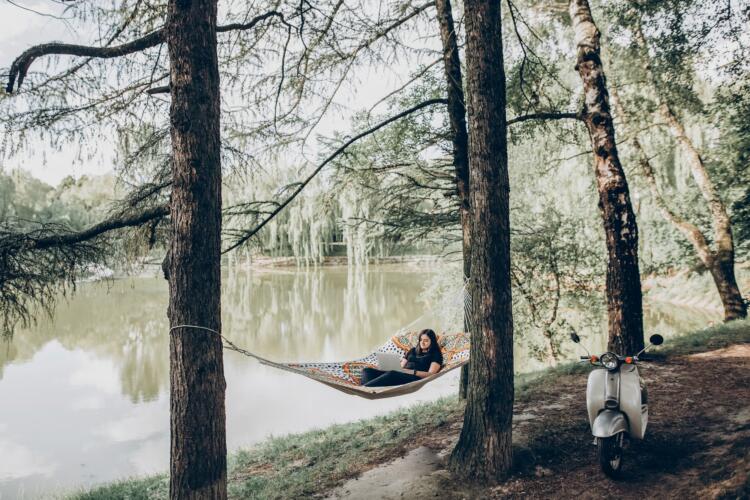
Everyones heard about how cheap and awesome of a holiday a riding trip through the Philippines are. But how much does it actually cost to travel and motorcycle in the Philippines & more importantly how much does it cost to rent a motorcycle in the Philippines?
In the Philippines, the daily rental ranges from PHP 250 to PHP 600 for a 125cc motorcycle. On the other hand, in the USA, it starts from $75 and can go up to $250 per day. However, the rates vary from one destination to another and depend upon the season and of course your skills to negotiate.
If you are traveling to large cities like Cebu or Manila, renting a bike is easy and moderately affordable. However, the scenario might change if you are traveling to small towns and less popular places. Renting a motorcycle can be both expensive and complicated in such places. Moreover, the Philippines has an extensive group of islands and thus, even if you rent a motorcycle, you can travel only to some limited destinations. Unlike larger islands, renting a motorbike on a smaller island is not only easy but economic as well. It allows you to move around the island more conveniently because of the short distances.
On the other hand, in the USA, the scope of renting a motorcycle is much more convenient. Just like cars or any other vehicle, motorbikes too can be rented from nationwide agencies. Due to the increasing interest in motorcycle rides, motorcycle rentals have increased significantly over the recent years. Thus, in the US, it’s easy to find rental programs by major bike manufacturers and rental shops according to your budget and requirements.
Motorcycle Rental in the Philippines
To explore the islands of the Philippines, a ferry and motorbike are the most convenient options. As Filipinos are friendly in nature, on your arrival, they will guide you about finding a motorcycle for rent.
However, if you are a biking enthusiast and love riding bikes with 800 cc or more, you might struggle to find a bike of your choice. Most of the bikes that you can hire from rental agencies are of low mileage, of around 125–180 cc. Thus, if you are not used to driving low cc bikes, avoid renting them. Also, the Philippines is a foreign country with its own set of traffic rules. For a new traveler, new traffic rules and jams might ruin your interest and make your ride tedious.
Some of the common motorcycle brands that you can rent in the Philippines are Honda and Yamaha. These bikes mostly come with a 125 cc mileage and have plastic bodies. These motorcycles are good for two people.
The rental rates of these bikes depend on the rental duration, brand, mileage, and location. In the Philippines, the daily rental of bikes ranges from PHP 250 to PHP 600. However, if you rent it for a week, the price can go down and you might get PHP 300–350 per day. If you are renting the bike from the resort you are staying at, they might charge you an additional PHP 50–150.
Looking for a big motorcycle with greater capacity and mileage in the Philippines? It is a rare pleasure to rent bikes of brands like BMW, Moto Guzzi and Harley-Davidson in the Philippines. There are very few rental companies that deal with motorcycles bigger than 200 ccs.
Motorcycle Rental in the USA
When it comes to renting motorcycles in the US, it’s easy and convenient. Motorcycle rental cost in America varies from state to state and city to city. However, typically the rate ranges from $75 to $250 per day. If you are renting a bike for a week, it starts from $500 and goes up to $1500 per week. In the US, the rental prices of bikes depend upon various factors like the model or the brand of the bike, the mileage and the power, the location, accessories included, and so on.
In the USA, there are plenty of options to rent a motorcycle. Major motorcycle manufacturers have their own rental programs. Besides these, there are plenty of other sources from which you can rent a bike. Some of the common sources are as follows:
Bike rental shops
Authorized rental dealers
Bike rental applications
Peer-to-peer bike rental websites
Besides costs, rental businesses also charge their customers with security deposits. When you drop off the motorcycle in a good condition, the deposited money gets refunded. Again, the amount of the deposit depends upon the motorcycle and the insurance you are choosing.
Conclusion
Motorcycle tourism has truly taken off around the world, including the Philippines. Rental bikes make it easy for travellers and tourists to explore a new place. Thus, if you are an international tourist visiting the Philippines, learning about motorcycle rentals can help you to set your budget accordingly. Understanding the pricing and the facilities can help you to plan your holidays successfully.
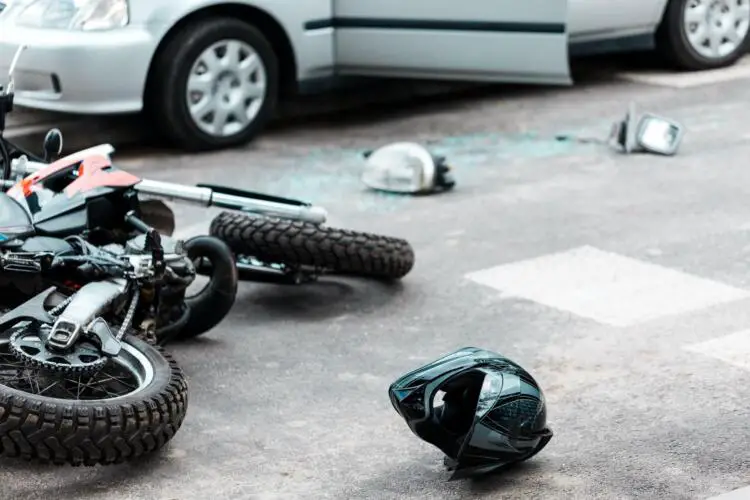
When compared with other vehicles, riding a motorcycle is challenging and risky at the same time. They are more crash-prone than other closed vehicles. However, it is a fun mode of transportation all the same. And so, motorcycle riding is risky, yet, is one of the favourite pastimes for motor enthusiasts and adventure lovers.
Speeding or reckless driving, unsafe lane changes, intoxication, lane splitting, hazardous road conditions and so on are some of the common causes of motorcycle accidents. However, among them all, the most common cause is other drivers’ failure to notice motorcycles on the road.
According to various studies, the chances of fatality are 29 times more in motorcycle accidents compared to car crashes. A motorcycle is less stable than other cars and motorcycle operators lack the surrounding protective structure of an enclosed vehicle while riding. In most cases, during a collision, riders are typically thrown out of the motorcycle which could cause severe or fatal injuries and even death. Operating a motorcycle requires the coordination of both physical and mental skills, which is not precluded while operating a motorcycle. Due to the challenges involved in operating a bike or a scooter, motorcycle accidents and their outcomes are more severe than car accidents.
Common Causes of Motorcycle Accidents
Motorcycle crashes are inherently far more dangerous than any other traffic accident. These accidents might cause major or minor injuries depending upon the severity of the accident. From lacerations, minor cuts and broken bones to spine, neck and traumatic brain injury, motorcycle accidents can cause various injuries to the rider. It is important to remember that unlike cars or any other enclosed vehicle driver, motorcyclists do not have the added safety of seatbelts, airbags and enclosures. Thus, it is important for every motorcyclist to follow certain basic safety measures to minimise the chances of crashes.
However, to practise the regular safety measure while riding a motorcycle, the motorcyclist must be aware of the common mistakes or causes of accidents. Though there are several other reasons that can be noted, here we have listed the common ones.
Left Turn Accidents
Cars making left-hand turns are one of the common causes of motorcycle accidents. When a car making a left-hand turn comes across a motorcycle, it becomes tough for the rider to keep their motorcycle stable and steady. Among all accidents, cars making left-hand turns account for 42% of all accidents. Though these accidents can occur with different vehicles as well, it’s more common with motorcycles because of their smaller size and less visibility. In most cases, car drivers make misjudgments of distance while taking left turns and cause such accidents.
Motorcycle Lane Splitting
Driving between two lanes can be too dangerous for bikers. Lane splitting is a common motorcycle accident cause for riders. Though this practice is illegal in most parts of the world, bikers go for lane splitting during traffic jams. During lane splitting, other vehicles might suddenly come close to the motorcycle and cause an accident. Remember, motorcycles have less ss space to manoeuvre around cars and thus, such actions can lead to severe accidents.
Lane Switching
Switching to the wrong lane is another reason behind motorcycle accidents. Such accidents take place when you are riding on a four-lane road and the car next to you suddenly changes its lane. As motorcycles are comparatively smaller in size, they easily fall into the car driver’s blind spot, leading to severe accidents. To avoid such instances, motorcyclists must be able to see the car’s mirror. While riding, if you can see yourself in the mirror of the car before you, it means that the driver can see you as well. However, if you are caught in the wrong spot by vehicle drivers, either slow down or speed up to get out of that spot.
Speeding and Reckless Driving
Accidents are more likely to happen when either the motorcycle or the other vehicle is speeding or driving aggressively. Speeding makes it tougher for the biker to have full control over the bike. The high speed makes it challenging for both the motorcycle and the other vehicle to see or react to prevent a collision. Thus, it is always advisable to maintain a controlled speed while riding a bike. Remember, the higher the speed of the motorcycle, the more severe the impact and the consequences.
Intoxication
Driving under the influence of drugs or alcohol is dangerous. According to a report, in 2019, among motorcyclists who died in crashes, 30% were alcohol-impaired. Remember, drinking and driving is both a criminal and social offence. So, while riding your bike, drop the idea of alcohol consumption or any other intoxication, as it can cost you dearly.
Head-On Collisions
A head on collision between a motorcycle and another vehicle is one of the common reasons for motorcycle injuries and deaths. Head-on collisions constitute around 56% of deaths from motorcycle crashes. In the majority of cases, such accidents are fatal for motorcyclists. Apart from head-on collisions with other vehicles, collisions between bikes and fixed objects are the reasons for motorcycle accidents. To avoid such accidents, motorcyclists must be able to read the road ahead, drive to the right, control the speed and ride off the road.
Hazardous Road Conditions
Potholes, crumbling roads, and lack of necessary signs and signals can make a motorcycle ride dangerous. It can increase a rider’s chance of losing control of their vehicles and might cause grave accidents even leading to death.
Motorcycle crashes might result in dire consequences. Injuries from such accidents can be life-changing and may impair you for life. Thus, to avoid crashes or accidents while riding, always follow the safety measures like wearing proper garments, and helmets, ensuring motorcycle maintenance and so on. Also, make yourself updated regarding the traffic rules and regulations to make the road a safer place.
Conclusion
Alcohol use, abrupt stop, dangerous road conditions, and road rash are some of the most common causes of fatal injuries. Countless motorcycle accidents are reported on motorcycle accidents result for many Americans due to road hazards.
Motorcycle riders must wear protective gear, consult with a law firm and build attorney client relationship to get legal advice related to speed limit, tire hits from loose gravel, slippery surfaces riding protection other tips to prevent further injury and keep other drivers safe too.
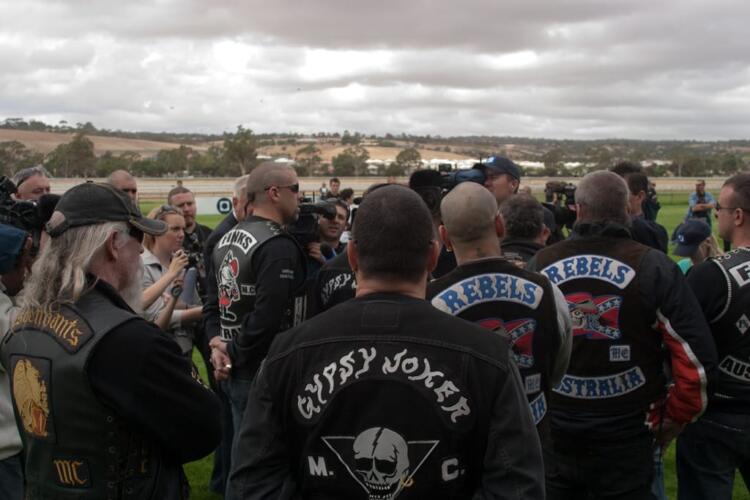
Motorcycles are a form of recreation, an art form, and have come to represent more than just transportation. Motorcycle Clubs have become the largest international social club in the world with over 1 million members worldwide. The club members live up to different motorcycle phrases that are an all-time favourite among riders. Club members will never stop riding and cherish their first motorcycle from exclusive motorcycle dealers.
The most popular motorcycle clubs are The Hells Angels Motorcycle Club, Bandidos Motorcycle Club, Outlaws MC, Mongols MC, and Pagans MC. Each club is different but they all share common ideals such as brotherhood, charity work for their communities & families as well as law enforcement support. Only a biker can enjoy the freedom and responsibilities of a long motorcycle ride. Motorcycle maintenance is an integral part of a riders life who treats the bike like family. The goal is to never stop riding motorcycles. Old riders refer to their bikes as bad boy quality two wheels.
Motorcycle riding has its perks and responsibilities. A motorcycle rider understands motorcycle functions that make a good rider. Motorcycle riding creates a plethora of opportunities for young riders. Motorcycle dealers closed down many groups that are unethical.
This article will explore some of the phrases you may hear if you ever enter into a conversation about motorcycles or meet someone who rides one.
25 Motorcycle Phrases & Slang
I’m rolling: this phrase means that the biker is going for long motorcycle rides. This phrase may also be used in replacement of a full sentence such as “I’m rolling to…(the store, the bar, etc.) It is truly a tough and macho thing to do.
You were right behind me, weren’t you?: Another way for a biker to identify another motorcycle rider with this question is if they were to pass the same motorist again, chances are that rider may not remember what to look for. Therefore, this phrase would identify the other person as a fellow biker.
Don’t worry about me: Motorcycle riding is a great way to express oneself. If another biker says this to you it means that they’re able to take care of themselves and that you shouldn’t worry. However, if a non-biker says this to you then they’re likely trying to be macho or trying to prove something. Young riders pick a bike ride over other activities any day.
Helmet Hair: this is usually an over-protective motorcycle rider or a first motorcycle owner who takes their motorcycle boots seriously. Also, helmet hair is someone who fancies helmets during bike rides. For easy motorcycle riding, ride a motorcycle with protective gear for safe practice.
Put your bike on the stand: this phrase literally means for a rider to place their motorcycle up onto its kickstand (the arm that holds the bike up when it’s not being ridden) to prevent it from falling over. This phrase is often used in the following way, “Put your bike on the stand before you open that can of worms.” It is a way for bikers to say that it’s time to get the motorcycle parked.
Packing: this phrase means that a rider is carrying a passenger on their motorcycle. This phrase can also be used to mean transporting something or someone on the motorcycle. Motorcycle maintenance is essential for packing.
Hitting the sauce: this phrase means that a rider is drinking alcohol, usually an alcoholic beverage like whiskey or vodka, etc. This term may also refer to drinking another type of drugs like marijuana or pain pills. A rider cannot stop riding or can get involved in serious accidents when hitting the sauce.
Bad to the Bone: this is a saying that is associated with motorcycle clubs that are anti-social, criminals, and affiliates. Bad to the Bone refers to outlaw bikers whose members have criminal records for drug trafficking activities, weapons charges, murder, etc.
Biker Babe: this phrase refers to any woman who is an expert at motorcycle riding whether or not she is an actual member of a club or just someone who enjoys riding motorcycles as transportation or for fun.
On the back: this means that one person has another person riding on their motorcycle behind them usually only in reference to short-distance travel like grocery shopping, running errands, etc. However, it can also refer to long-distance travel like travelling across the country or even by overnight trips.
Let’s take a ride: this phrase means that you and the person you’re speaking to should embark on a motorcycle adventure together. This may mean taking your motorcycle out for an extended trip or just going out for a quick spin around town. Mountain bike are common riders pick for motorcycle trips.
Full Dresser: if someone is referring to their motorcycle they say this term because many people refer to motorcycles as male genitalia, usually in jest by bikers themselves. So when someone says “this is my full dresser“, it literally means it’s their fully dressed motorcycle, although some people really do have custom paint jobs.
Racking it: this phrase is unusual in that it means to place something or someone into a motorcycle’s storage compartment usually called a saddlebag. However, some people may be confused because the term “rack” often refers to strip clubs.
Pipes sound sweet: this phrase is used when referring to motorcycles that have custom aftermarket exhaust systems installed on them which make the motor emit more of a deep rumble or growl rather than the traditional squeaky clean motorcycle sounds associated with BMW’s and Harley Davidson motorcycles for example. Harley Davidson bikes are great for motorcycle trips. This creates a great chance to not stop riding and explore further.
I’d rather ride my bike than…(fly, drive, etc.): another way to say you prefer a long motorcycle ride over just about anything including other forms of transportation such as aeroplanes, cars, etc. Although when someone says this they just want to let you know that they enjoy riding motorcycles and would much rather ride than take another form of transportation and understand motorcycle functions completely.
Ride or Die: this term means that you are loyal to your motorcycle. When someone says this term they are basically saying that their motorcycle is the most important thing in their life and if they have to choose between their partner, family, etc. Or their motorcycles then they will always put their motorcycle first.
Shoot me down: this term means that you want to stop at a gas station but don’t want to let your motorcycle’s engine run while you’re pumping gas. This phrase is said as a reminder from one rider to another rider, typically when one of them stops at a gas station and the other doesn’t hear or understand the first person has stopped and is waiting for them.
Squid: this term refers to someone who overestimates their confidence than others which means they will not wear all of the protective gear such as helmets and jackets because they consider themselves extreme riders.
Scootin’: if someone uses this term they are referring to riding their motorcycle on two wheels, not using the kickstand of your motorcycle to balance on two wheels. This term is usually used by people who ride sport motorcycles or crotch rockets as a reference to their riding style and ability.
Gravel Bike: this phrase means a dirt bike that is not street legal and can only be ridden on off-road terrain. Commonly these bikes are referred to as enduros or enduro bikes as well as motocrossers as well if they actually do both types of riding rather than just one or the other.
Top Fuel: this term refers to top fuel dragsters which are specifically made for racing on a quarter-mile strip by hitting speeds up to and over 300 mph. Many people who ride motorcycles refer to their motorcycle as a top fuel even though it clearly isn’t capable of racing on a quarter-mile strip at high speeds.
Hog: this term is used very commonly by many Americans when referring to Harley Davidson motorcycles since they are the most popular brand in the country. Although some people may be offended by being called a hog or pig because they think that these terms are derogatory towards women, just like calling someone dude, mate, bro, etc. it’s not intended to be disrespectful rather than friendly banter between motorcycle lovers.
Bruiser: this term is used for motorcycles whose appearance makes them look tough or masculine like a “bad boy” motorcycle.
Ride the Elevator: this term refers to riding up and down hills without stopping or slowing down; cruising up and down all of the hills on your ride so you don’t have to stop at each one. This is usually done by experienced riders who are trying to get somewhere quickly or just for fun because it’s kind of tedious to stop at every hill no matter how small they are.
Bagger: this term is used to refer to motorcycles that have large fuel tanks, typically between 50-100 gallons which require side-saddle gas tanks since regular petrol tanks won’t fit into the space made available by these amounts of fuel.
Hooligan: this term refers to someone who rides their motorcycle recklessly; oftentimes these people will stand up on their seats while riding, popping wheelies and running red lights.
The only safe way to ride a motorcycle is to predict the unpredictable. And Nothing is more unpredictable than curves and corners.
Imagine this, you’re halfway around your corner and an old lady is in the middle of the road. When pushed into a dangerous situation like this during a curve you have two options: swerve to change your direction or stop. Both are difficult maneuvers to perform but today we will elaborate on what to do to stop during a curve.
Safest & fastest way to stop a motorcycle in a curve:
Road Position: Counter-steer deeper towards the inside lane
Stand Bike Up: Straighten your bike up
Perform Emergency Stop
Performing a stopped motorcycle in a curve is one of the most difficult things to do on a motorbike. It requires both skills, re-action speed, and knowledge about how to slow down the bike, which takes some time to master. There are many techniques that are combined together in this stopping maneuver, don’t expect it to be perfect from the first time.
Let’s break these down…
1. Road Position (Where is your Front Wheel pointed?)
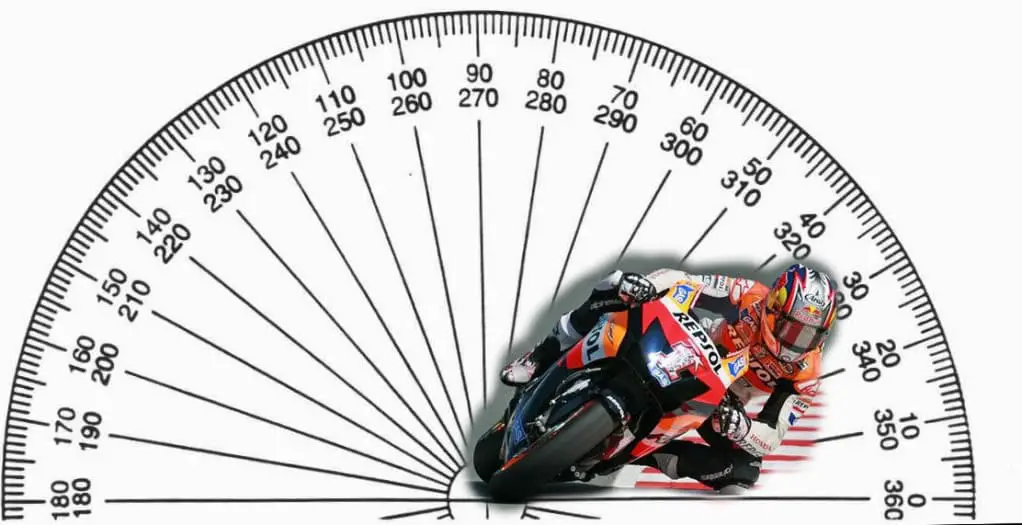
Let’s say you’re smashing that corner, you’ve bent your bike over so much Rossi would be proud! Then suddenly you need to stop.
Well, we all know, to stop we need to straighten up our bikes.
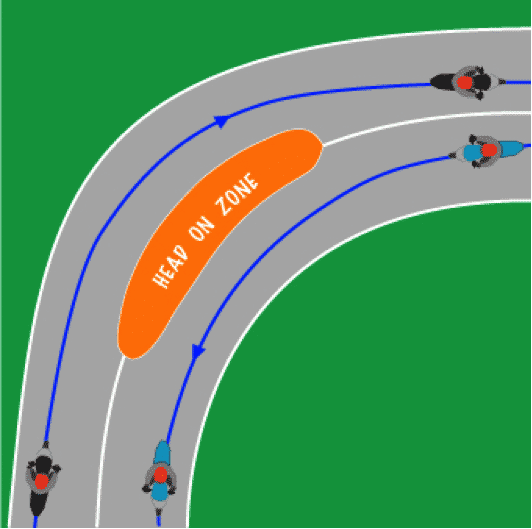
BUT if you take curves anything like me, straightening up halfway through a turn would put us too wide in the lane and possibly off the road. This is because of the arch of your turning circle. The arch of your turning circle is an imaginary line that follows the angle your bike would continue if you changed nothing.
Image from bikesafewa.com.au
Another way to think about the arch of your turning circle is to think about where your front wheel’s pointing. You see, in a count-steer with a lean angle, your bike’s front wheel will naturally point towards the outside of the lane. The moment you straighten your bike up, your counter-steer disappears and you’re heading towards those trees off the road.
So what can you do about it?
The solution, counter-steer deeper towards the inside lane until the arch of your bike straightens up. Then when you straighten the bike up you won’t end up running yourself off the road.
Doing this should be performed with extreme caution, increasing your counter-steering then suddenly straightening up your bike will feel a lot like a dip and weave motion.
2. Stand Bike Up (Reduce lean angle)
Once your bike is facing the right way and you know you aren’t going to run yourself off the road, the second step is to stand or straighten your bike up. This is crucial to the next step (breaking) because braking at an angle almost always ends in a motorcycle accident.
And even if you were able to brake at an angle, there are some strong advantages to waiting until your bike is straight.
When your bike is straight you have the most friction on your tires, this significantly increases your stopping power. Also, you are able to use significantly more brake force on your front brake whilst being in a safe range on the front forks.
For these reasons alone, don’t start braking until you’ve stood your bike up.
3. Perform Emergency Brake/Stop
You’re in the right position and you’ve stood the bike up. All that is left is to STOP! And nothing gets you to a complete stop faster than emergency braking.
How to perform an emergency stop:
Check mirrors (make sure no one will crash into you if you brake too hard)
Roll-off Throttle
Apply front brake and rear brake (prioritize the front brake)
Clutch in (don’t worry about shifting down for now)
Increase braking (even pressure now to unload the front fork)
Left foot on the ground when the bike stops moving
In an emergency situation where the hazard is extremely close, once you’ve engaged the brakes don’t let off until your motorcycle brakes fully.
Common Questions about Stopping on a Curve
How to know if I should swerve or stop in a corner?
My rule is, always slow and swerve unless you can’t. Then use this stopping maneuver to stop during a curve. Ultimately this maneuver is all for you to maintain control of your motorcycle. In a split second, you’ll need to decide what will do this best for you.
Rear Brake vs. Front Brake in Corner
Ultimately you shouldn’t be using your front brake or your rear brake while you have any lean angle, or are taking a corner.
After straightening up priorities your front brake for extra stopping force and if you absolutely had to use a brake around a corner while leaning, use the rear.
But I cannot stress this enough, good riders never get themselves in that situation. It really is dangerous to use both your front brake and your rear brake in a corner without straightening your bike up.
Should I use engine braking around a corner?
No, braking using your engine can cause your rear tire to lose grip and slide out. And once that happens you’re in a world of hurt! In this maneuver, we aren’t actually even engaging the clutch at all!
If you did have enough time or you are a more experienced rider, engaging your gears is fine to do. But still not helpful or required here.
How to Practice this Maneuver?
Practicing this maneuver would be best on an empty parking lot or road. Doing this maneuver around even a pretty slow corner can be really scary the first few times because you’re forced to go wide.
There are two simple tips that 100% guarantee to making cornering hazards more predictable so you can anticipate them better and have more time to correct them accordingly.
Firstly, looking further ahead.
I realize that there is limited visibility during cornering but too many motorcyclists focus on the bitumen in front during a corner and not on potential hazards ahead.
Secondly, take corners slower.
I’m going to get a lot of backlash for this, but in corners that you can’t see more than a second ahead, easing off that throttle a little more could be the difference between having or not having a crash.
What happens if I brake hard during a curve?
Many riders are tempted, but whatever you do, don’t brake hard during a curve.
If you brake hard during a curve, it will most likely cause the bike to lose traction. Most bikes will end up going for a slide when the brakes are pulled during a curve.
To allow your bike to deal with braking forces your bike needs to be straightened up and not turning when braking.
What makes stopping in a curve difficult?
Always be behind your bike at all times in a group if possible and keep it strong. In a rear tire slipping when the rear wheel is not in line with the rear wheel the rear brake should be released to rapidly straighten the motorcycle. Why does stopping slowly at a curve make it a lot of work?
What to do if my bike starts to skid?
If your bike starts to skid, don’t turn into the corner or you’ll go off road and crash. If it does start to slip straighten up your bike more, ease off the brakes for the time being, and make sure that all wheels are pointing forward again. Stop brakes until the motorcycle is completely under control before continuing on with breaking.
How do Different Conditions Change this Manuver?
If you’re practicing this maneuver, you should do so in dry conditions, but if it’s wet you can still do this. Obviously, in a real-world situation, you don’t have this luxury, just remember that the surface will be slippery and braking distances are much longer than usual.
Is it ok to load the front tyre when applying front brakes?
Most riders would agree, loading your front tyre when applying front brakes is completely natural and shouldn’t be a point of concern. This is what your front forks are for.
However if a rider brakes hard during a curve (specifically with a lean angle) then the front forks are not loaded at the same time and this can have disastrous consequences.
Stopping on a curve for a Dirt-Bike vs. Road Bike
There is absolutely no difference in technique when stopping on a curve for different types of bikes.
The main difference is the amount of traction available to each and how much you can get away with doing the wrong thing.
Final Thoughts
When I started riding being able to quickly straighten up my bike and brake felt very unnatural. Coming from a car, like so many other riders, you would always just brake during the corner.
But as I practiced this maneuver with the increasingly shortest distance my confidence grew and it has definitely made me a better rider. Everyone can drive in a straight line, brake, and corner. But not very many are able to combine all three safely and to do so in so few seconds as you get around a corner.
Arch Motorcycle is one of those brands you hear over and over again in the motorcycle world, but you never see them in any showroom. This article will help to dispel the myths and mysteries surrounding the high-end custom motorcycle brand known as Arch Motorcycles.
An Arch bike is the best American performance cruiser. The motorcycle company is known for manufacturing power cruiser motorcycles that offer an aggressive riding position. The performance cruiser is a custom bike with carbon fiber and v twin engines. The sports bike of the company has an innovative design and unsprung mass to offer the best riding position and experience for professionals.
Who Founded Arch Motorcycle?
Arch Motorcycle was founded by Keanu Reeves and Gard Hollinger in 2011. The initial idea was Reeves and he convinced Hollinger to join him.
To create their first bike, Reeves & Hollinger customize a Harley-Davidson motorcycle. After five years of design and testing, they released their first production model at the 2013 International CES show in Las Vegas Nevada with an MSRP of $78,000 USD for the base model.
Since then, they have expanded into producing electric motorcycles as well as luxury items such as apparel and accessories. They are now sold internationally to high-end motorcycle enthusiasts.
What is Keanu Reeves’ Involvement in Arch Motorcycles?
Keanu Reeves is a man of many talents, but it seems like motorcycles have a special place in Reeves’s heart. Arch Motorcycles came from his idea to create a production motorcycle that met his own vision. Reeve’s involvement in the company is mainly as co-founder and CEO.
Arch Motorcycles Net Worth
The net worth of the company is unknown, however, you could only assume by reputation that it is in the double/triple-digit millions.
Arch Motorcycle Locations & Addresses
The superbike company has showrooms in Los Angeles California and New York City, but their headquarters is located in Los Angeles. The Arch Motorcycle HQ is located at 11 S Main St, Los Angeles, CA 90012, United States.
Arch Motorcycle Engine
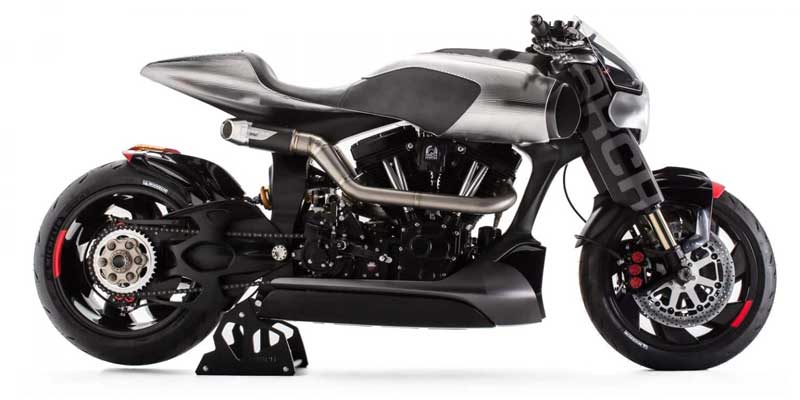
Let’s take the 2020 Arch KRGT-1 and look at the engine that’s inside. The KRGT-1 includes a 2032cc engine that’s able to put out 69.8kW at the rear wheel. That’s pretty impressive.
What is the Company Brand Values?
The Arch Motorcycle Company was established with the purpose of redefining the American performance cruiser. Today, they deliver an unrivaled riding and ownership experience through an obsession for innovative design, engineering excellence, and dedication to the rider.
Every Arch Motorcycle is a bespoke production motorcycle. Meaning that each bike is customized a little differently for its rider. The superbike and car brand deliver a uniquely collaborative process tailoring livery and ergonomic fit to each owner.
Why is Arch Motorcycle Company so famous?
The reason Arch Motorcycle bikes are so famous is that Keanu Reeves has a passion for motorcycles and he invests his own money to create the perfect motorcycle with his vision in mind. Also, it helps that founder Keanu Reeves is one of the largest household actor names on the planet.
Let’s take the 2020 Arch KRGT-1 as an example of the speed for an average Arch Motorcycle. The KRGT-1 has a 2032cc engine and weighs 244kg (dry) which means it is fast! very very fast, especially for a cruiser.
Keanu Reeves on Motorcycles in Movies
It’s fair to say that Keanu Reeve’s obsession with motorcycles goes beyond Arch, he has been known for riding motorcycles in movies for most of his career. Some notable movies are Point Break, Speed, Matrix, Constantine.
Arch Motorcycles in Video Games
Cyberpunk 2077 features the Arch Motorcycle Method 143.
Let’s take a look at one video game that will have a very special Arch Motorcycle in it. CD Projekt Red announced they are using motorcycles from the company in the game Cyberpunk 2077. The Method 143 will be on display at various locations throughout Night City, so if you get to play the game there is a good chance you might see one of these beauties!
What is Arch Motorcycles’ most famous bike?
The 2020 Arch KRGT-1 is the most famous bike at this time. And for good reason, the bike seems absolutely amazing.
Where can I buy an Arch Motorcycle?
Currently, only customers who get approved to purchase one of these motorcycles will be able to get one directly from Keanu Reeves. Unless you are a celebrity or millionaire, your chances of getting the 2020 KRGT-1 are low.
Why are Arch Motorcycle’s so Special?
The company was designed to produce motorcycles that were more refined than most other bikes on the market. The Arch method involves custom designs and builds each bike bespoke. This is a service unlike any other.
How many Arch Motorcycle bikes are Created each Year?
The number of Arch motorcycle bikes produced each year is still unknown but one would assume that it’s very low, since each bike is a project in and of itself.
The idea of a great camping trip is to get away from it all. To be left alone with your thoughts and nature. To commune with Mother Earth or Father Sky or whichever deity you worship. And that means getting off the grid, right? Getting out there where there’s no cell signal and no internet connection (or at least very little).
The best way to prep for motorcycle camping is to:
Do pre-leaving checks
Know what to pack
Know how to pack it
Plan which campsites to stay
Pre-Leaving Checks
Prepping your Bike’s Maintainance
Before heading off camping on your motorcycle, you should check all the regular things like tire pressure and oil levels. This way you can identify and replace anything that’s worn or broken before it becomes a problem. If you’re camping at the end of the season, consider doing all your camping on paved roads so as to avoid off-road conditions. But if you are planning to go off-roading then this check is even more important. My advice, get your services done just before going camping to be sure.
Camp Gear Check
Checking your bike is important, but if camping is new to you, there are a few other checklists that you might want to run through before hitting the road. Make sure that all camping gear is in working order.
The things to look out for the most are:
Stovetops works
Torch/lanterns turn on
Cooking gear is clean
Plan Route
Planning your route before leaving is super important, nothing is worse than leaving home, hitting that open highway for half a day, only to realize you made a wrong turn.
Plan Rest Stops
If you’re motorcycle camping, then the chances of camping within an hour or two from home are slim.
What does this mean for planning? It means planning rest stops and fuel stops along the way are important. Rest stops ensure that you actually get to your destination in one piece.
Try planning out where you’ll have your rest stops before you even leave the house, that way you’ll be confident you’ll have enough gas, won’t fall asleep riding & it’ll make for a much more enjoyable trip.
I love working out which cafes are best along the way to stop at!
What should I pack?
Riding Gear
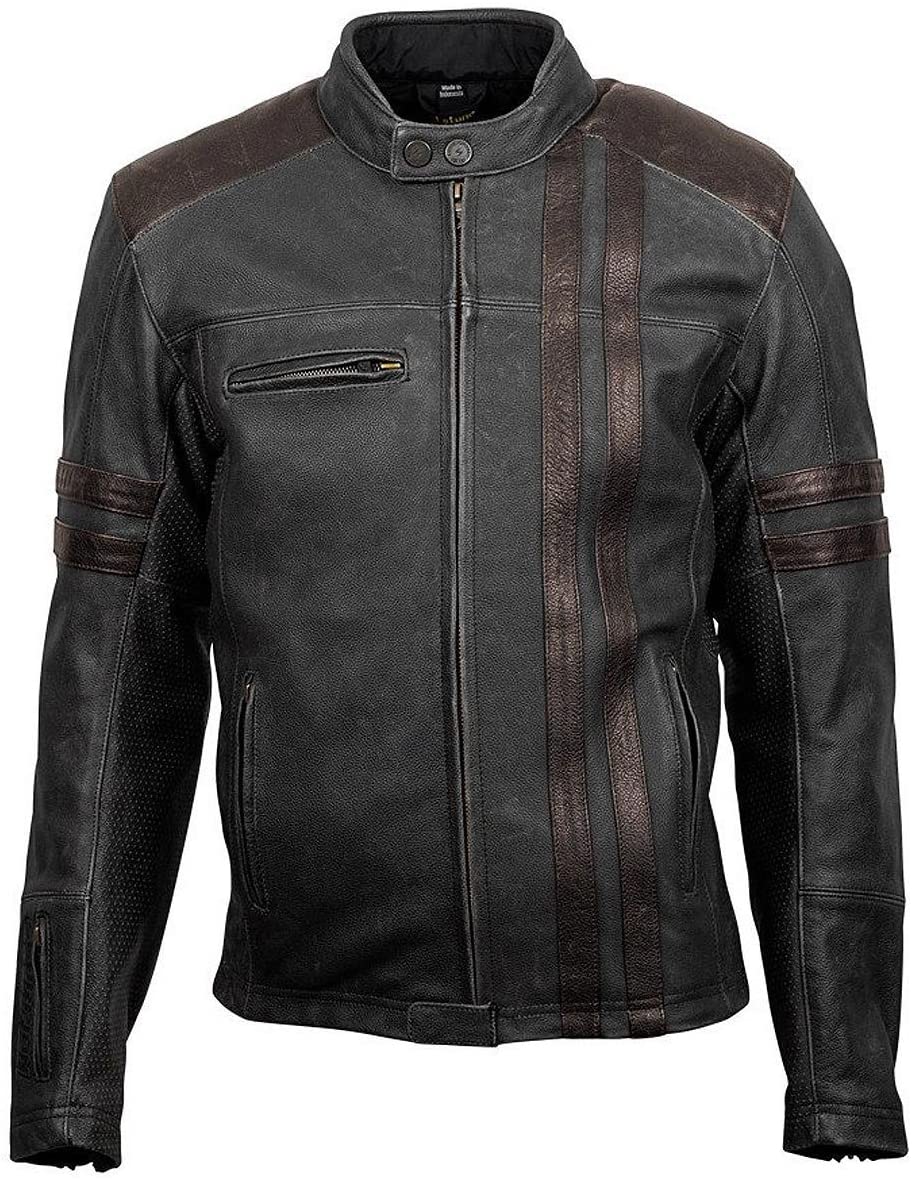
Obvious? I know. But some might forget! Depending on where you are riding, the weather will determine what kind of riding gear you want to pack/where. Consider if you’ll be riding through multiple weather conditions. Will you need a mesh motorcycle jacket and a leather one? etc.
Bring fewer clothes than you think you’ll need. Almost everyone over-packs clothes when it comes to camping trips. Motorcycle camping is no different.
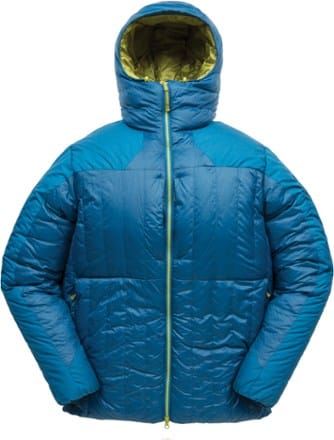
Layering your clothing is the best thing to do when motorcycle camping. A thermal base layer, waterproof jacket with detachable sleeves, then warm hoodie is good camping clothes.
Gloves are important too, not just for riding but for those cold nights. I don’t think camping in summer is much fun without sunscreen & sunglasses but maybe that’s just me!
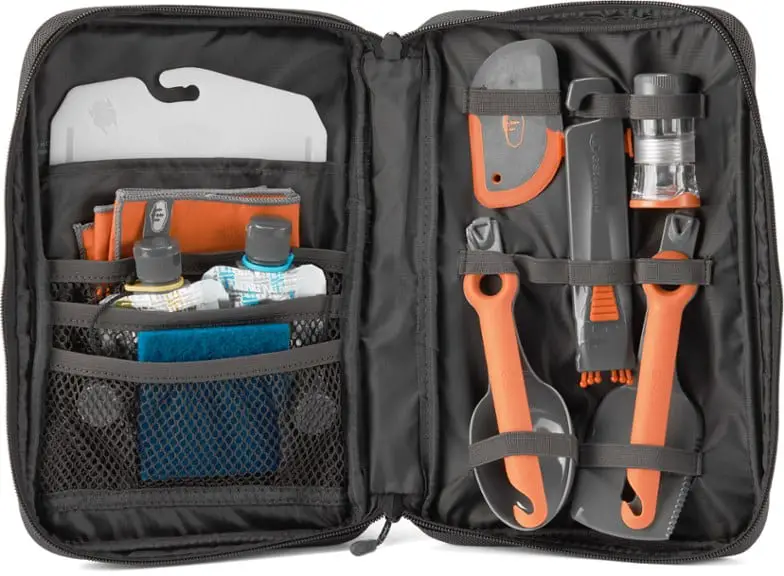
Make sure you have a camping stove, camping cutlery, and camping mugs. Only bring a single item for each person coming. So if you’re camping alone bring:
1 x mug
1 x set of cutlery
1 x bowl
1 x plate
When it comes to a camping stove for motorcycle camping, I always take my JetBoil, it’s simply the best around.
When motorcycle camping, you’ll most likely be camping out of your tent. If so you’ll need a sleeping pad & sleeping bag.
When looking for a sleeping bag, get down-filled over a synthetic sleeping bag, these are the lightest, warmest & smallest sleeping bags on the market. They’re expensive but a good sleeping bag will last you a very very long time.
When it comes to comfort on a camping trip, it’s hard to overlook the sleeping mats. You might be thinking, do I really need a sleeping pad? And the answer is if you want a good night’s sleep where you wake up the next day feeling 100%, yes, yes you do.
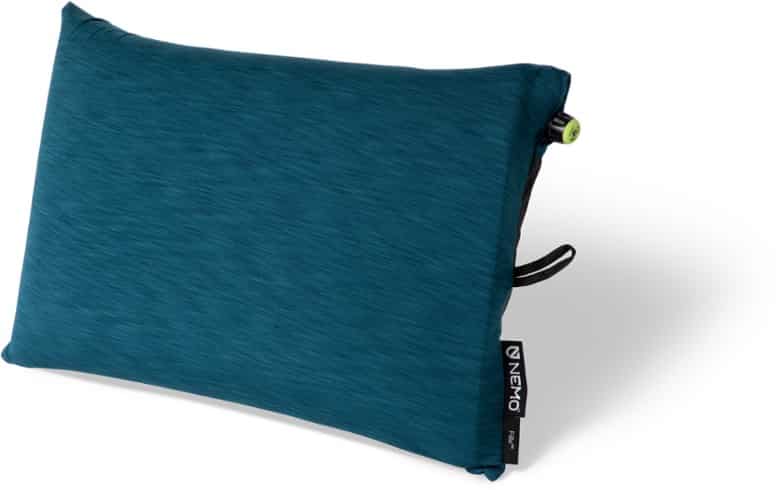
A blow-up pillow is optional, personally, I just use some of my clean clothes or a towel as my pillow.
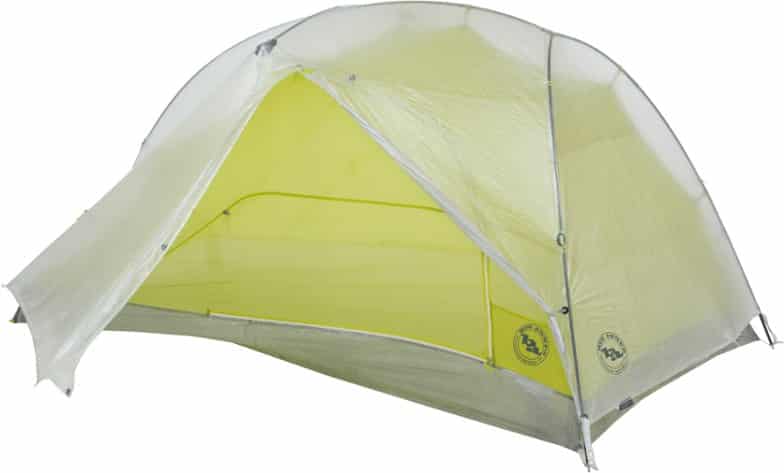
Choosing the right tent for motorcycle camping is important because not all camping tents are designed for motorcycle camping.
You’ll need to consider the following features when looking for a tent as motorcycle campers:
Do you want to park your motorcycle inside the tent?
How much space will the tent take up in your luggage?
Always get a two-person tent for just you.
People often opt for a cheap tent, but I am of the mindset that you should put your dollars to work in this department. When you consider that staying 3 nights in a hotel will cost $300-600 easy, and your camping trip is just as enjoyable and costs nothing comparatively, I see buying an expensive backpacking tent as a sound investment. Consider looking into ultralight backpacking tents from REI. Whatever you do, don’t buy one of those family tents. Those things are stupidly heavy.
A few different bandages (triple antibiotic & antiseptic)
Moleskin or Spenco Second Skin Blister Pads
Painkillers (bushfire burns are common camping injuries)
Tweezers & Nail Clippers
Rubbing alcohol
A few sterile dressings
Sterile Gauze Pads
Tweezers & Nail Clippers
Sunscreen, Sunglasses, and SPF lip balm. A small bottle of sunscreen can go a long way on a camping trip. Getting sunburnt camping doesn’t quite ruin your camping trip but it sure does interrupt it!
I’m not even kidding about the duct tape. If you’ve never used camping before, trust me, you’ll love camping once you start using duct tape camping.
Water Filtration
You need to make sure you’ve got adequate water filtration on a motorcycle camping trip. You can’t expect to find drinkable water everywhere, and whilst a lot of camp site will have fresh drinking water, some won’t and on a motorcycle, you can’t carry around gallons of drinking water.
Extra Misc Motorcycle Camping Items
Camp Shoes: Something other than your boots are nice to wear around the campsite.
Solar Hot Shower: These can be extremely lightweight and small.
Ground Cloth: This is great as a picnic matt, or under your tent for extra warmth.
Picnic Table: Extremely small and portable only, please!
Luggage: How to pack
Learning how to pack for a motorcycle camping trip may seem daunting, but it doesn’t have to be! I found it best to lay out everything I am taking before working out where it will all go.
But you do have a few carrying options when it comes to luggage, feel free to mix and match depending on the gear you are bringing:
Saddle Bags:
I recommend going with a saddle bag that has a wide opening, think the shape of a camping pot. This will make packing and unpacking camping gear from your motorcycle luggage much easier.
When packing a saddlebag, make sure the weight is distributed evenly on the left and right, pack camping gear in smaller items first, camping gear like pots & pans at the bottom of your saddlebag, then camping gear like plates and cups on top.
Use your saddlebags for all cooking and food items.
Backpack
I found a backpack is best for carrying clothing and personal items. When on a motorcycle camping trip it’s nice to have one clean place, such as your backpack that you know your personal gear is safe. This is also the best camping bag for ensuring your camping gear doesn’t shift around while riding.
Top Box
Use your top box to carry all of your camping gear such as a tent, swiss army knife, axe, travel lights, sleeping bag & pad, portable solar charger, rain gear, insect repellent, etc.
Just remember that your top box is most likely your only hard luggage, so if something needs the protection of a hard luggage case then put it in here!
Tank Bag
I would only use a motorcycle tank bag if I really needed to, when a tank bag is needed it seems like overkill to me.
Tips for packing light
Packing light will make your entire trip more comfortable and enjoyable.
The following tips might appear obvious, but most can’t do them.
The secret is to bring the bare minimum.
Tip 1: Multi-Purpose Items
An easy way to do this is to bring camping gear that can be used for multiple purposes, an easy example is, get a bigger mug that you can also use as a bowl or a spork instead of a spoon and fork. These things help hugely when keeping your pack light.
Tip 2: Compression Bags
Compression bags are a fantastic way of saving space in your luggage. Whilst you’re not technically packing lighter, you are packing smaller.
Consider Weather Conditions
This is one of the most important things to consider when camping, taking into account your destination’s seasons will not only help you plan your packing list but also how you pack it.
If you’re going to be riding in the rain, is everything waterproof? If it’s summer, you’ll need to pack extra sunscreen on the top of the bag. Ect.
Also, consider textile luggage vs. leather luggage, I won’t throughout too many opinions here, but it’s good to look into the difference these materials have with weather conditions.
Carrying Extra Gas
You might not think so, but carrying extra gasoline is usually a good idea when it comes to long-distance camping trips, even a small fuel bottle goes a long way on two wheels. This also comes into planning here, in fact, I’ve written an entire article helping you work out if you need more gas here. If you do decide to take more gas read this article about 5 ways to carry extra gas.
How to find the best camping sites
Free Camp Sites
There are tons of sites out there listing motorcycle camping sites that are free, I would highly recommend doing your research online before you leave.
Getting involved in your local motorcycle communities or Facebook groups will help find out about where free motorcycle camping sites might not have any reviews online.
Motorcycle-friendly private camping grounds
These sites are motorcycle camping’s hidden gem. They’re the motorcycle campgrounds you would usually pay to stay at, but these places will often let motorcycle riders stop for a night or two, sometimes it will even be free depending on your negotiation skills.
Some of my most memorable motorcycle camping experiences have come from motorcycle-friendly private camping grounds.
Finding private camping grounds is a little harder though, you might need to do a little door-knocking.
National Forest Campgrounds
If you’re motorcycle camping in the US, then go visit the National Forest Service- they have a huge list of motorcycle-friendly campsites all over the United States.
These campsites are usually located in scenic, quiet areas near lakes or streams.
Most motorcycle-friendly campgrounds run on a fee system. These fees are donations to keep the facilities maintained by the U.S National Forest Service. The range of motorcycle camping fees at each site is between $10 and $30 per night per motorcycle or self-contained RV unit.”
Motorcycle touring companies
This is another great way to find motorcycle campgrounds, motorcycle tour companies always have knowledge on where to stay and where not to stay. Even if you don’t go ahead with them, have a chat and get some ideas.
Motorcycle Clubs
Motorcycle clubs are another way motorcycle campers keep in contact with each other and share insights about where are the best places to stay. If there’s a motorcycle club near to where you’ve planned to motorcycle camp, ask them where to go.
To Sum Up
Your next Motorcycle trip is going to be an adventure, there’s no doubt about that.
But unlike other car campers, you’ve got everything to carry on your motorcycle- so it all has to be planned & prepped right.
Planning where to go and what to do is one thing, but planning exactly how much is not enough/too much gear and how to carry it is another.
The most important part is to just remember that a successful camping trip doesn’t happen on the road or at the campsite, but in the prepping before you leave.
And when it comes to motorcycle camping, you’ve got all the pleasures of camping combined with being on two wheels.
As a motorcyclist, I will be honest, it’s a lot of fun and a great way to travel on the cheap, but there are some dangers that new riders need to know about before they hop on their first motorcycle. Motorcycle safety is something that should always be at the forefront of a new rider’s mind.
In this article, we’ll go over 25 tips so you can enjoy your time riding without worrying or being unprepared for anything!
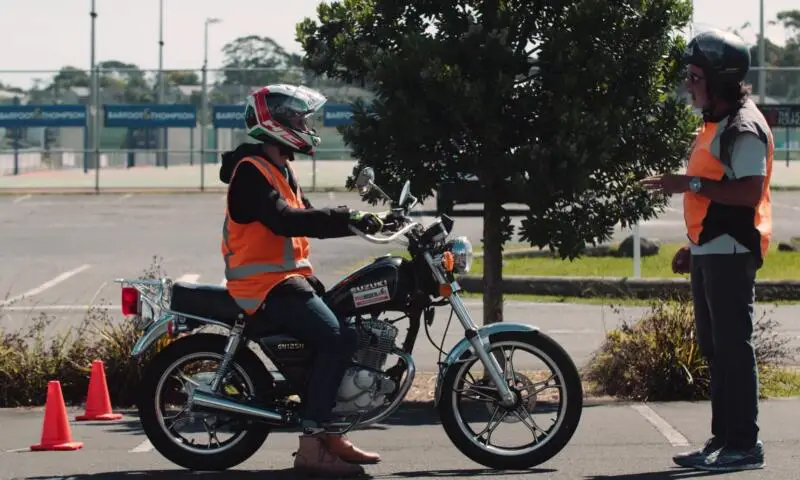
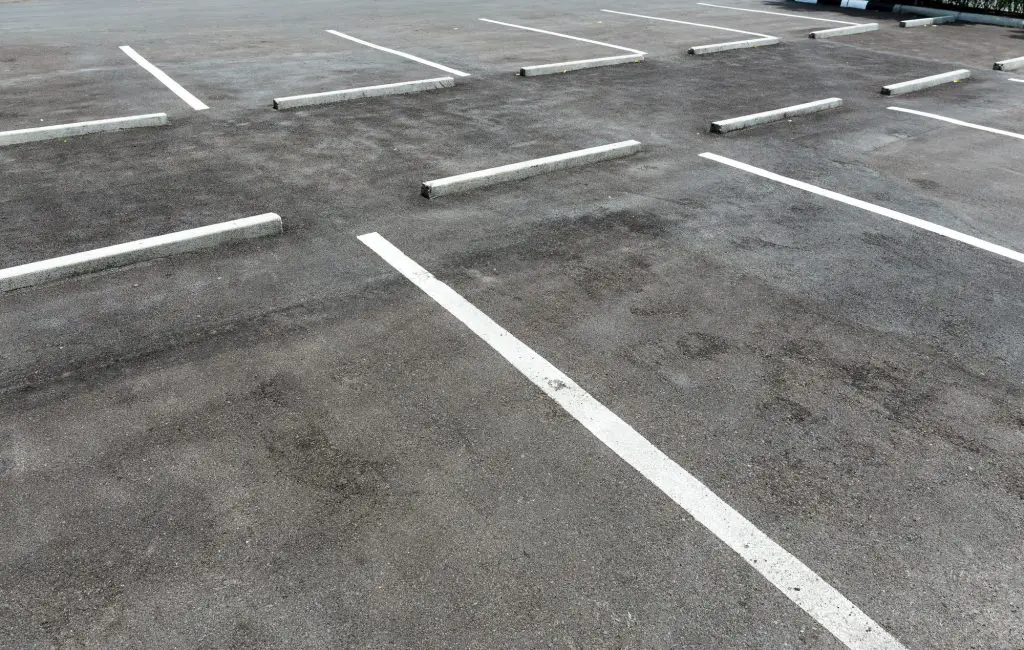
1. Practice in Empty Parking Lots
Since there isn’t a lot of motorcyclists out on the road, you should definitely start on an empty parking lot or driveway. This will allow you to familiarize yourself with your motorcycle and its controls without worrying about any traffic.
It’s also something that I recommend new riders do regularly; it’ll make you more familiar with your motorcycle and safer when on the street.
2. Practice Clutch Control
When you’re starting out, clutch control will be one of the most important things you learn. You can’t ride your motorcycle without it!
The clutch allows you to control how fast or slow you go, as well as allowing you to stop completely.
I highly recommend practicing using your clutch lever controls in an empty parking lot before hitting the highway for new motorcycle riders. Also, it’s a good idea to practice your clutch control in connection with stopping in a curve the correct way.
3. Leave your Phone at Home (or Off)
This may seem like something you wouldn’t want to do, but in reality, it’s one of the smartest things you can do on a motorcycle. The last thing you need when learning to ride is for your phone (or music) to distract you while riding.
Make sure that when you get on your motorcycle, all distractions are left at home or off.
You’ll learn much faster if you can avoid unnecessary distractions during each motorcycle ride.
4. Wait to Ride on Major Highways
This is probably the most important tip I can give to new riders. Avoid riding on major highways when you first start out; use smaller roads, where traffic isn’t as intense.
Allow yourself some time to get used to slow-moving traffic before hitting up a highway. Most motorcyclists will tell you that highways are the most predictable place to ride, and whilst it might be true it’s not the best for new riders.
As a first-time motorcyclist, you don’t learn anything sitting at 60 on a highway. And if you’re are involved in a motorcycle accident on a highway the consequences are so much worse…
5. Practice Turning Around
I know this sounds weird, but it’s really good advice I got from more experienced riders! Practice slowly turning your motorcycle correctly.
You never know if something will be in your way or if another vehicle cuts you off – practice turning around so that you’ll be better prepared for any emergencies that may arise while riding.
Use an empty car park or even just drive into a dead-end street and turn around to prepare yourself for anything.
6. Ride at your own Pace
The one thing you should remember whenever you get on your motorcycle is to take it easy. There’s no reason to rush or push anything; riding a motorcycle isn’t easy, so it’s best not to overdo it when you first start out.
When it comes to motorcycle safety, riding your ride is key.
Practice and learn your motorcycle at your own pace and things will go much more smoothly!
Your first-time riding shouldn’t be in a group, with the exception of your instructor in a safety course. Riding in groups straight after getting your motorcycle license lends itself to peer pressure & more obstacles for you to avoid. Especially when everyone around you is going fast!
Give yourself some time to learn about your motorcycle before you ride in any sort of group.
Of course, taking a motorcycle safety course is the one exception to this. Taking a motorcycle safety course will exponentially help you ride defensively which is exactly what you need on your first bike.
8. Experienced Riders Look through Turns
Another tip that will help you prepare for any potential emergencies is to look through turns before actually entering them. This way, if there’s an obstacle in your path you’ll be able to avoid it without having to stop completely.
Look through the turn and allow yourself some room so that if something happens, you can safely avoid it without much fuss.
9. Practice Riding in the Dark & Rain
Slowly ease yourself into this one, but this is something that even experienced motorcyclists avoid…
If you are not bad at multitasking then practice riding during both nighttime and during the rain as these are the two most difficult conditions for a beginner rider.
But also something that needs to be practiced in order to increase your overall motorcycle safety.
Most accidents happen due to lack of proper visibility because of sunlight or darkness or due to slippery roads after raining so it’s better for beginners to train themselves on how they would behave.
10. Wear Proper Motorcycle Gear from your First Ride On
Despite what you might think from movies or other riders, it’s important to wear a full-face helmet and to wear proper gear. This may feel a little stifling at first, but if you’re going to do anything it’s best that you do things right the first time around.
Not only is wearing a helmet required in most states, but it’s also the single most important piece of safety equipment you’ll ever use.
The same goes for wearing full gear; wear it all, even if you feel like it restricts your movement. You’ll get used to it, and trust me, it’ll save you!
11. Never Ride In Middle Lanes
It’s probably a good idea to try to stick in the slow lane while riding, especially if you’re just starting out.
The middle lane can trap you between other motor vehicles and force you to make sudden moves.
That’s not something you’ll be able to do effectively when you’re just starting out!
12. Keep your Feet on the Footpegs
Another tip that you should definitely follow is to keep your feet flat in the footpegs.
It’s never a good idea to get your feet off of the pegs for any reason, so make sure that even if something happens and you lose control of your motorcycle, at least you’ll be able to keep it upright. On a motorcycle you always want to be ready, so keep your right foot next to your rear brake.
13. Adjust your Mirrors Before every Ride
Before you take off on your motorcycle for any reason, make sure to adjust your side mirrors so that you can see what’s behind you.
You never know when your mirrors have been knocked and adjusting whilst riding is just annoying.
This will give you more time to react if something is in your path and allow you to safely maneuver around things without having to stop or swerve suddenly.
14. Motorcycle Riders are Invisible to Other Motorists
It is important that you put yourself in the mindset that other drivers on the road can’t see you. This will allow you to practice defensive driving and avoid any accidents while riding.
All too often, motorcyclists get into trouble because they assume that other vehicles can notice them, so it’s important to always think ahead and be prepared for the worst-case scenario.
15. Don’t Push through Bad Training
Learning any skill requires repetition and these reps combine to create habits. When it comes to motorcycle maneuvers and techniques it’s no different, especially in those months straight after getting your motorcycle license.
If you’re not getting it, take a break, go watch a YouTube tutorial or read a blog on the subject and get back to it another day.
16. Wait Before Buying Expensive Mods
Learn to ride safely and enjoy your motorcycle before you go out and buy expensive mods. It takes time to get to know your motorcycle. Don’t solve your issues with buying things.
You can easily get carried away and spend a lot more than you should at first on all sorts of things that will just end up collecting dust in the garage.
17. Start Riding with a Smaller Motorcycle
I get a lot of criticism for this one, but I do not recommend getting a motorcycle that’s too big for you to start with.
You’ll be tempted, and trust me, the peer pressure is also there…
But no matter how cool they look, it doesn’t change the fact that motorcycles are dangerous machines. Getting a smaller motorcycle means that you’ll have more control over it and give you a comfortable learning curve. Experiencing a motorcycle accident in your first few months of riding will wreck your confidence.
18. Do not force yourself to Ride
I see this all the time, a learner wants to get as much experience as possible so they start riding to every social event on their calendar.
This isn’t inherently bad, but what happens is you find yourself out at 1:00 am needing to get home, maybe you’ve had a drink or maybe you’re just dead tired and you force yourself to ride.
Please don’t do this, it’s the most likely time you’ll crash.
Before you take your motorcycle out, consider what time you’ll be coming home, and if you think you’ll be tired, don’t force yourself to ride.
Muscle memory is a real thing and we want to repeat good habits.
19. Consider Private Lessons
If you can’t get a specific technical or maneuver to consider hiring a professional instructor for some private lessons.
When you consider how much longer you’ll spend on trial and error, it can be a very cost-effective and beneficial learning experience.
20. Bring a Bike Lock for your Helmet
I learned this one after 3 months of riding and wish someone told me from the beginning.
Go and buy a bike lock, this will allow you to lock your helmet to your motorcycle when you arrive somewhere. Carrying your helmet around the shops, restaurants, and into friends’ homes is just annoying.
21. Be Extra Cautious in Car Parks
Car parks are notorious for being the most likely place you’ll have a tumble on your motorcycle.
Since other motorists aren’t expecting motorcycles, you need to be extremely careful when entering and exiting car parks.
Always look ahead at the cars where they’re headed, never assume that other drivers have seen you because they probably haven’t.
And even if other cars aren’t the concern, most first-time motorcyclists aren’t very good at slow-riding skills. So extra high alert!
Braking with two wheels is different than four. You’ll need to learn when to use your rear brakes vs when to use your front brakes.
Also, practice using two or three fingers around the rear brake or front brake lever and applying slowly increasing pressure.
23. Don’t neglect Motorcycle Maintainance
There’s nothing more terrifying than the “check engine” light coming on when you’re driving along at 100 mph doing 40mph, or worse, it comes on after you’ve already left.
Pay attention to your service history and make sure you have a way of getting it fixed. Make sure you know where all the spare parts are located in the motorcycle so if something were to break down, you know where to find them.
A few things to add to your pre-riding check are to make sure your turn signals are working, your throttle isn’t sticky, your tires have a good amount of tread and your motorcycle clutch lever feels normal.
24. Protection over Style
When it comes to gear, protection always comes before style.
You don’t need a full race suit to start with, but decisions will always come up when you need to choose and choose motorcycle safety over what you actually look like.
Sturdy motorcycle boots, a good jacket, riding pants, gloves, and a full-face helmet are all musts for a new rider who cares about motorcycle safety.
25. Get as Insurance Coverage
This one is huge. Don’t skip out on having the proper insurance.
A new rider needs to insure their motorcycle. If your motorcycle is totaled and you haven’t spent extra to protect it, well… It’s gone and there’s nothing anybody can do to replace it!
Even more importantly, get some sort of personal injury insurance.
This one is often overlooked but all it takes is that one person to be careless and you’ll be facing medical bills that could financially ruin you.
Final Thoughts
Learning to ride a motorcycle in a fun and safe way is not always easy but with these tips hopefully, you feel a little more confident about jumping onto that motorcycle.
The most important thing to remember is to never force yourself to ride.
If you feel like barking muscles, saddle soreness, or just cannot get a specific maneuver don’t push through it.
So take it easy on yourself, find a buddy, and enjoy your new motorcycle experience!
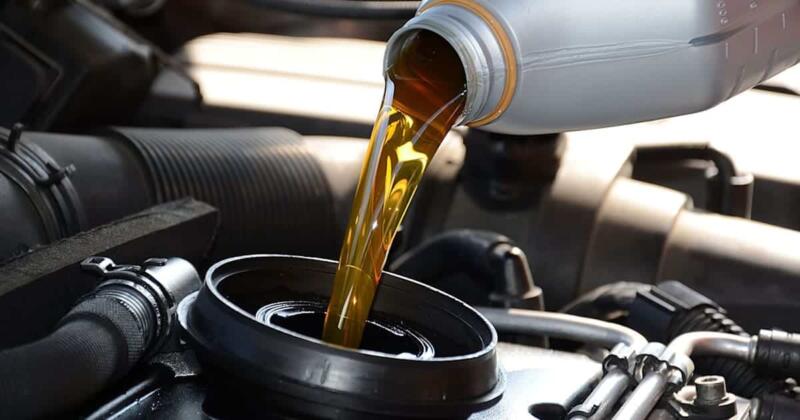
Both cars and motorcycles use combustion engines, run on the same gas, and are used for transportation but do they run on the same engine oil? This is a very important question that almost all of us motorcyclists ask the first time our bikes need their first oil change.
A car’s engine and motorcycle’s engine use different engine oil. While both use oil to lubricate their mechanisms, a motorcycle’s engine requires a thicker type of oil. There are various reasons why motorcycle engines need different types of oil.
The Key Differences Between Car Engine Oil and Motorcycle Engine Oil
Motorcycle Engine Oil
Motorcycles require a heavier type of oil to stay lubricated over an extended period because it runs at higher speeds, has smaller tolerances, and the engine’s parts are also more tightly packed together. The tighter engine parts can cause an issue because it does not allow for proper heat dissipation which could result in the breakdown or coagulation of motor oil. To avoid these issues, Honda decided that motorcycles should have thicker grades of oil than cars since cars have bigger spaces between their moving parts.
Car Engine Oil
On the other hand, car engines run at lower speeds with wider spaces between moving components. Engines in cars do not compress as much air, so the blow-by is not as high. As a result, car engines can handle lighter grades of oil than motorcycle engines. Car engine oils are less viscous than motorcycle engine oil because they run at lower temperatures and have more movement in their moving parts.
Driving Styles
Different driving styles also affect the viscosity of engine oil used for each vehicle type. If you drive your car or SUV to work every day, city traffic will cause more wear on the engine than if you take your motorcycle into town for errands instead. Although both vehicles use the same type of gas, cars are heavier which means that it takes way more energy to get them started or even move them forward. This makes it on their motors which need an oil that can withstand more heat and provide better lubrication.
Can I use Car Engine Oil in a Motorcycle Engine?
Though car engines and motorcycle engines use different types of oils, those who drive both must make sure they don’t pick up the wrong bottle. You should not switch between car and motorcycle oil as you will end up damaging your engine by doing so because the two different oils have a different viscosity – thus causing uneven movement of your engine parts resulting in engine failure. I’ve heard a lot of people trying to use car oil in their motorcycle to try and save a few bucks, this is ridiculous because you’ll end up spending 10x the oil cost on repairs for your engine.
What Motorcycle Engine Oil to Use?
It is best to use the proper grade of motor oil for your bike’s engine because each type of engine has its own tolerances and specifications that must be maintained. The different types of oils are designed to keep your engine lubricated properly while avoiding breaking down or coagulating under extreme conditions. Don’t let us mislead you, using the proper viscosity of the oil is not all there is to it. You’ll also have to make sure that the quality of your oil meets or exceeds what’s recommended for your motorcycle engine.
How much Motorcycle Engine Oil do I Need?
The amount of oil needed depends on the size and type of engine in your motorbike. A car engine needs about 4 liters, while a motorcycle requires around 1 liter because its space is limited by design. The average scooter has between 1.4-2 liters capacity so make sure you check your user manual just in case you’re unsure!
When Changing the Oil on my Bike, Should I Drain all the Used Motor Oil Out?
In order to obtain the best results from using motor oil for your bike’s engine, it is a good idea to drain out all of the old oil first. Old or used oil should be thrown away as it could contain particles that will harm your new oil. The additives in used oil can cause problems because they have already been activated and are not beneficial anymore.
To Sum Up
The thickness of car and motorcycle engine oils differ on purpose. Car engine oils are lighter but still provide proper lubrication while motorcycle engines need heavier grades of oil due to their tighter tolerances and more compact design. Driving styles also affect the type of viscosity required on each vehicle type! Motorcycle engines require less viscous motor oils than car engines do so follow your manufactures recommendations when it comes to the engine oil and whatever you do, don’t use car engine oil in your motorcycle.
Motorcycles can be less expensive, more convenient, and way more fun than a car. But is it possible for a motorcycle to replace your current mode of transportation? Be careful before switching your car for a motorcycle because there are definitely some things that you’ll feel like you’re missing.
Your motorcycle will never be able to replace your car. Whilst motorcycles are cheaper, funner & quicker than cars; you’ll wish you had the car for those rainy/cold days when you need extra boot room when it’s more than just you and those extra-long commutes.
Some people believe motorcycles are the perfect alternative to owning an automobile especially with skyrocketing gas prices & the increase in parking costs. Motorcycle owners don’t have to worry about finding parking spots, they get better gas mileage than their four-wheeled counterparts, and most of the time there is only one person in the car anyway. All of this means motorcyclists spend less money on fuel per mile traveled, and they also get more exercise while riding! But don’t get too trigger-happy just yet. There are a few things to consider before trading in your car for a motorcycle.
Why you might want to consider replacing your car with a motorcycle
Motorcycles Cost of Ownership are Less than Cars
The cost of owning a car is expensive. Owning your own vehicle means extensive insurance costs, changing the oil, replacing the battery, getting new wiper blades, buying gas & filling up the tank & doing all this under budget isn’t just difficult it’s nearly impossible.
Motorcycles are cheaper to maintain than cars. You don’t have to worry about paying for parking or car repairs as much as you would with a car because motorcycles are small enough that they can fit in even small spaces and finding free parking is easier too.
The Upfront Cost of Motorcycle is Cheaper than Car
Let’s face it, compared to other modes of transportation cars are expensive. The cost of buying a car can be daunting but because motorcycle ownership is cheaper than car ownership the initial cost for owning one is less too.
Most people spend around $20,000 to buy a good car, whilst a great brand-new motorcycle costs around $5000.
The benefit of Motorcycles in Traffic Compared to Cars
Motorcycles take up much less space on the road than cars which means that they spend less time sitting in traffic jams and get places faster than their four-wheeled counterparts plus you get to enjoy your ride so much more when there isn’t all the added stress of having to fight with other commuters for road space.
A Motorcycle Cost of Less Gas per Mile
My 2015 CBR 300R motorcycle will give me 85 mpg; whilst our 2020 Mazda CX-5 will only give me 28 mpg. Enough said motorcycles are just THAT MUCH CHEAPER.
Now it should be noted here, that a car (such as the CX-5) can carry 5 people, whilst the motorcycle cannot carry more than 2. But when you consider all the commutes you do, how many really involve more than 1 or 2 people?
Why you might want to reconsider trading in your car for a motorcycle
The convenience of a Car over a Motorcycle
When you own a car you have the convenience of being able to carry everyone & everything, because there is enough room for friends, groceries, luggage, and fun!
Motorcycles are not as convenient as cars because they do not have the same amount of storage space or seating capacity. It’s not just about the storage and ability to carry luggage, but also ease of getting around.
Imagine this, a day out at the beach, you’re still in your swimmers, you wrap the towel around you and jump in the car to drive home. You can’t do that on a bike.
You’re driving to work and you want to listen to a podcast whilst drinking your morning smoothy. You can’t do that on a bike.
The Ability to Carry Luggage and
Cargo is Better with Cars
If you’re thinking of using a motorcycles as a primary form of transportation you need to be made aware that you can only really fit so much on your bike and all your luggage and cargo needs to go somewhere.
Car drivers have the luxury of people carriers & hatchbacks which makes it easy to store items during transport because they’re easy to put in, take out and see what’s going on inside.
Exposure to the Elements
When it comes to getting places dry, warm & not drenched in sweat, having the option to take the car is a necessity. Unless you have the absolute most expensive riding gear, if it’s raining outside and you have no choice but to take the bike, you are going to get wet. Likewise, if it’s boiling 🥵 you will arrive covered in sweat. This is really unavoidable on a motorcycle.
And whilst 70% of the time it won’t be an issue, when it is pouring outside and you don’t have any other mode of transport, you’re kinda stuck.
Extra Cost of Owning a Motorcycle
There are some hidden costs associated with owning a motorcycle, namely your riding gear. Owning a car doesn’t require any additional spending. Sure you need to insure your vehicle but there are no extra costs associated with owning one.
It’s not just the obvious stuff like gloves, boots, helmets etc., but also things like riding gear cleaners and lubes which all add up over time.
Safety Concerns
Statistically the more you ride your motorcycle the higher chance there is that you’re going to come off it, and in a lot of cases when that happens, things don’t end well.
This is going to sound dramatic but insurance companies know this and take it into account which means if you ride frequently your insurance premiums will reflect that fact and you’ll pay more for your cover than someone who does not ride as often.
Concluding thoughts
Whilst motorcycles are the cheaper, funner, and clearly a more environmentally friendly alternative to cars for so many commutes, I would not trade in my car for a motorcycle. I would only have a car or have both. In my eyes, motorcycles are luxury items that, if you can afford to own, give you so much joy in riding, can significantly save you money on gas, and look cool as hell!
Cars provide a certain level of safety, storage, and simplicity which I personally could not live without.
Motorcycles are a great way to get around town and enjoy the open road. But, all motorcycles can look dated after some time has passed. However, there are ways that you can give your motorcycle a good makeover and turn it into something that looks cool and new! This blog post will go over 6 ways to make your bike stand out from the crowd.
The best way to make your motorcycle look cool is by:
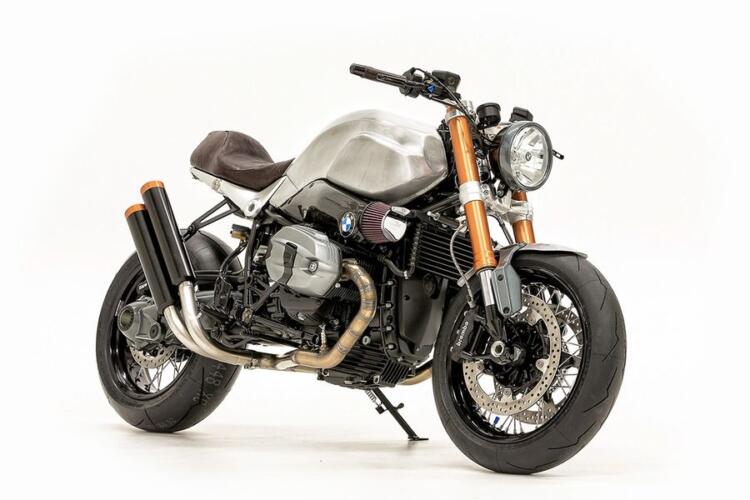
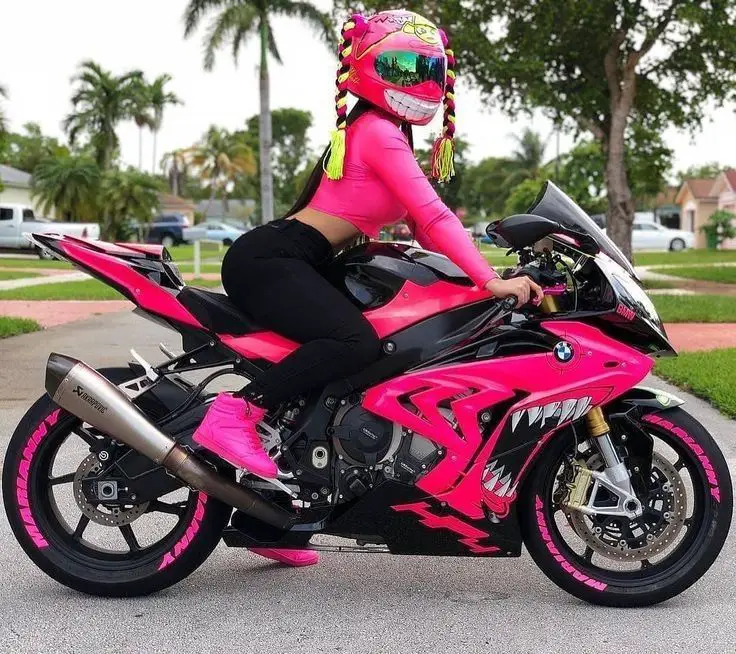
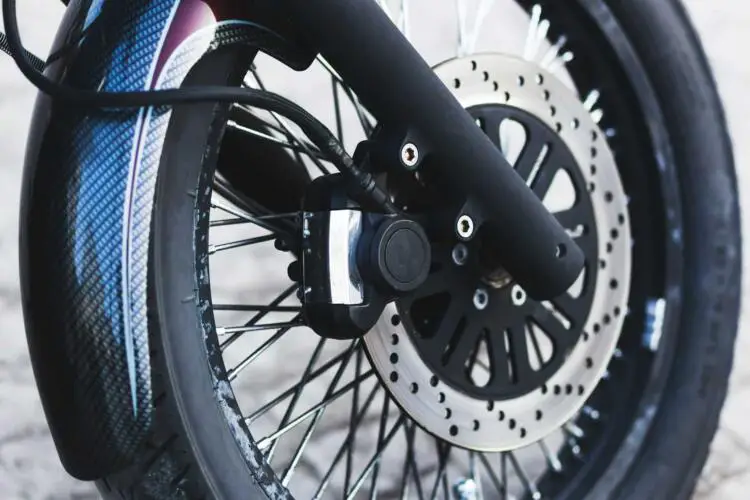
Change up the Colors of your Motorcycle
Change the Seat
Change your tires
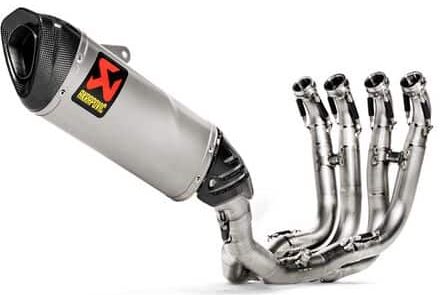
Change your Exhaust Pipes
Get Slimline LED turning Signals
Keep your Bike Clean
Change up the Colors of your Motorcycle
One way to make your motorcycle look cool is by sprucing up the bike with a paint job. There are many colors and styles of motorcycles that you can choose from, depending on what kind of style you’re going for! To get inspired, check out some custom bikes online or head over to your local dealership.
You should also be sure that whatever color or design you pick will go well with other parts on the vehicle too – like any decals/stickers it might have already, as well as its current seat & tires if they happen to match. Also consider how durable this paint job will be in different weather conditions (i.e., heat) before making a final decision about which one looks best symmetrically across
Change the seat
The next thing you can do to make your motorcycle look cool is by changing the seat. There are lots of different seats that you can choose from; some big, some small. Playing with the color also makes a huge difference…some even come with tassels and braids! Whatever kind of style or color suits your preferences best will go a long way towards making it stand out in a good way too.
Just be sure not to accidentally mix up any important parts (i.e., tail light wiring) when removing the old one, as this might cause issues further down the road if not taken care of right away.
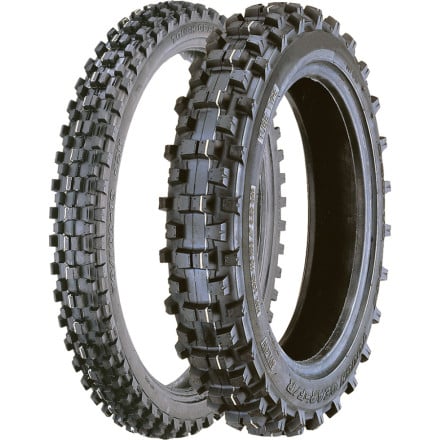
Change your tires
Another way to make your motorcycle look cool is by changing the tires. While some people might think that tire treads don’t really matter too much, this couldn’t be further from the truth! All kinds of different styles and colors are out there these days; spokes & wire wheels, all black or white walls – the list goes on and on.
One thing we can say for sure is that using wider tires will help give you better traction while riding in wet conditions (i.e., rain). If you want a great set of new tires but aren’t sure where to start looking online…look no further than MotoSports! They offer top-quality aftermarket parts at affordable prices so everyone has access to them whether they’re a beginner or an expert.
Just be sure not to get one that’s too big as this could result in damage later on due to engine overheating; particularly if you’re doing higher speed rides for long periods of time like at the race track! Make sure they also fit properly without any issues along those lines before making such an investment as well since there’s nothing more frustrating than being out on the road with a muffler that keeps slipping off.
Get Slimline LED Turn Signals
Another way to make your motorcycle look cool is by getting slimline LED turn signals. These will help increase your visibility to other drivers which can prevent accidents from happening, especially in low-light conditions when it’s harder for people to see you compared with bright sunny days!
The best part about them too is that they’re extremely easy to install on a variety of different motorcycles and scooters. They usually come with all the necessary wiring/adapters needed in order for everything to function properly…all you have to do is pop out your old bulbs & replace them with these ones after screwing in the new LEDs (just make sure not to connect any negative wires together or damage may occur).
Keep your Motorcycle Clean!
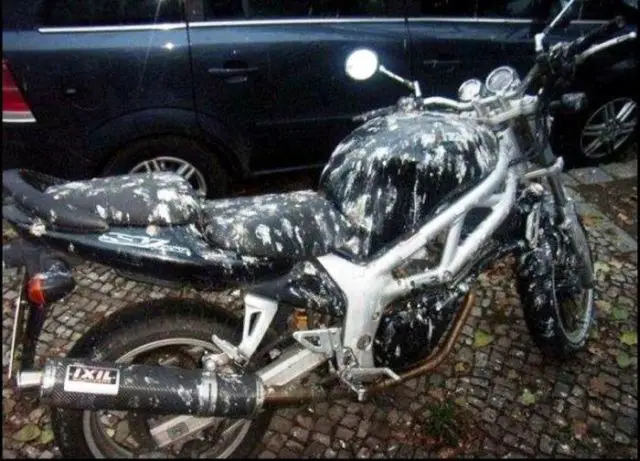
The final thing you can do to make your motorcycle look cool is by keeping it clean & tidy at all times. There’s nothing more uncool than seeing a Harley-Davidson duo glide covered in bird crap.
This entails washing it regularly, changing the oil when necessary, and replacing anything that might be loose or worn out over time (i.e., seat). This may seem like common sense but many people neglect these things until there’s an issue, which could result in expensive repairs later on if not handled right away. Always try to stay ahead of any potential issues before they even happen instead of waiting for them to arise first whenever possible!
Modifications are a great way of getting significantly more value out of your motorcycle without upgrading to a new bike completely. So let’s talk about what modifications you should do on your motorcycle.
There are some modifications that are more common than others, but if you’re not sure where to start, here are six of the most popular ones. All of them are relatively easy to install (i.e usually plug-and-play or just a couple of bolts)! Later on, I might write a post about the crazier ideas for modification but for now, though, let’s stick with these 6.
The 6 must-have modifications you should consider doing for your motorcycle are replacing your exhaust system, a new set of tires, upgrading to a lithium-ion battery, Air Filters, Indicators & Luggage.
Ditching your stock exhaust system can drastically enhance the performance of your bike as well as the way it sounds.
The main difference between different exhaust systems is the size of the piping. The larger the pipe diameter, the more air can flow through it which makes for bigger “dumps”. The dump refers to how much air you are speeding up when hitting a certain point on your throttle curve (i.e shifting gears).
If you have a small/stock-sized pipe and hit 3rd gear or higher in your rpm range at full throttle, you will see some lost horsepower due to increased resistance in your system because of lack of space for air/fuel to be flowing through it freely. For that reason, people often invest in aftermarket exhausts just because it can really change the sound (and performance) of your bike.
Click here to find a new exhaust system for your motorcycle.
The right tires can literally change how your bike feels and handles, so I would say that this is the second mod you should go for. When it comes to choosing the right tire, all sorts of things need to be considered – tread pattern, thread type (grip), construction etcetera.
But within those factors, there are choices available for every budget and style of riding. With more grip and better handling, you will feel more confident on your motorcycle – getting new tires is definitely worth it!
To help choose the right tires MotoSports are able to filter the correct tires specifically for your motorcycle.
And if you’re not sure what type of tire is best for your use-case watch this video:
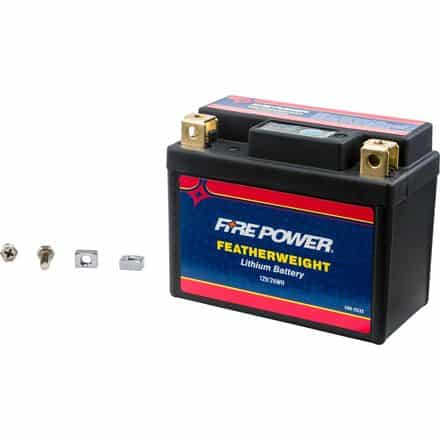
Upgrading to a lithium-ion motorcycle battery is a fantastic choice for many reasons.
Firstly, you get better performance from it due to the chemical composition of lithium-ion. Lithium batteries have a higher energy density than lead-acid batteries and thus weigh less for the same amount of capacity. This is significant because if your bike weighs 100 kgs with just the standard battery, then that’s 10kg
The benefit of upgrading to a lithium-ion motorcycle battery over a lead-acid battery are:
Lithium-Ion motorcycle batteries are far lighter than the original lead-acid type, making for much better weight distribution on your bike (which increases handling).
Lithium-Ion motorcycle batteries take up significantly less space on your motorcycle compared to lead-acid batteries.
Lithium-Ion motorcycle batteries hold their charge for longer and much better in colder conditions.
Lithium-Ion motorcycle batteries are far more robust & are destroyed when tipped over like lead-acid batteries.
Furthermore, they can be charged using any standard battery,
Click here to see our recommended Lithium-Ion motorcycle battery.
Replacing your standard air filter with a performance-based one can increase the power of your motorcycle. When you ride on the road at full throttle, everything is fine because there is enough clean air to enter into your engine without any resistance.
However, when you are in slow-moving traffic or around town, there is a lot more dirt and pollution that goes straight into your engine which causes it to work much harder than necessary. A good quality aftermarket air filter will catch the majority of this dirt before it gets to damage your engine while also maximizing its airflow capabilities.
Upgrading an old air filter for a performance-based one has many benefits. Here are some of them:
The larger cross means less restriction which allows additional air to pass through it freely.
Oiled filters are more efficient than non-oiled ones because dirt is held away from the filter media allowing for fewer particles inside your engine.
The placement and style of your indicators and mirrors (if you have them) is to some extent stylistic preference. If you like the look of your current indicators and mirrors, then there’s no reason to change them; but if you feel like they could be improved in some way it would be well worth considering options such as integrated ones or LED optimized ones. There are all sorts of styles and looks available so you can find something that suits your bike.
Mirrors and indicators aren’t purely a matter of style though, they also affect the safety and effectiveness of your motorcycle. The best mirrors enable you to see behind yourself as well as straight ahead at intersections so you can clearly see any hazards. A good indicator will have an orange lamp that is more visible than standard bulbs while being bright enough to signal traffic around you effectively.
Having luggage on your motorcycle is a fantastic way to keep some of your belongings with you wherever you go and it can also be used for self-protection if you find yourself riding in less than ideal conditions by carrying some tools handy. You’ll need to check that the luggage fits securely and has enough padding so that it doesn’t damage your paint job or get damaged while riding, but otherwise, there are all sorts of options available to suit your style and budget.
There are so many different types of luggage available for your motorcycle. If you are interested in adding luggage to your motorcycle I would suggest that you check out our recommended motorcycle gear’s page where we have our favorite top boxes, Saddlebags & many more carrying options
I’m sure you’ve seen those electric scooters for commuting all over the city. They are often used as a quick and easy way to get from one place to another, especially if you live in a high-density area like New York City, Tokyo, Sydney or London. But what makes them so great? And which is the best electric scooter for commuting on the market today? Let me go ahead and answer these questions for you!
Straight off the bat let me tell you the best electric scooter and commuter scooter I’m most excited by.
It’s the CHARGEPRO developed by Charge By Hixon that has innovative battery technology with a fast charger system. This little guy has a 60V 30AH Lithium-Ion Battery which means that you’ll be able to get 60 miles in each and every charge and be able to hit 30 mph. This electric scooter for commuting has front and rear lights, high battery life, pneumatic tires and a controllable weight limit.
Now I know that doesn’t sound very fast/go very far compared to a motorcycle but this thing is TINY and absolutely sips power.
I’ll explain more below while we dive into why electric scooters are good for city commuters.
Electric Scooter is so cost-effective
Power vs. Gas
Let’s take our CHARGEPRO as an example, it comes with a 60V 30AH, 2000W battery. According to Electric Choice, the average electricity rate is 13.19 cents per kilowatt-hour in the USA. That means that for $0.27 (I rounded up) you can travel 60 miles.
According to Fuelly, the average 2021 CBR125R uses 86.7 miles per gallon. with a gallon of fuel costing $3.18 per gallon (gasprices.aaa.com) that means that the same 60 miles would cost $2.20 on a CBR125R. That’s ridiculous! Because I don’t know about you, I’m not currently riding a 125!
With this same logic, let’s say you’re travelling 48 miles a day 5 days a week, that’s 240 miles a week. And let’s say you work 48 weeks a year. Seems like a standard commute to me.
Let’s see how much it would cost:
On the CHARGEPRO = $1.08 per week or $51.84 per year
On the 2021 CBR 125R = $8.80 per week or $422.40 per year
Ease of Use when Commuting
I, like every motorcyclist, love the feeling of riding, the freeness of punching it, cornering, and the feeling of perfectly shifting gears with a tingle of adrenaline while moving effortlessly through traffic.
An electric scooter features a wide range of applications such as dual suspension, solid tires, anti lock brake, thumb throttle, and three different speed modes for a comfortable ride.
But when it comes to commuting and being in traffic there are a few things that might just sway me towards an electric scooter like the CHARGEPRO over a motorcycle. Especially when it comes to ease of use when commuting. Let’s break these down:
Connected Front and Rear Braking
I can hear it already “connected front and rear brakes are dangerous! Well actually, the CHARGEPRO has got split braking, with a single brake. It’s a single braking system but in emergencies the brakes are split to separate the force between the mechanical disc brakes, reducing stopping distance and ensuring safe braking at high speeds. The rear disc brake and the rear drum brake for most electric scooters in the e scooter market control the weight limit and motor power to enable a dual braking system. Pretty smart right?
No Gears
I don’t know about you, but when it comes to changing gears on commutes, I hate it. Don’t get me wrong, on joy rides, changing gears are all part of the experience, but on commutes, I just want to set and forget. With an electric scooter like the CHARGEPRO you don’t need to worry about gears because… there are none!
No Licence Required
If getting a motorcycle license was the thing stopping you from getting a motorcycle for commuting, look no further, with an electric scooter you don’t even need a motorcycle license to ride. You still need your car license though.
Benefits of an Electric Scooter over a Gas Scooter?
Electric Scooters are:
Cheaper to run, maintain, and service than gas scooters
Are quieter than gas scooters
Include significantly more features for both comfort and safety
Better for the environment
In Summary
If you are a daily commuter riding no more than 50 miles a day going and purchasing an electric scooter like the CHARGEPRO is a no-brainer. How can you compare $422 per year on gas to $51 per year on power? Plus the reduction in maintenance costs, they’re quieter, better for the environment, and offer much much more features than their gas counterparts.
The best electric scooters have air filled tires for a smooth ride. An electric kick scooter or an adult electric scooter has a limited maximum speed. Electric scooters for commuting are roughly half the size of other bikes but can climb steep inclines, and ride on paved surfaces and under low light conditions easily. This is because of a user-friendly control panel, eco friendly features and large tires offer easy commute in real world conditions.
A traditional bike is different from other scooters and has a different braking mechanism as well. The GLX V2 offers excellent top speeds for more experienced riders. This comfortable scooter is one of the budget models that has a number of riding modes with eco mode, LCD display, pedestrian bell, standard charger and shock absorbers for bumpy roads. Evade traffic jams and reach your destination on time.
Choose a reliable electric scooter with a Gotrax GLX V2 battery with a mechanical disc plate and excellent top speed. Select an appropriate riding mode with an excellent battery pack, dual spring suspension, cruise control function, LED headlight, LED Display, and excellent safety features at an affordable price to enhance your ride quality.
I will say, I have not personally ridden a CHARGEPRO, but have completed a lot of research into this subject, both about the CHARGEPRO and other e-scooters and from my point of view buying an electric scooter for city commuting is just smart.